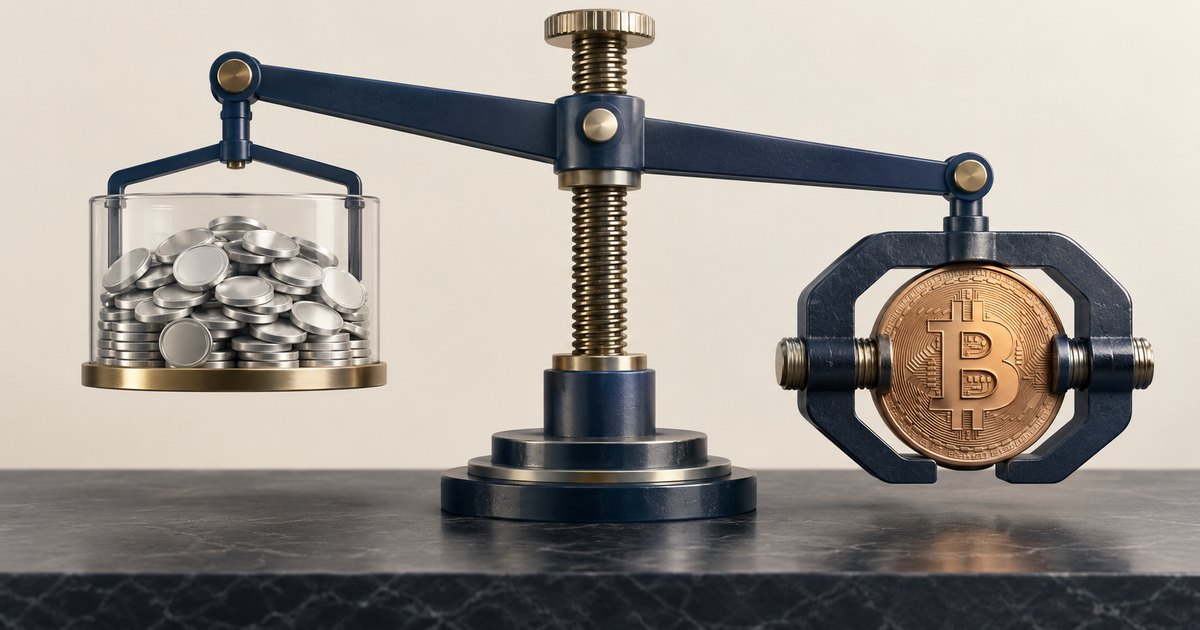
Aave lifts GHO borrow rate to 4.5% on Ethereum Core after USDC GSM depletion
In brief
- GHO borrow rate on Aave's Ethereum Core market now 4.5%, up from 4.25%.
- TokenLogic reported in an Oct. 2 notice that the USDC GHO Stability Module was depleted.
- TokenLogic said borrowers could pay 4.25% for Core GHO and earn 4.5% in sGHO, a DAO-funded gap.
- CryptoSlate said the higher rate has not yet shown improved USDC conversion liquidity.
Why the rate moved
TokenLogic's Oct. 2 notice proposed moving Core from 4.25% to 4.5%. The reasoning was simple. Borrowers could pay 4.25% to borrow GHO on Core and earn 4.5% in sGHO, and the DAO was left funding the 25-basis-point difference. TokenLogic also proposed raising a base rate from 2.75% to 3% and the APR at optimal utilization from 4% to 4.25%.
Aavescan's daily snapshots, as cited by CryptoSlate, showed 4.25% at midnight UTC on Oct. 3 and 4.5% at midnight on Oct. 4 and Oct. 5. Core recorded 116 million GHO borrowed on Oct. 2 and 115.8 million on Oct. 5. Aavescan's Prime page showed 4.17% on Oct. 5 at 86.35% utilization (versus 4.22% in its midnight snapshot).
Getting GHO back into the modules
TokenLogic said the increase should help refill reserves if borrowers get the GHO they need for repayment through the GSMs. It described two ways to get GHO: buy it on the secondary market, or exchange USDC or USDT through a GSM.
The exit path for savers is more layered. Aave's sGHO documentation says users deposit GHO, receive vault shares and can redeem them for GHO without a cooldown, and that deposits aren't rehypothecated. But sGHO redeems into GHO only, so a holder who wants USDC needs a separate conversion. Aave also documents a pause state and user-specific withdrawal limits.
USDT inventory and its limits
Under the RemoteGSM architecture TokenLogic described in March, governance-approved facilitators supply preminted GHO to a GhoReserve, and GSMs draw from it and restore it within assigned limits. An Aave Labs institutional proposal reported 19.2 million USDT on Ethereum and 40.7 million on Plasma as of Sept. 24, a total of 59.9 million. It left out USDC instances because their redeemable balances were negligible.
TokenLogic's Oct. 2 update put roughly 22.5 million USDT in a USDT GSM, though it didn't say which network or networks that figure covered. According to CryptoSlate, Plasma offers a possible route to USDT inventory beyond Ethereum through Chainlink CCIP.
The rate on its own doesn't settle the USDC side.
In CryptoSlate's analysis, the effect on reserves depends on borrowers bringing stablecoins into the modules, and the new rate alone hasn't shown improved USDC conversion liquidity.
Frequently asked questions
Why did Aave raise the GHO borrow rate on Ethereum Core?
TokenLogic said borrowers could previously borrow GHO on Core at 4.25% and earn 4.5% in sGHO, which left the DAO funding the 25-basis-point difference. Its Oct. 2 notice proposed raising the Core rate to 4.5%, and it also reported that the USDC GHO Stability Module was depleted.
How can a borrower get GHO to repay a loan?
TokenLogic described two routes: buy GHO on the secondary market, or exchange USDC or USDT through a GHO Stability Module. TokenLogic said the rate increase should help refill reserves if borrowers source repayment GHO through the modules.
Can sGHO holders redeem directly into USDC?
No. Aave says sGHO redeems instantly into GHO only, so a holder who wants USDC needs a separate conversion. Aave also documents a pause state and withdrawal limits that apply to specific users.