Alexandria: How Alexander's City Became the Ancient World's Intellectual Hub
In brief
- Alexander the Great was welcomed as a liberator in Egypt after removing Persian rule, reshaping the region's political future.
- Alexandria's gridiron street pattern—perpendicular intersecting streets—was unprecedented in ancient Egypt and designed to maximize commerce.
- Scholars synthesized philosophical traditions from Greek, Egyptian, Babylonian, and Hebrew sources into a unique intellectual tradition.
- Egypt's mummification practices enabled anatomical study despite cultural taboos against dissecting human bodies.
A City Built for Commerce
Alexandria was designed from its inception as a commercial center oriented toward the Mediterranean rather than inland Egypt. The city's planners made a deliberate choice: look outward, not inward. This orientation would prove transformative.
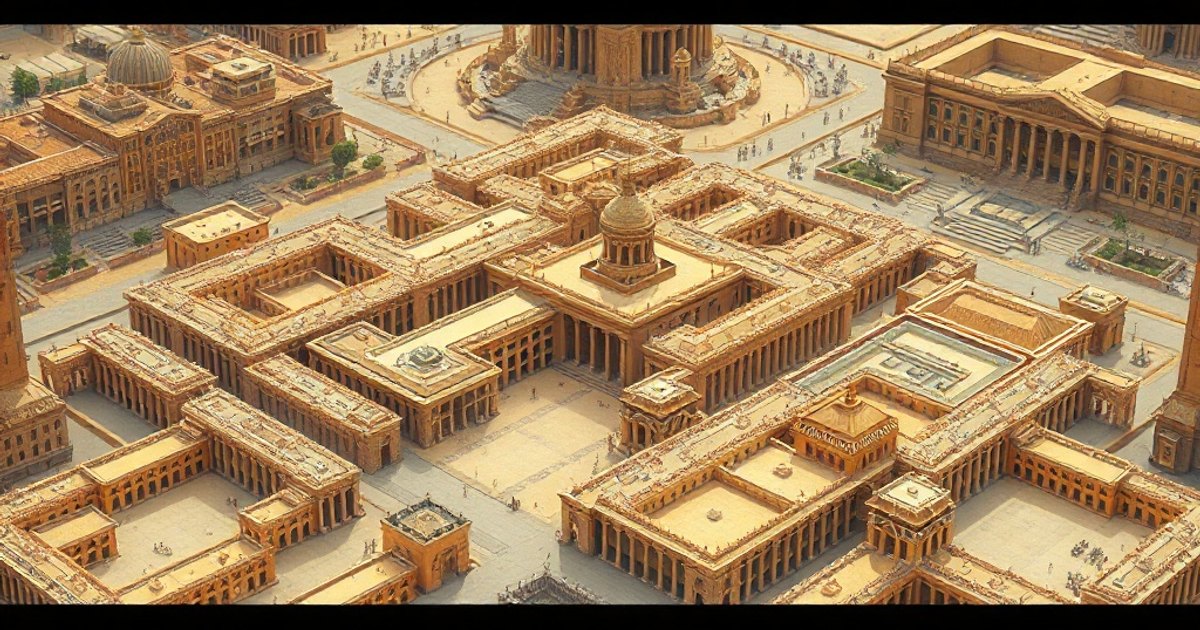
The urban design itself was radical. Alexandria featured a gridiron street pattern with streets intersecting at right angles, which was unprecedented in ancient Egypt. Straight avenues cut through the city at geometric precision—nothing like the organic, winding layouts of earlier Egyptian settlements. This grid wasn't decorative. It was functional. It moved goods, people, and ideas with efficiency that older cities couldn't match.
The Synthesis of Knowledge
What made Alexandria truly distinctive wasn't just its harbors or its streets. It was what happened inside the city's libraries and academies. Alexandria's scholars synthesized philosophical traditions from Greek, Egyptian, Babylonian, and Hebrew sources. The Ptolemaic rulers, Alexander's successors, aggressively collected texts from across the Mediterranean and Near East. Knowledge flowed in from everywhere.
This wasn't fusion for its own sake. Scholars in Alexandria built something new from these traditions—a fertile ground for intellectual exchange. Egyptian mathematicians worked alongside Greek philosophers. Hebrew scholars debated with Babylonian astronomers. The library became a machine for producing synthesis.
Anatomy and Mummification
One surprising advantage emerged from Egypt's ancient past. Ancient Egypt's mummification tradition provided opportunities for anatomical study despite cultural taboos against dissecting human bodies. The practice of preserving the dead created a unique research opportunity. Scholars could study human anatomy in ways forbidden elsewhere in the ancient world.
This gave Alexandria an edge in medicine and biology. The city's physicians advanced their craft on a foundation that other centers simply couldn't access.
The Lasting Legacy
Alexandria's combination of commercial design, intellectual ambition, and cultural synthesis made it the ancient world's preeminent knowledge center. It didn't emerge by accident. It was built—literally and intellectually—with intention.
Frequently asked questions
Why was Alexander the Great welcomed in Egypt?
Alexander removed Persian rule, which Egyptians hated. His arrival was seen as liberation rather than conquest, transforming Egypt's political landscape.
What made Alexandria's urban design revolutionary?
Alexandria featured a gridiron pattern—streets intersecting at right angles—which was unprecedented in ancient Egypt. The city was deliberately designed as a commercial center facing the Mediterranean, not inland Egypt.
How did Alexandria become an intellectual hub?
The Ptolemaic rulers aggressively collected texts from across the Mediterranean and Near East. Alexandria's scholars synthesized Greek, Egyptian, Babylonian, and Hebrew philosophical traditions, creating a unique intellectual melting pot.
What gave Alexandria an advantage in medical study?
Egypt's ancient mummification tradition provided opportunities for anatomical study despite cultural taboos against dissecting human bodies. This gave Alexandria's physicians unique research access.