Alibaba Qwen Image 3.0 Prioritizes Text-Dense Infographics Over Aesthetics
In brief
- Qwen Image 3.0 processes 4,500 tokens, 4.5× prior generation capacity
- Renders nine infographic panels in single prompt as complete image
- Supports precise text rendering at 10 pixels and LaTeX notation
- Launched without benchmarks or weights; API trials open at chat.qwen.ai
Dense Output, Single Pass
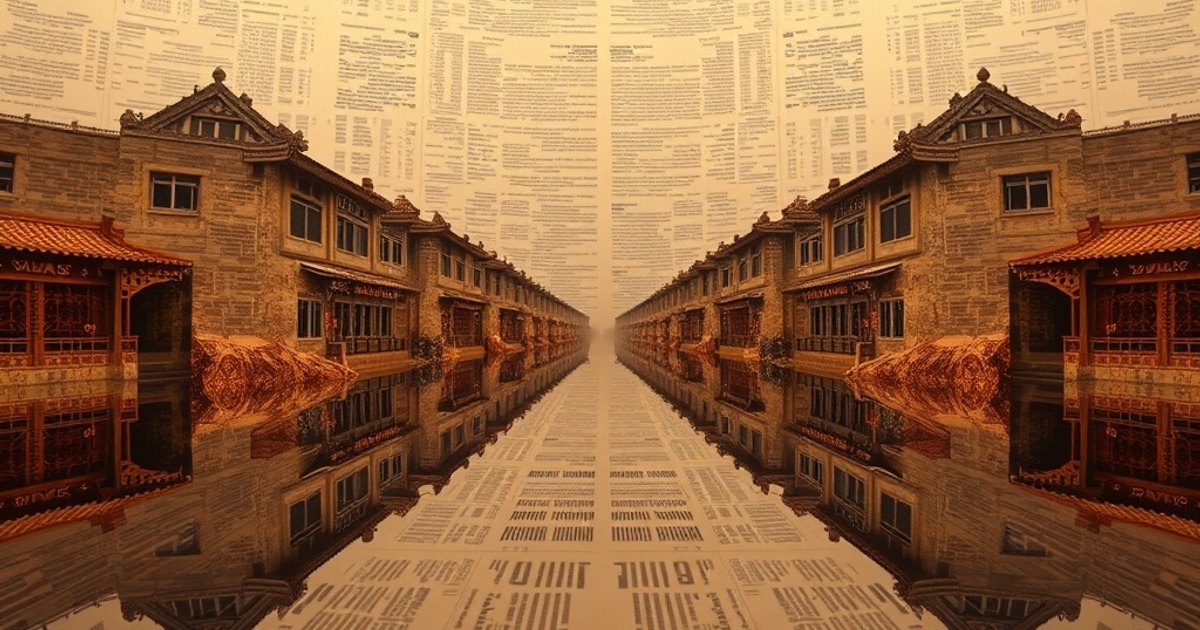
The core appeal lies in practical throughput. Qwen Image 3.0 can generate nine separate infographic panels in a single prompt as one complete image, eliminating the need to stitch multiple generations together. The model supports precise rendering of text as small as 10 pixels, critical for newspapers, data visualizations, and technical documentation. Qwen Image 3.0 also handles LaTeX notation accurately across full academic paper mockups, a detail that signals targeting of research and knowledge-work workflows.
The model supports native rendering of 12 languages and connects to the internet to fetch live data, meaning prompting for a weather forecast visual for a specific city produces current conditions, not generic imagery. These aren't aesthetic flourishes. They're infrastructure.
The Transparency Gap
Yet Qwen Image 3.0 arrived without the openness Alibaba previously championed. Qwen Image 1.0 launched with open weights under an Apache 2.0 license and a same-day technical report. By contrast, Qwen Image 3.0 launched without a benchmark table, downloadable weights, or technical report.
The omission is notable because Qwen Image 2.0 Pro placed fifth in Alibaba's Qwen-Image-Bench evaluation across 18 models, while OpenAI's GPT Image 2 led the ranking. Publishing no benchmark for version 3.0 leaves the performance story incomplete—whether the new model closes that gap remains unknown to the public.
Access and Pricing
"Qwen-Image-3.0 is not just pursuing 'good-looking'—it is pursuing 'useful,' making image generation a truly deployable productivity tool," the Qwen team wrote in the official announcement.
API trials are open at chat.qwen.ai, allowing immediate experimentation. Pricing hasn't been announced, leaving the commercial model unclear. For teams evaluating image generation infrastructure, the lack of published benchmarks and pricing complicates procurement decisions. The utility is evident. The proof points are not.