Anthropic says Claude designed three working gadget prototypes, but key limits remain
In brief
- Claude designed circuit boards, cases and firmware for three working prototypes, Anthropic said.
- Diode Computers engineers built and tested the devices; Claude had no access to lab hardware.
- Circuit boards were made straight from Claude's files and needed no circuitry fixes, Anthropic said.
- The devices weren't certified, validated or designed for mass production, Anthropic said.
- Anthropic gave no success rate across repeated end-to-end design attempts.
What Anthropic says Claude did
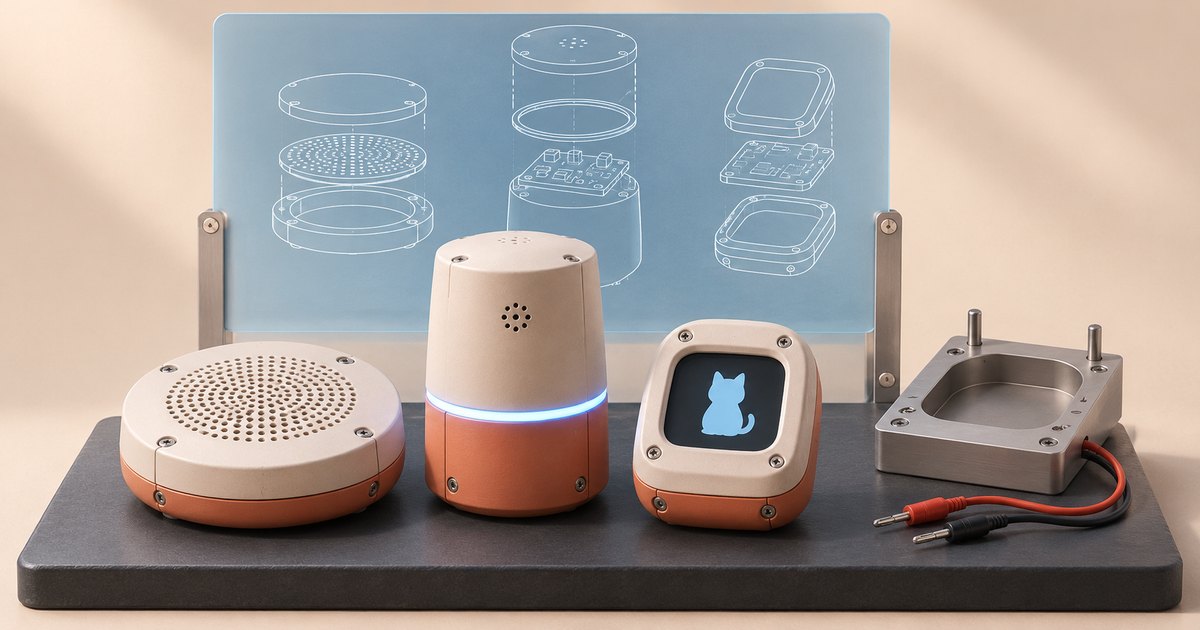
In its Nov. 9 research post, as reported by CryptoSlate, Anthropic attributed the designs to Claude Fable 5.2. For the speakerphone, the company said Claude produced specifications and schematics, placed components on a printed circuit board, routed the copper connections, designed a 3D-printable case, wrote the device's software and prepared a parts list. Anthropic said the other two devices followed a similar process.
Some of the details are pretty specific. Anthropic said Claude checked whether the speakerphone's board would fit inside its case, found that the mute switch would collide with a wall during insertion, and added an assembly step that tilted the board into place. On the voice-assistant hub, it changed the enclosure's shape to shorten the microphone ports. Anthropic also said Claude wrote firmware that dimmed the speakerphone's LEDs as audio got louder (keeping the device within the board's designed electrical-current limit).
Where the humans came in
Claude wasn't connected to test equipment or to the machines that make and assemble boards. People did the physical construction and testing, with Diode engineers handling that work. Diode also supplied occasional follow-up directives, and one engineer asked whether the virtual pet would operate without a battery.
Anthropic said Diode manufactured all three boards directly from Claude's design files without exchanging manufacturing adjustments, and that the prototypes worked without circuitry fixes. That's Anthropic's account, as relayed by CryptoSlate.
What's still missing
Working isn't the same as shippable.
Anthropic said the devices hadn't undergone electrical validation, antenna tuning, thermal testing or certification, and they weren't designed for mass production. CryptoSlate noted that a functioning prototype still needs substantial engineering work before it becomes a commercially ready product.
Consistency is the bigger open question. The disclosure gave no overall success rate across repeated end-to-end design attempts, and CryptoSlate wrote that three working examples don't establish a repeated-attempt success rate.
Anthropic's planned next steps include denser, faster and more complex boards, simulation checks, and learning from measurements of finished devices. How often Claude gets it right across repeated tries is the number nobody's been given yet.
Frequently asked questions
What did Claude actually do in Anthropic's hardware design project?
Anthropic said Claude produced specifications and schematics, placed components on a circuit board, routed copper connections, designed a 3D-printable case, wrote device software and prepared a parts list for the speakerphone. Anthropic said the voice-assistant hub and virtual pet followed a similar process.
Did Claude build the devices itself?
No. Claude wasn't connected to test equipment or to the machines that make and assemble boards, so Diode Computers engineers did the physical construction and testing. Diode also gave occasional follow-up directives.
Are the Claude-designed devices ready for commercial production?
No. Anthropic said the devices hadn't undergone electrical validation, antenna tuning, thermal testing or certification and weren't designed for mass production. The disclosure also gave no success rate across repeated end-to-end design attempts.