Bitwise launches PAPY-USDC vault on Circle's Arc for RWA-backed lending

In brief
- PAPY-USDC went live on Arc on September 16, 2026, alongside Arc's public mainnet launch.
- The Morpho vault lends USDC against overcollateralized tokenized RWAs, including Huma's PST and sUSDai.
- Net APY on Morpho was 4.79% in early October against a 5-6% target, Crypto Briefing reported.
- Deposits stood near $418K-$422K, against a capacity capped at roughly $1B.
How the vault works
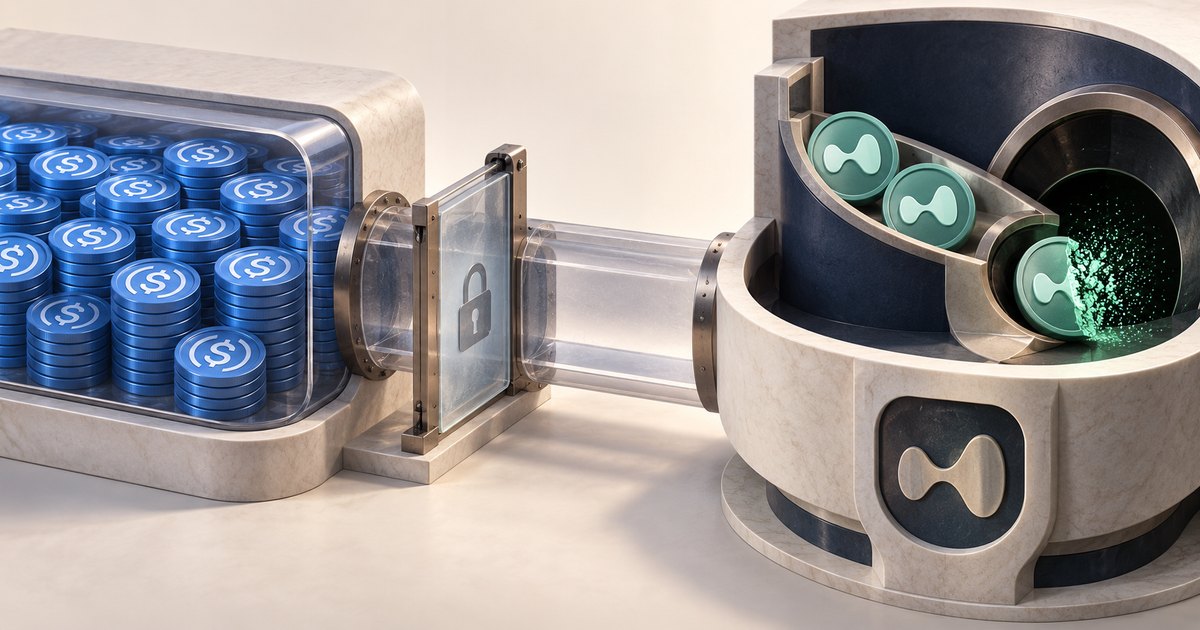
The product is built on Morpho's Vault V2 architecture. Users deposit USDC, and the vault lends it out against tokenized real-world assets (RWAs). Those loans are overcollateralized. Crypto Briefing reported that accepted collateral includes Huma Finance's PST and sUSDai, and the vault can also allocate to cirBTC markets.
Bitwise doesn't hold the money.
The firm acts as a non-custodial curator. It decides which collateral qualifies, what loan-to-value ratios apply and which interest-rate models the vault uses. The vault follows the ERC-4626 standard and has no lock-up, so depositors can withdraw when they want (subject to the vault's available liquidity).
Yield, fees and size
PAPY-USDC targets a variable APY of 5-6%. As of early October, Crypto Briefing put the vault's net APY at between 4.8% and 5.55%, with the Morpho app showing 4.79%. At that point, the outlet said, the 4.79% figure ranked it first by yield among Morpho vaults on Arc. Yields have sometimes fallen short of the target. Bitwise charges a management fee of roughly 0.39-0.4% and no performance fee.
It's still a small pool. The vault held between $418K and $422K in USDC in early October, Crypto Briefing reported, while its capacity is capped at roughly $1B.
A second chain for PAPY
Arc isn't PAPY's first chain. Bitwise launched a PAPY-AUSD vault on Ethereum on September 2, 2026, and Crypto Briefing reported that version pulled in over $20 million in deposits within two weeks. The main difference is the currency, since the Arc vault was built around USDC from launch. Bitwise, which has $9 billion in client assets according to the outlet, now runs PAPY on Morpho on both Ethereum and Arc.
Yield isn't the only variable worth watching. Crypto Briefing noted that the vault's safety ultimately depends on how well collateral like Huma's PST and sUSDai holds its value and stays liquid.
Frequently asked questions
How does Bitwise's PAPY-USDC vault on Arc work?
Users deposit USDC into the vault, which runs on Morpho's Vault V2 architecture. The vault lends that USDC to borrowers who post tokenized real-world assets as collateral, and those loans are overcollateralized, according to Crypto Briefing.
Does Bitwise hold depositors' funds in the PAPY vault?
No. Crypto Briefing reported that Bitwise acts as a non-custodial curator. It sets the eligible collateral, loan-to-value ratios and interest-rate models, but doesn't hold depositors' funds directly.
What yield has the PAPY-USDC vault reported?
The vault targets a variable APY of 5-6%. As of early October 2026, Crypto Briefing reported a net APY between 4.8% and 5.55%, with the Morpho app showing 4.79%. The outlet said yields have sometimes fallen short of the target.