BlackRock slashes Bitcoin IBIT minimum to $1M, opens program to wealthy clients
In brief
- BlackRock processed over $5 billion in Bitcoin-to-IBIT swaps since October 2025.
- Minimum transaction size dropped from $25 million to $1 million in July 2026.
- In-kind conversions defer capital gains tax via like-kind exchange treatment.
- IBIT is the largest US spot Bitcoin ETF; Coinbase serves as custodian.
How in-kind conversions work
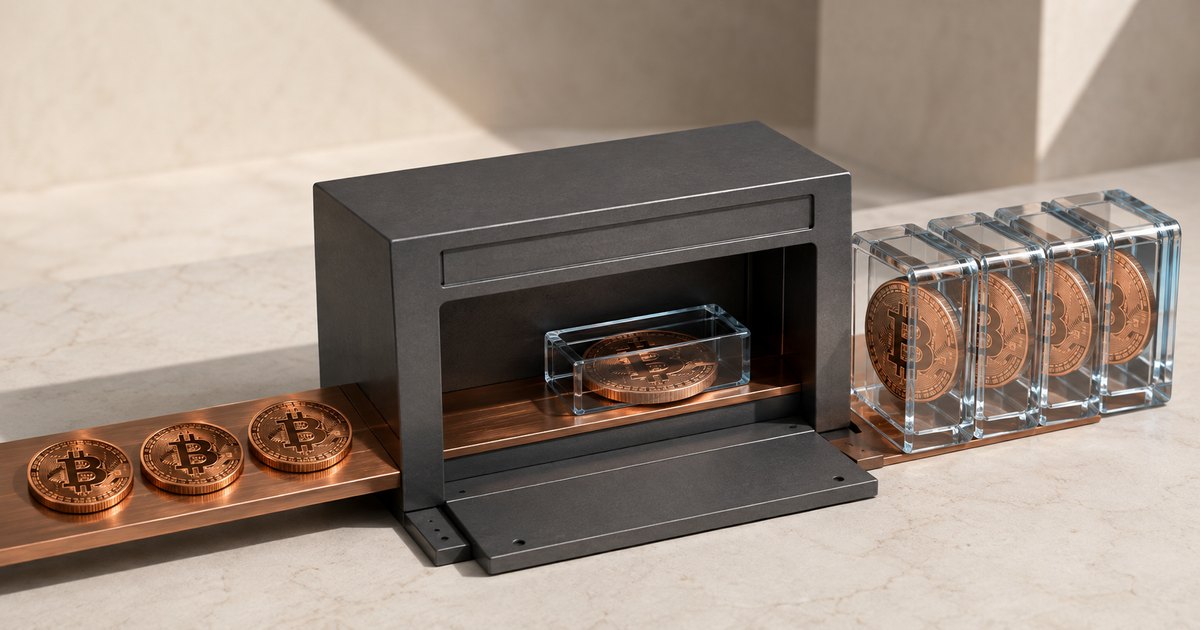
In-kind conversions allow Bitcoin holders to swap coins directly for IBIT shares without triggering an immediate capital gains tax event. A Bitcoin holder delivers their coins to an authorized participant, who then delivers them to the trust and issues IBIT shares in return. The holder's cost basis in the original Bitcoin carries over to the IBIT shares, so the tax bill comes due eventually—but only when the shares are sold.
The structure treats the transaction as a like-kind exchange rather than a sale, deferring tax liability into the future. This is the key mechanic that makes the program attractive to large holders: they get Bitcoin exposure wrapped inside familiar Wall Street infrastructure without an immediate tax hit.
Why the threshold matters
A $25 million floor meant you needed to be holding roughly 250 Bitcoin just to walk through the door. That excluded most retail investors and even many institutional players. BlackRock slashed the minimum transaction size for in-kind conversions to $1 million in July 2026, opening the program to a much broader class of high-net-worth individuals, family offices, and smaller funds.
The acceleration since then speaks for itself. The firm's in-kind conversion program has quietly processed over $5 billion in direct Bitcoin-to-IBIT swaps as of August 2026, representing more than 60% growth in less than a year.
The custody question
IBIT remains the largest US spot Bitcoin ETF by both assets under management and flows, and the in-kind conversion program is a key part of why. Coinbase serves as the custodian for IBIT, shifting custody risk to Coinbase and the broader ETF ecosystem rather than leaving coins in self-custody. For holders managing large positions, that trade-off—surrendering direct control for regulatory certainty and infrastructure—has become increasingly attractive.
"BlackRock has found a way to solve one of crypto's most persistent identity crises: what do you do when you're sitting on a mountain of Bitcoin but want the comfort of a brokerage account? You swap it, directly, for shares of the iShares Bitcoin Trust (IBIT), no sale required." — Crypto Briefing
BlackRock manages over $10 trillion in total assets across its platform, which means it already has relationships with the institutions and individuals most likely to benefit from this program. The in-kind conversion pipeline isn't just a technical feature—it's a moat, converting Bitcoin holders into Wall Street clients at scale.
Frequently asked questions
What is an in-kind conversion for Bitcoin?
An in-kind conversion allows Bitcoin holders to swap their coins directly for shares of a Bitcoin ETF (like IBIT) without triggering an immediate capital gains tax event. The holder's cost basis carries over to the ETF shares, deferring the tax bill until the shares are eventually sold.
Why did BlackRock lower the minimum to $1 million?
The previous $25 million minimum required holding roughly 250 Bitcoin, excluding most institutional players and high-net-worth individuals. Lowering it to $1 million opened the program to a much broader class of participants, accelerating adoption and growing the conversion pipeline from $3 billion to over $5 billion in less than a year.
Who holds the Bitcoin in IBIT?
Coinbase serves as the custodian for IBIT. When holders convert their Bitcoin into IBIT shares, they're transferring custody to Coinbase and the broader ETF ecosystem rather than maintaining self-custody.