Duke Energy wins North Carolina approval for rate increases, data-center tariff

In brief
- North Carolina Utilities Commission approved new rates Monday for Duke Energy Carolinas and Duke Energy Progress, Duke said.
- Average annual increases are 3.7% and 3.4% over two years, respectively; residential rises are higher.
- Data centers drawing more than 50 megawatts fall under a new rate schedule.
- Duke shareholders will fund $20 million in new assistance for customers in need.
What customers will pay
Residential customers get the bigger increases. Duke Energy Carolinas' residential increase averages 4.8% a year over two years, and Duke Energy Progress residential customers face 4.7%, according to the company.
Duke's own projections put that in dollars. A typical residential customer on Duke Energy Carolinas using 1,000 kilowatt-hours a month is projected to see bills rise $6.53 on Jan. 1, 2027, and another $4.66 on Jan. 1, 2028. For Duke Energy Progress, the projected increases are $9.62 and $5.89 on the same dates.
Duke said it reached comprehensive agreements that cut the ask for both utilities after customers raised concerns (the request was first filed last November). Duke said the order also includes $20 million in new shareholder funding to help customers in need.
A separate tariff for data centers
The data-center schedule is the piece that's new.
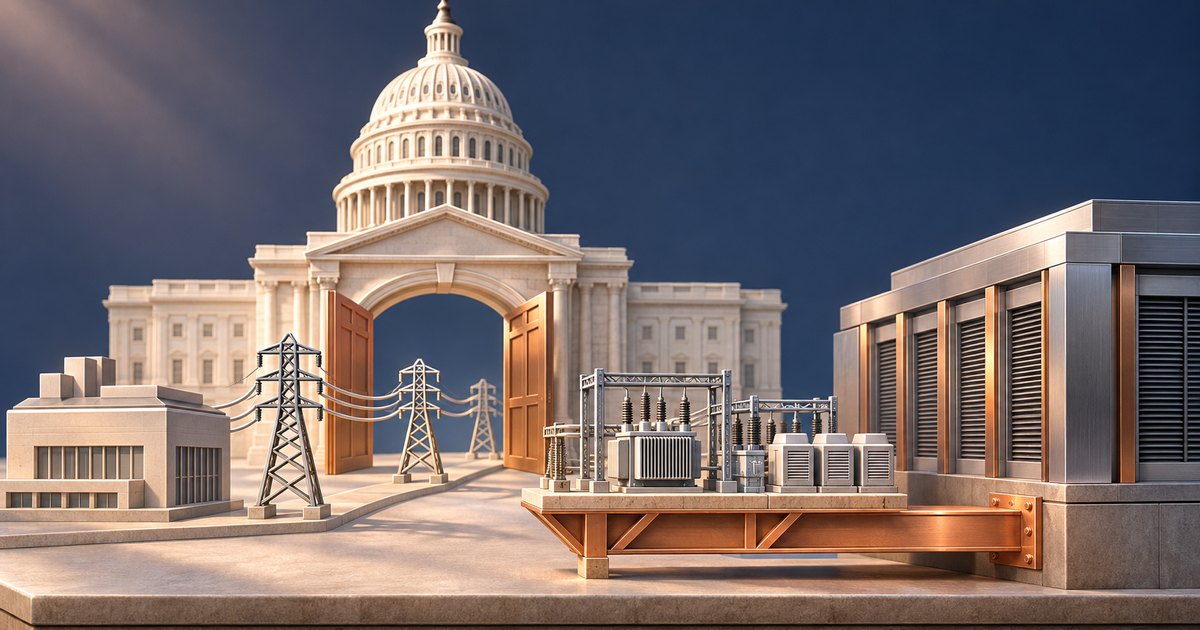
It applies to customers with loads above 50 megawatts. The added terms include upfront dedicated-facility payments, financial requirements for transmission upgrades and security requirements, which Duke says are meant to address the risk of stranded generation investments. The company also said customers will get refunds with interest if it doesn't finish planned infrastructure upgrades on time.
One utility, two rate tables
Duke Energy Carolinas serves about 2.3 million households and businesses, and Duke Energy Progress serves about 1.6 million customers. Duke said the two will be combined into a single utility as of Jan. 1, but their rates won't merge right away. They'll blend gradually, at a pace the NCUC sets through rate cases and rider filings.
The release also laid out the growth backdrop. North Carolina was the No. 3 state in population growth, adding nearly 150,000 residents last year, and Duke said 116,430 distribution poles and 24 million feet of wire were added or replaced over the past five years. Self-healing technology now covers more than 80% of its customers in the state, according to the company, which says it's investing in grid upgrades and efficient generation as part of an energy modernization strategy.
Charlotte-based Duke Energy (NYSE: DUK) is a Fortune 150 company. Its electric utilities serve 8.7 million customers in six states and own 55,700 megawatts of capacity, and its natural gas utilities serve another 1.6 million.
Frequently asked questions
How much will Duke Energy bills rise in North Carolina?
Duke Energy projects that a typical residential customer using 1,000 kWh a month on Duke Energy Carolinas will see increases of $6.53 on Jan. 1, 2027, and $4.66 on Jan. 1, 2028. Duke Energy Progress customers face projected increases of $9.62 and $5.89 on those dates.
What does Duke Energy's new data center tariff require?
The new rate schedule applies to data center customers with loads above 50 megawatts. According to Duke Energy, its terms include upfront dedicated-facility payments, transmission upgrade financial requirements and security requirements meant to address the risk of stranded generation investments.
Will Duke Energy Carolinas and Duke Energy Progress rates merge?
Duke Energy said the two entities will be combined into a single utility as of Jan. 1, but their rates will stay separate. The rates will blend gradually at a pace the NCUC sets through rate cases and rider filings.