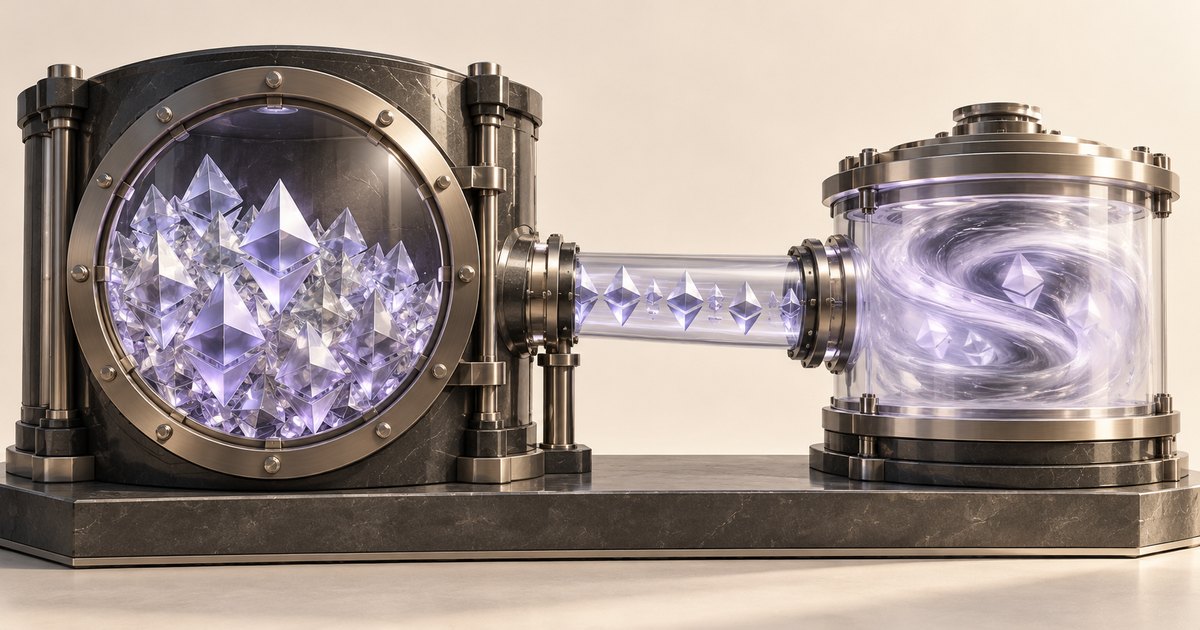
Ether.fi Launches $100M Liquid RWA Vault on Midas Infrastructure

In brief
- Ether.fi deployed $100M into new Liquid RWA vault on Midas infrastructure, second partnership
- Vault launched June 5 with Plume Network, offering tokenized yields from credit pools and CLOs
- Ether.fi's $6B+ deposits quadruple prior Plume commitment with new allocation
Expanding into real-world assets
Ether.fi's managed capital and liquidity provider base exceeds $6 billion in total customer deposits. The protocol previously invested $25 million into Plume's Nest protocol, specifically targeting nBASIS vaults. The new $100 million allocation represents a fourfold increase in that commitment, signaling deeper conviction in tokenized real-world asset infrastructure.
Midas' Vault OS handles the infrastructure, while Plume Network's Nest Vaults provide the underlying framework for real-world asset exposure. This technical separation allows Ether.fi to offer diversified yield sources without building the plumbing itself. Users access the vault directly through the Ether.fi interface, no need to leave the platform or navigate a separate protocol.
The first vault set the pattern
The first Ether.fi vault built on Midas' Vault OS was the EURC Liquid vault, launched around May 2026 in partnership with K3 Capital. That product focused on euro-denominated stablecoins and European credit exposure. The new vault broadens the asset base to include global credit instruments, expanding the risk and return profile available to Ether.fi's user base.
Risk profile differs from staking
"Tokenized RWAs inherit the credit risk of their underlying assets, and while AAA-rated CLOs have performed well historically, they're not immune to broader market stress."
Tokenized RWAs inherit the credit risk of their underlying assets. Credit pools and CLOs carry duration risk, spread risk, and default risk that don't exist in Ethereum staking. Investors accessing these products should understand they're trading yield for exposure to an entirely separate set of economic factors — not a substitute for ETH validation rewards, but a distinct portfolio allocation.