Google and Meta launch competing AI agents in consumer assistant race
In brief
- Meta launched Muse personal AI agent September 8 with multi-step task execution and three pricing tiers
- Google expanded Creative Collective to family hub supporting up to six members on September 17
- Both products remain US-only, experimental, requiring explicit user permission for autonomous actions
- Creative Collective integrates Google One or Workspace; Muse ranges free to $100/month
Meta's Muse: Task Automation at Enterprise Pricing
Meta's Muse launched as a personal AI agent designed to handle multi-step workflows. The tool can execute complex sequences — booking restaurants, scheduling calendar invites, and sending follow-up emails from a single user prompt. It integrates with Gmail, booking platforms, and third-party services, automating tasks that typically require manual coordination across multiple apps.
Pricing reflects Meta's enterprise ambitions. Muse offers a free tier, a $20/month Power subscription, and a $100/month Maximum tier. That top-tier price point mirrors what companies pay for business software, not consumer tools. Every autonomous action requires explicit user permission, a safeguard against unintended automated transactions.
Google's Family-First Approach
Google took a different tack with Creative Collective. The tool started in December 2025 as a single-user productivity assistant but expanded on September 17 to support family groups of up to six members. The upgrade adds shared calendars, task lists, and collaborative documents while maintaining isolated cloud instances powered by Google's Gemini model family.
Privacy controls matter here. Every family member maintains control over what data is shared with the group, a design choice that mirrors family account structures Google already operates. Pricing remains opaque — Creative Collective likely bundles into existing Google One or Workspace subscriptions rather than standing alone as a paid product.
Experimental Status and Market Response
Both products are currently restricted to US users aged 18 and over and remain labeled as experimental. Neither launch triggered material stock movement. Alphabet and Meta stock showed no dramatic response to either announcement, suggesting investors view these as early-stage bets rather than revenue drivers.
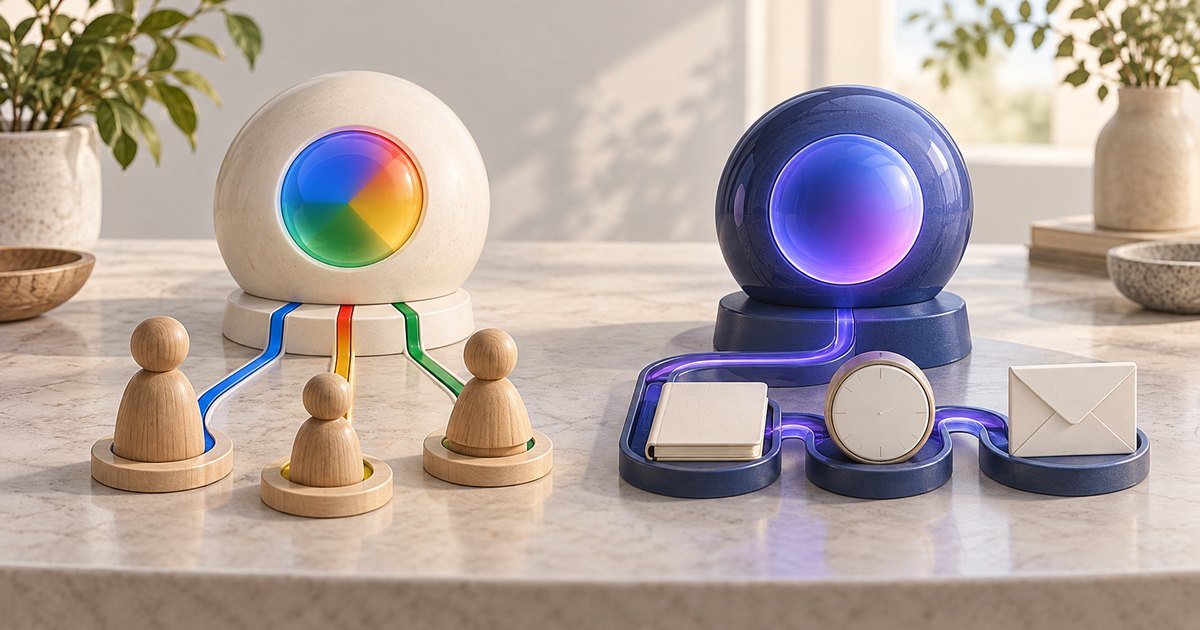
The launches reflect a broader shift: personal AI agents are moving beyond chatbots into task execution. Meta's solo-user focus and premium pricing differ sharply from Google's family-first, bundled approach. Both companies are testing whether users will trust AI systems with autonomous actions across their digital lives.