Google commits $40 billion to Texas data center and renewable energy through 2027
In brief
- Google commits $40 billion to Texas cloud and AI infrastructure through 2027
- Meitner Energy Center pairs data center with 1+ GW renewable energy and 3 GWh battery storage
- Facility operates behind-the-meter, generating its own power independent of public grid
- Partnership with Intersect energy company; construction began late 2025
Behind-the-Meter Design Cuts Grid Strain
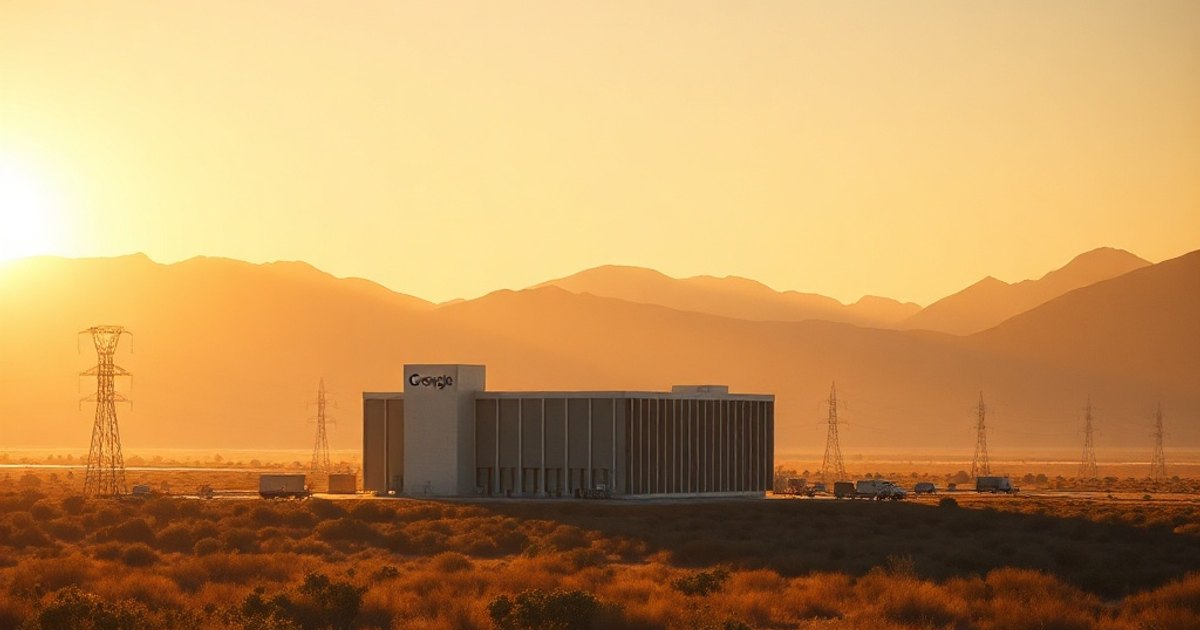
The Meitner Energy Center combines a data center with a portfolio of energy assets: wind, solar, battery storage, and on-site gas-fired generation. Battery storage alone is expected to reach 3 gigawatt-hours, serving as a buffer when renewable sources fluctuate. The facility's energy setup is designed to operate behind the meter, meaning it generates its own power on-site rather than pulling from the public grid.
The data center itself will use an air-cooled design rather than the water-intensive cooling systems that have drawn criticism in drought-prone regions. This design choice addresses local environmental concerns while reducing operational complexity.
Energy as the Scaling Bottleneck
The single biggest constraint on scaling AI, cloud computing, and crypto mining is the same: energy. Data centers bring construction jobs, permanent operational roles, and a significant boost to the local tax base for communities. Yet data center demand in Texas has contributed to rising wholesale electricity prices, which directly affects Bitcoin mining operations in the state.
As hyperscalers like Google lock up more generation capacity behind the meter, the remaining grid power becomes more expensive and more contested. Google committing over 1 GW of generation capacity to a single facility underscores just how power-hungry next-generation computing has become.
The $40 billion investment plan includes previously announced expansions in Armstrong, Haskell, and Wilbarger counties, cementing Texas as Google's primary hub for AI and cloud infrastructure growth in North America. The Meitner project represents a shift toward self-contained energy ecosystems—a model likely to be replicated as demand for compute accelerates.