HPE says hybrid AI routing cut its coding token costs by 30% to 50%
In brief
- HPE's own October 2026 analysis found a 30-50% drop in AI coding token costs.
- Frontier models handled planning and heavy inference; open-weight models handled routine work.
- HPE Private Cloud AI, infrastructure HPE owns, hosted the open-weight models.
- HPE sells private cloud infrastructure; every savings figure comes from its own analysis.
How the routing works
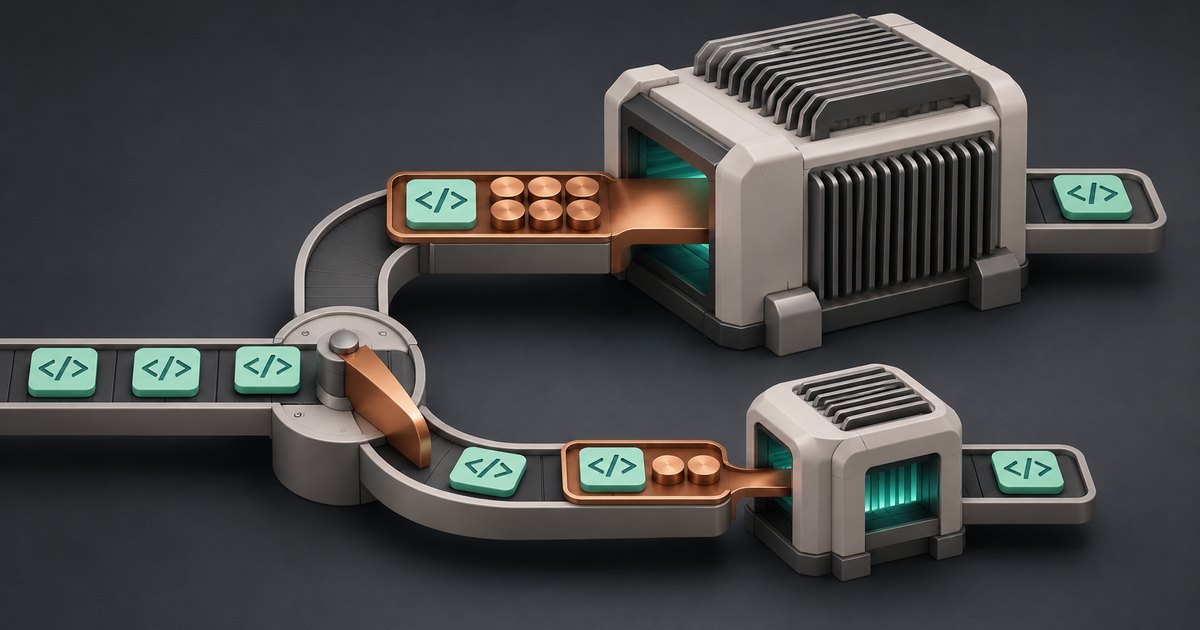
HPE didn't drop frontier models. It used them only when a job required them and sent everything else to cheaper capacity.
Budget controls handled that split. Routine tasks went to cheaper capacity by default, and complex jobs escalated to larger models when needed (it's a tiered setup, not a wholesale switch). According to the company, the platform supported more than 150 internal applications.
HPE's numbers, about HPE's product
HPE also claimed PCAI delivered 40-55% savings on cost per token and a roughly 50% total cost of ownership advantage over major public clouds, based on multi-year comparisons. Separately, CFO Marie Myers said in September 2026 that private cloud deployments achieved up to 60% cost reduction compared with public cloud, as relayed by Crypto Briefing.
All of those figures are HPE's own.
They come from the company's analysis of its own product, and HPE sells private cloud infrastructure. Owned infrastructure isn't free, either. It means capital spending, operational overhead and in-house expertise to manage open-weight models. And the routing only works as well as the system deciding which tasks are routine and which ones need escalation.
Why token bills are getting attention
Agentic work is where the costs pile up. Crypto Briefing reported that a single agentic coding task could consume 10 to 50 times more tokens than a basic chat prompt. HPE found its top 5% of users generated approximately 450 times more token consumption than the lightest users on the same license.
Pricing has moved as well. GitHub Copilot went from flat-rate pricing to metered credits, and Uber reportedly exhausted its entire 2026 AI budget by April after expanding its use of Claude Code. Gartner, for its part, predicted that AI coding token costs would surpass average developer salaries by 2028.
That's the backdrop for HPE's pitch. The 30-50% figure is a result HPE reported from its own deployment, not a benchmark other companies can count on.
Frequently asked questions
How does HPE's hybrid AI routing work?
HPE's platform sent complex work, such as planning and heavy inference, to frontier models. More common operations ran on open-weight models hosted on HPE Private Cloud AI, infrastructure the company owns. Budget controls routed routine tasks to cheaper capacity by default and escalated complex jobs when needed.
Are HPE's AI cost savings figures independently verified?
No. The 30-50% token cost cut and the PCAI savings figures come from HPE's own analysis of its own product, and HPE sells private cloud infrastructure. Running owned infrastructure also involves capital spending, operational overhead and in-house expertise.