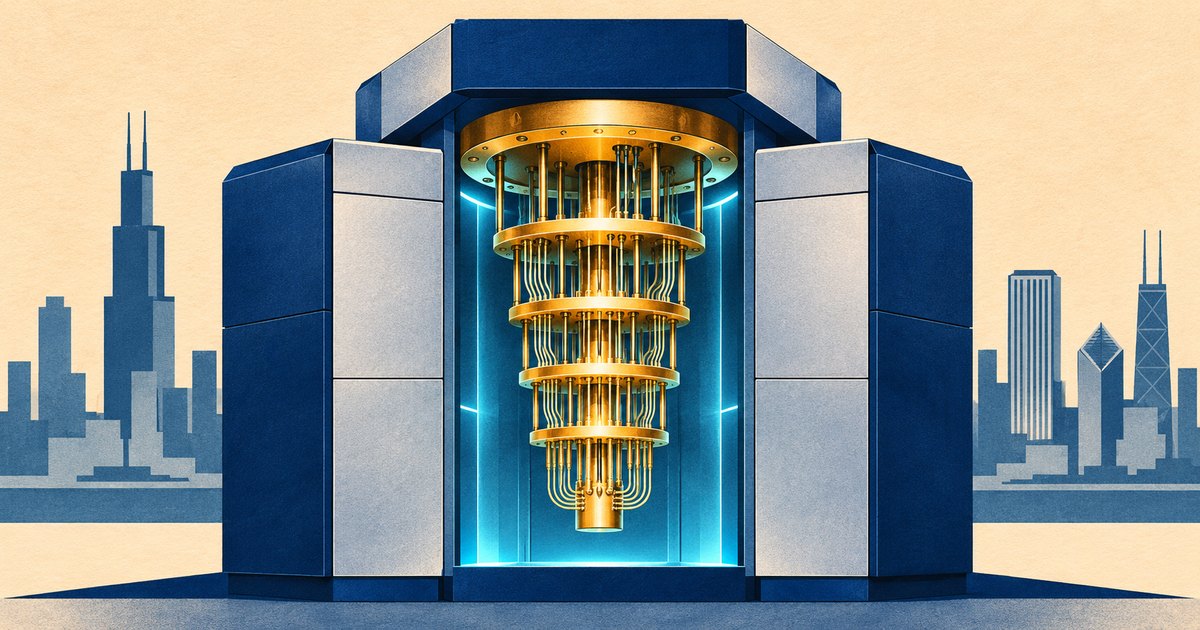
IBM's Starling roadmap targets a fault-tolerant quantum computer by 2029
In brief
- IBM Starling, billed by IBM as the first large-scale, fault-tolerant quantum computer, targets 2029.
- Starling aims for about 200 logical qubits running 100 million quantum operations.
- IBM's qLDPC codes need ten times fewer physical qubits than earlier approaches, IBM projects.
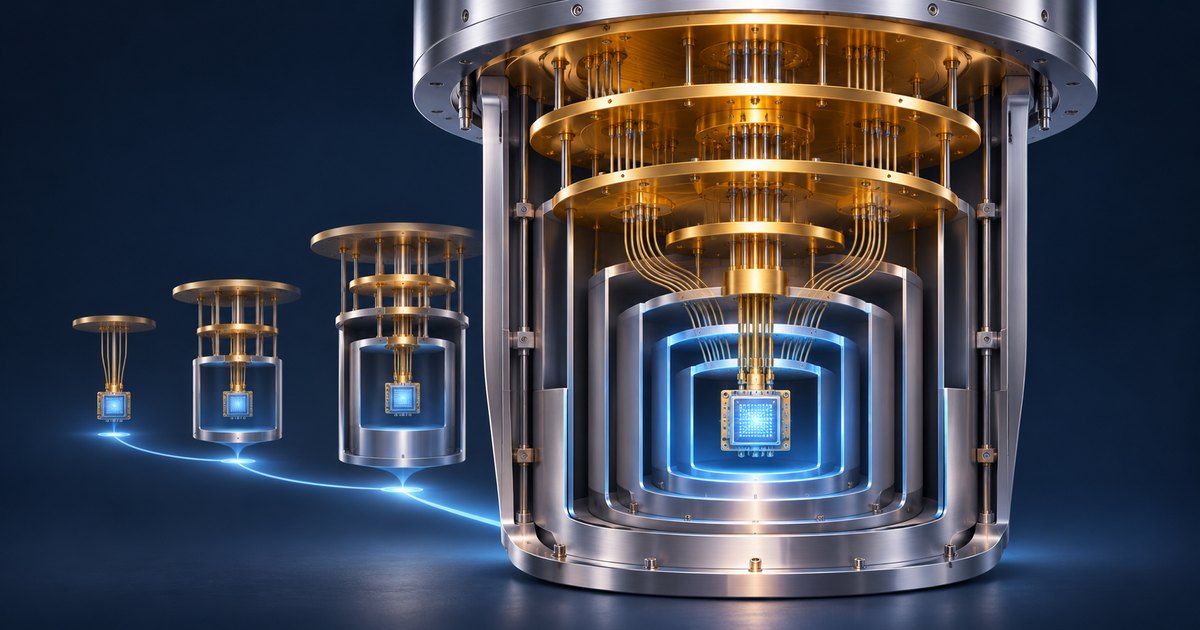
- IBM linked two cryogenic modules cooled below 15 millikelvin in August 2026.
- Chemistry and materials simulation are the first expected application areas, according to IBM.
What Starling is meant to be
Quantum hardware is fragile. Physical qubits are the actual hardware, and heat and noise can push them into errors. A logical qubit is a more dependable unit built from many of those physical qubits, with error correction catching mistakes as they occur (that's the whole point of fault tolerance).
IBM's design for Starling is modular, built from roughly a dozen cryogenic modules rather than one large refrigerator. It's planned to be housed at the new IBM Quantum Data Center in Poughkeepsie, New York. IBM isn't jumping straight there; the roadmap runs through a sequence of intermediate processors, each named after a bird, and a follow-on system called Blue Jay is designed to support 2,000 logical qubits.
The qLDPC bet
IBM said its approach relies on a family of error-correction codes known as qLDPC. Those codes are projected to need ten times fewer physical qubits to reach the same logical error rate as earlier approaches.
That's a projection, not a result.
Crypto Briefing flagged the point directly. The other moving piece is the decoder, meaning the classical software and hardware that interpret error signals and decide how to correct them, ideally in real time. In a November 2026 update, IBM said decoder performance had improved in ways that match Starling's requirements.
What IBM has shown in 2026
In August 2026, IBM linked two modular cryogenic units and cooled them to below 15 millikelvin. At SC26 in November, the company reported progress on quantum-classical integration, including real-time decoders and work with NVIDIA and AMD. Topics included Slurm scheduling for quantum processors (Slurm is the workload manager many supercomputing centers already use to queue jobs), co-design platforms and GPU-accelerated error-correction tools.
So why does any of this matter outside a lab? If the qLDPC approach holds up, the application areas IBM is pointing to, especially chemistry and materials simulation, are where fault-tolerant machines are expected to show value first, Crypto Briefing noted.
Frequently asked questions
What is the difference between a physical qubit and a logical qubit?
Physical qubits are the actual hardware, and they're prone to errors from heat and noise. A logical qubit is a more dependable unit built from many physical qubits, with error correction catching mistakes as they occur. IBM's Starling targets about 200 logical qubits.
What are qLDPC codes and why does IBM use them?
qLDPC is a family of error-correction codes that IBM said its Starling approach relies on. IBM projects the codes will need ten times fewer physical qubits to reach the same logical error rate as earlier approaches. That figure is a projection, not an achieved result.
What does a quantum decoder do?
Decoders are the classical software and hardware that interpret error signals and decide how to correct them, ideally in real time. In a November 2026 update, IBM said decoder performance had improved in ways matching Starling's requirements.
Where will IBM's Starling quantum computer be located?
IBM planned to house Starling at the new IBM Quantum Data Center in Poughkeepsie, New York. The system is designed to be modular, built from roughly a dozen cryogenic modules rather than a single large refrigerator.