Nvidia commits over $1 billion to Kinsus to expand AI substrate capacity by 2028
In brief
- Nvidia announced a more than $1 billion investment in Taiwan-based Kinsus, Crypto Briefing reported.
- Funding targets Kinsus's advanced ABF package-substrate capacity for Nvidia's AI platform.
- Nvidia-dedicated capacity at Kinsus's Taoyuan Youth campus is expected to rise over 3.5 times.
- Operations are projected to start in H2 2027, with full capacity by Q3 2028.
What Nvidia is paying for
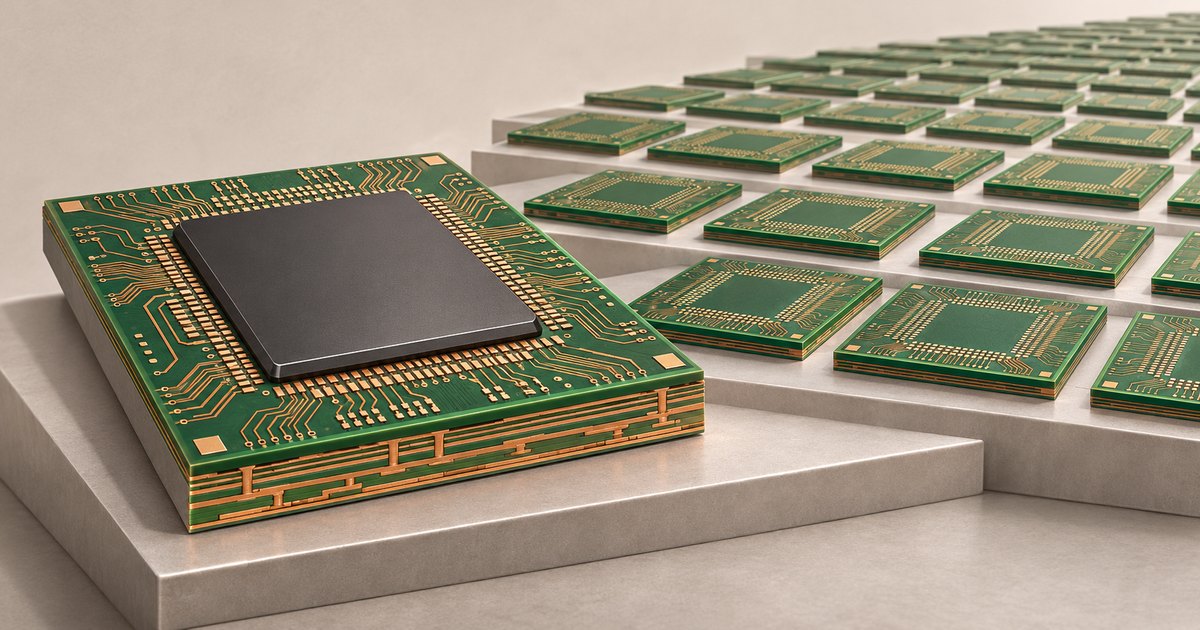
It's a supply deal first. According to Crypto Briefing's report on the announcement, the money is meant to expand Kinsus's advanced ABF package-substrate capacity, and the commitment is aimed at bolstering Nvidia's AI platform by securing dedicated future substrate supply from the Taiwanese supplier.
Why substrates? The report frames the whole commitment around that word "dedicated," meaning capacity set aside for Nvidia's AI platform.
LeoDex News hasn't reviewed Nvidia's original statement or any filing, so the more than $1 billion figure is attributed to the announcement as Crypto Briefing reported it.
Taoyuan expansion and timeline
The build-out centers on Kinsus's Youth campus in Taoyuan. Capacity devoted to Nvidia there is expected to increase by more than 3.5 times, per the same report. That's a big jump. It also won't happen quickly.
Operations at the expanded facility are projected to begin in the second half of 2027, and the site isn't expected to reach full capacity until the third quarter of 2028 (roughly a year after start-up), according to Crypto Briefing.
In other words, the extra substrate supply is a 2027 and 2028 story, not a 2026 one.
Part of a wider supplier push
Crypto Briefing described the Kinsus investment as part of Nvidia's broader strategy involving partnerships with other prominent companies, naming Amkor, Foxconn and Samsung Electro-Mechanics. LeoDex News hasn't seen sourcing on the terms of those arrangements, so they're mentioned here only as partners the report named.
For Kinsus, the near-term picture is construction and ramp-up: start-up in the second half of 2027, then full capacity by the third quarter of 2028, if the projections reported by Crypto Briefing hold.