Oil prices surge as Strait of Hormuz traffic plummets amid US-Iran tensions

In brief
- Brent crude rose 4% to above $74–$76 per barrel following Hormuz disruptions
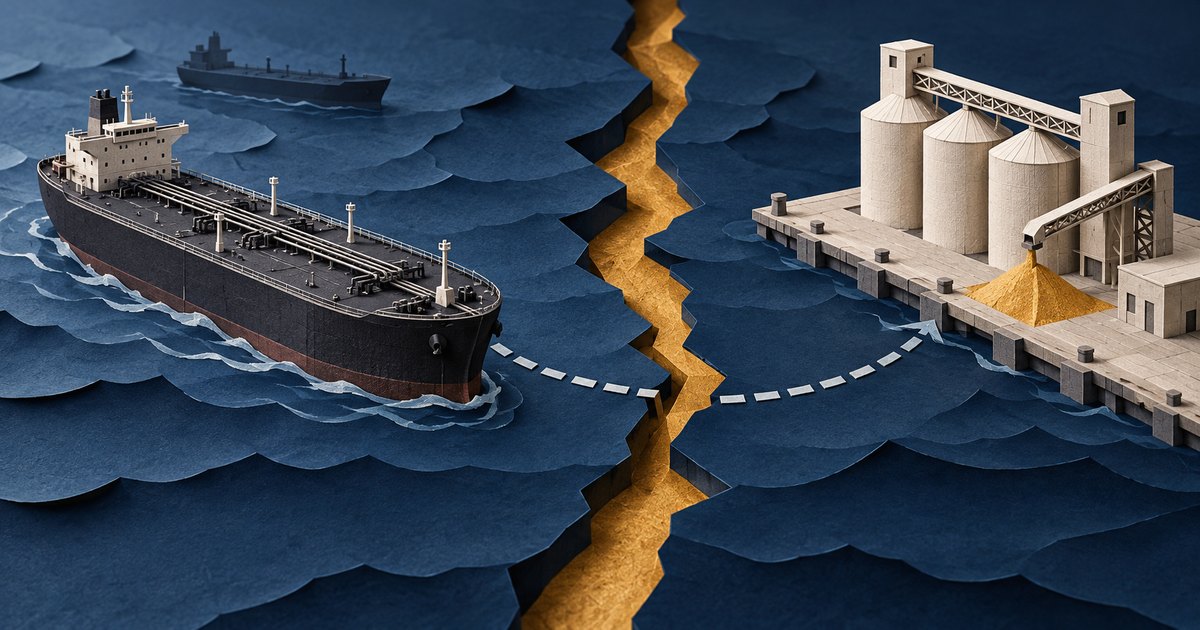
- Strait of Hormuz operating below 2% typical throughput with 150+ vessels stranded
- US-Iran missile strikes earlier this month triggered the traffic slowdown
- Oil market surplus forecasts threatened by supply disruptions
- Gulf oil exports remain significantly below pre-conflict levels
Hormuz Disruption Deepens Supply Concerns
Fresh US-Iran missile strikes earlier this month have triggered the current bottleneck. The Strait of Hormuz typically handles a massive share of global energy exports, but current conditions have reduced it to a trickle. Gulf oil exports remain significantly below pre-conflict levels, creating a supply squeeze that's rippling through energy markets.
The stranded vessels represent real cargo — oil tankers and LNG carriers waiting for passage, their schedules disrupted. Each day the strait remains constrained adds pressure to prices. Traders are pricing in the risk that this isn't a temporary spike.
Market Forecasts at Risk
This situation threatens to derail forecasts of an oil market surplus in the coming year. Analysts had been modeling a shift toward oversupply by 2025, which would've eased inflation concerns tied to energy costs. A sustained Hormuz disruption flips that narrative. Instead of surplus, markets now face potential scarcity — and scarcity means higher prices persisting longer.
The geopolitical risk premium is real. When a single chokepoint handles that much global throughput, even a week of disruption moves markets. Months of tension? That reshapes forecasts entirely.