Qatar PM warns of 8.6% GDP contraction, pivots $60B investment strategy
In brief
- Qatar faces 8.6% GDP contraction in 2026, steepest among Gulf states, from conflict impact on LNG production.
- Doha Investment platform unveiled to manage 45 state-owned enterprises and insulate economy from energy sector damage.
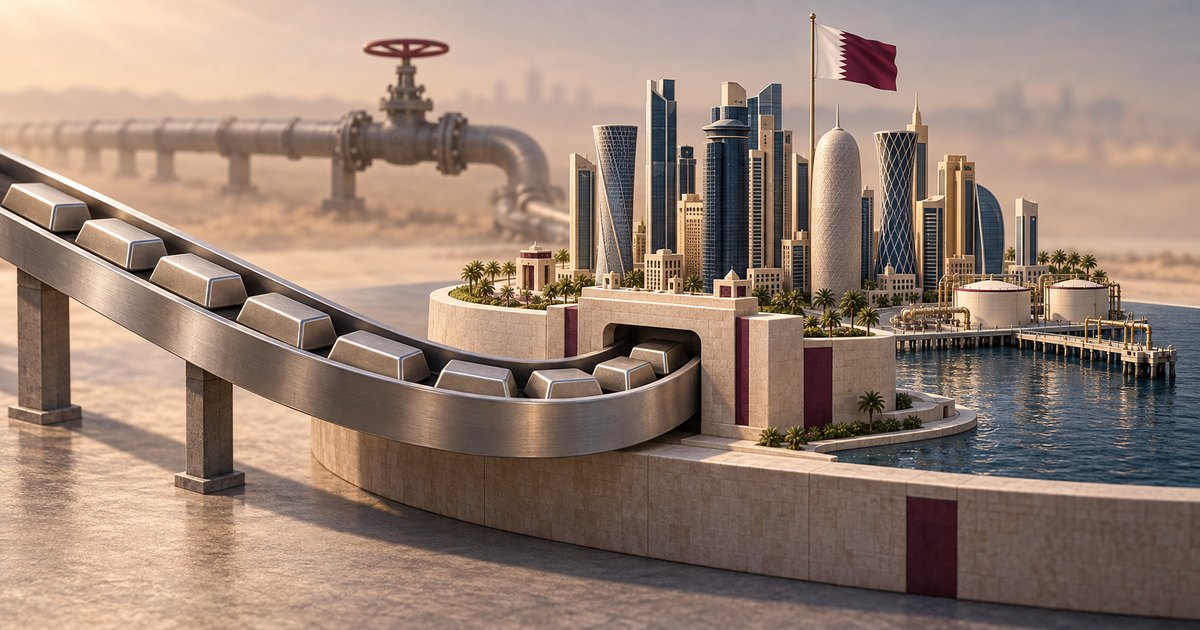
- Ras Laffan LNG production dropped 17% since military escalation began in late February 2026.
- Qatar announced $60 billion five-year domestic investment pipeline: $38.5 billion infrastructure, $22.5 billion real estate.
- PM called for unified Gulf state action to push for US-Iran resolution.
The Economic Toll
Military escalation began in late February 2026 when attacks on Iranian forces triggered retaliatory strikes targeting Gulf energy infrastructure. Sheikh Mohammed described the conflict as an "earthquake" whose aftershocks ripple far beyond the Middle East. For Qatar, the impact is acute: production at the Ras Laffan LNG facilities has been reduced by 17%, even as European and Asian buyers were counting on Qatari volumes to meet demand.
Roughly $20 billion in annual revenue is at risk for the nation. Qatar faces the steepest GDP contraction among Gulf states—a signal of how heavily the country depends on energy exports and how vulnerable that reliance has become in a destabilized region.
The Doha Investment Platform
To insulate its economy from further energy sector damage, Sheikh Mohammed unveiled the Doha Investment platform, a new sovereign investment vehicle housed under the Qatar Investment Authority. The platform will manage a portfolio of approximately 45 state-owned enterprises that collectively represent about one-third of QIA's total assets.
The restructuring reflects a pivot away from dependence on hydrocarbon revenues. Rather than wait for regional tensions to ease, Qatar is redirecting capital inward.
The Five-Year Investment Agenda
Sheikh Mohammed outlined a $60 billion domestic investment pipeline stretching over five years. Of that sum, $38.5 billion is earmarked for infrastructure projects structured through public-private partnerships, while $22.5 billion targets real estate and hospitality development. The scale suggests Qatar intends to rewire its economy toward non-energy sectors even as LNG disruptions persist.
The move also signals a message to other Gulf states: economic diversification is no longer optional. Sheikh Mohammed called for unified Gulf state action to push for a US-Iran resolution, framing coordinated diplomacy as essential to regional recovery. Without it, the economic damage will compound—and Qatar's 8.6% contraction could become a harbinger for the entire region.