Ripple and CSD BR mirror BTG Pactual fund records on the XRP Ledger

In brief
- Ripple and CSD BR announced a first phase mirroring BTG Pactual fund-share records on XRPL.
- CSD BR's systems remain the official record for registration, deposit and settlement.
- RippleX's Markus Infanger counted about $2.7 billion of $6.7 billion in XRPL tokenized assets in Brazil.
- Brazil ranked first in Chainalysis's 2026 adoption index after the firm changed its methodology.
A mirror, not a replacement
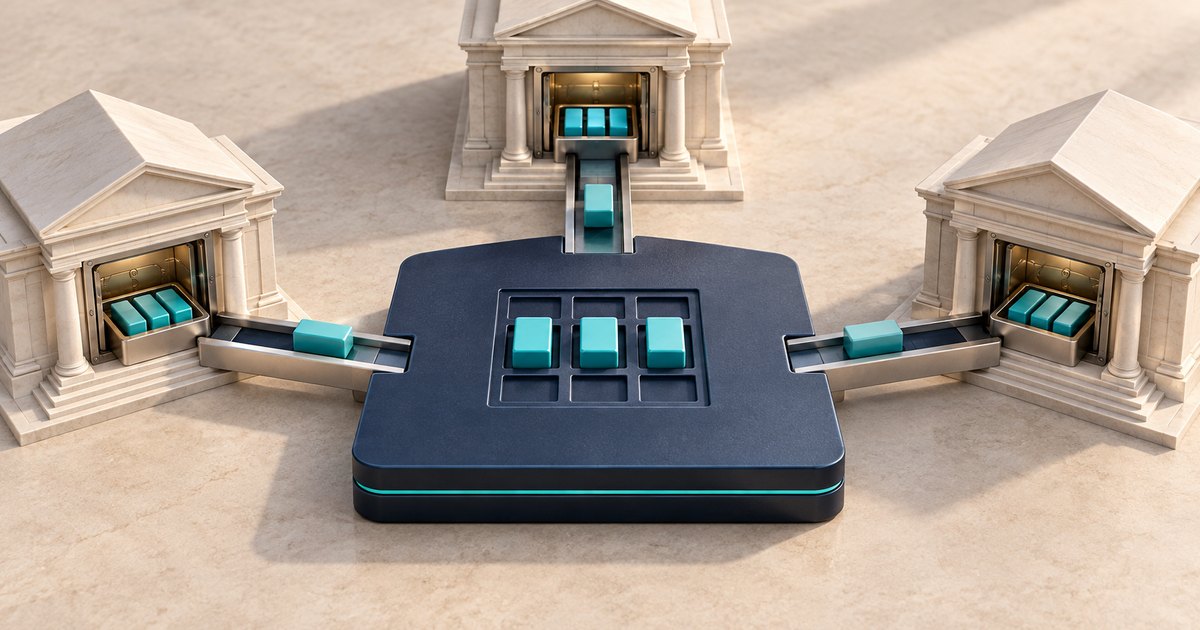
That distinction matters. The ledger copy doesn't replace Brazil's regulated register (it mirrors BTG Pactual fund-share ownership records alongside it).
The announcement came a day after RippleX executive Markus Infanger told Estadão's E-Investidor that about $2.7 billion of the $6.7 billion in tokenized real-world financial assets he counted on XRPL was in Brazil. That's his count, not independently verified data. CryptoSlate calculated it puts roughly 40% of the reported asset value in one country, while noting the figure measures assets rather than payment activity.
Brazil isn't new territory for Ripple.
Years of groundwork
Ripple opened its Brazilian office in 2019 and announced XRP-enabled payments with Travelex Bank in August 2022. Its October 2024 partnership with Mercado Bitcoin initially targeted internal treasury transfers between Brazil and Portugal; the release described corporate and retail international payments as future plans, not live services. Mercado Bitcoin then announced plans in July 2025 to tokenize more than $200 million in permissioned real-world assets on XRPL.
In October 2025, Ripple said VERT's credit platform recorded lifecycle events, documentation and payments on XRPL and its EVM sidechain (VERT's pension-receivables fund held more than R$200 million in net assets at the time). By March 2026, Ripple was expanding its Brazilian offering across payments, custody, prime brokerage and treasury management. It named Banco Genial, Braza Bank and Nomad among payments users, and Mercado Bitcoin, Foxbit and Ripio among platforms listing or supporting its RLUSD stablecoin. Ripple also said it would seek a Brazilian virtual asset service provider license.
CryptoSlate's headline casts all of this as Ripple making Brazil the center of its XRPL tokenization push. That's the publication's read, not Ripple's.
What Chainalysis sees
Chainalysis's 2026 adoption index ranked Brazil first overall, second for cross-border flows, third for service flows and domestic peer-to-peer activity, and fourth for balances. First place doesn't mean the biggest market by raw dollar volume, and a methodology change limits comparisons with earlier rankings.
Chainalysis estimated $252.5 billion in Brazilian crypto activity between July 1, 2025, and June 30, 2026. Its Latin America report found the country's crypto economy contracted 1.6% over that stretch, and it described Brazilian companies using stablecoins for liquidity management and cross-border transfers.
The rules are shifting, too. Brazil's Oct. 1 restrictions were set to bar virtual assets from settling aggregated eFX flows between providers and foreign counterparties (individual international virtual-asset transfers stay permitted).
Frequently asked questions
Does the Ripple and CSD BR project replace Brazil's official securities register?
No. The first phase mirrors BTG Pactual fund-share ownership records using XRPL tokens and Ripple custody. CSD BR's systems remain the official record for registration, deposit and settlement, as reported by CryptoSlate.
How much tokenized real-world asset value on XRPL is in Brazil?
RippleX executive Markus Infanger told Estadão's E-Investidor that about $2.7 billion of the $6.7 billion in tokenized real-world financial assets he counted on XRPL was in Brazil. CryptoSlate calculated that's roughly 40% of the reported value, and noted it measures assets rather than payment activity.
Where does Brazil rank in Chainalysis's 2026 crypto adoption index?
Chainalysis ranked Brazil first overall, second for cross-border flows, third for service flows and domestic peer-to-peer activity, and fourth for balances. First place doesn't mean the largest market by raw dollar volume, and a methodology change limits comparisons with earlier rankings.