Saudi Arabia reroutes crude via Strait of Hormuz after pipeline drone strikes
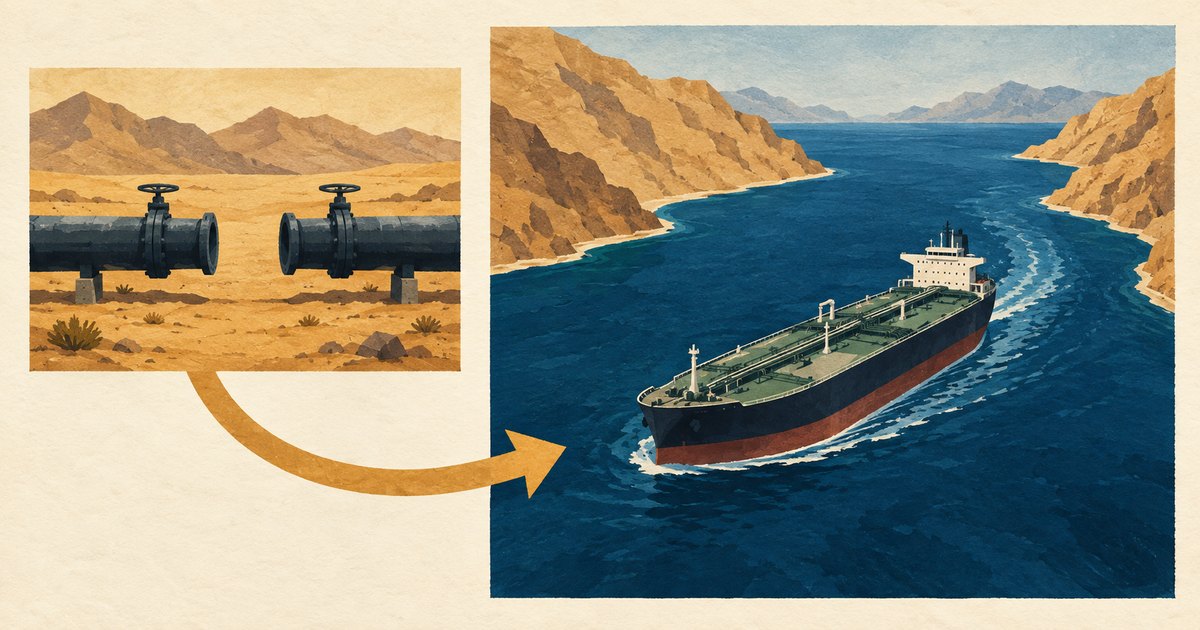
In brief
- Drone strikes shut down the Petroline on September 10, forcing reroute through Hormuz
- Pipeline transported 4-5 million barrels daily, representing 4-5% of global supply
- Brent crude surged to $105-$110 per barrel by September 14
- Repairs estimated at 3-6 weeks; storage capacity sustains only 5-7 days of exports
- Saudi Arabia delayed retaliation after Iraq's PM requested time to address situation
The attack and aftermath
Saudi officials attributed the strikes to drones launched from Iraq's Maysan province. Satellite imagery confirmed major damage, including fires at pumping stations along the route.
Rather than retaliating immediately, the kingdom said it was respecting a request from Iraq's prime minister for time to address the situation domestically. That restraint did little to calm energy markets.
Supply shock and market response
The Petroline was no minor asset. Before the attack, the pipeline was moving 4 to 5 million barrels per day, representing roughly 4% to 5% of global oil supply. Its design capacity is even higher, at up to 7 million barrels per day.
Brent crude prices surged into the $105 to $110 per barrel range by September 14, crossing the psychologically significant $100 threshold. The move reflected not just the immediate supply loss, but the fragility of Saudi Arabia's export position. Saudi crude exports had already fallen to a 13-year low of 3.2 million barrels per day in August, the result of multiple overlapping production cuts and maintenance schedules.
The Hormuz gamble
Now Saudi Arabia faces a hard reality: it's routing oil through the very chokepoint it spent decades trying to avoid. About a fifth of the world's petroleum passes through the Strait of Hormuz on any given day. Escalating tensions involving the US, Israel, and Iran have created recurring friction in the waterway since late February.
Storage capacity at the Yanbu port can only sustain five to seven days of exports at current consumption rates, which means the kingdom can't simply wait out a long repair window. Repair estimates range from three to six weeks. That timeline will shape energy markets and geopolitical calculations across the region for the next month.