SpaceX Secures 35-Year Tax Exemption for $55B Terafab AI Chip Plant
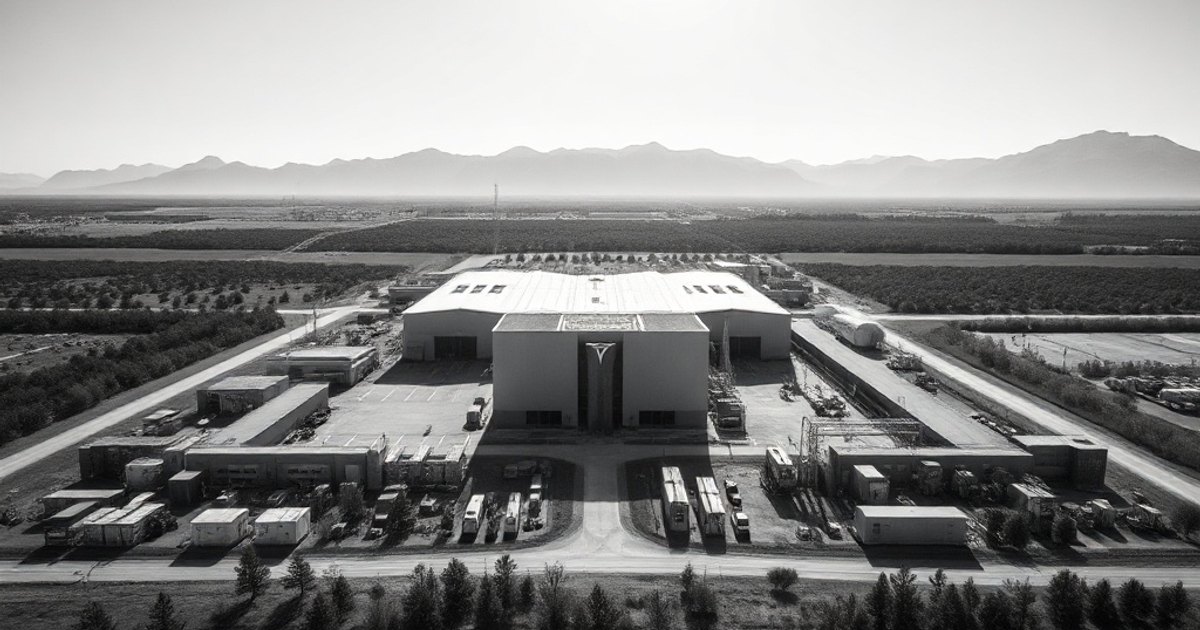
In brief
- Grimes County approved 35-year full property tax waiver for SpaceX's $55B Terafab chip plant in 4-1 vote.
- SpaceX commits $10M upfront and $20M annually, totaling $710M over exemption period.
- Joint venture involves SpaceX, Tesla, and xAI, all controlled by Elon Musk.
- Facility expected to generate approximately 2,000 jobs in rural Texas county.
- Local residents raised environmental impact concerns at June 3, 2026 public hearing.
The Deal Structure
In exchange for the 100% property tax abatement, SpaceX will pay an upfront fee of $10M and annual payments of $20M over 35 years. County officials framed the arrangement as a net win for a rural community near College Station and the greater Houston region. The alternative, they argued, was collecting property taxes on a facility that could eventually represent $119B in total investment.
The math underscores the scale: roughly $27.5M in initial investment per job created. Construction is expected to generate approximately 2,000 jobs in the area, a significant number for Grimes County.
The Joint Venture
The Terafab facility is a joint effort involving SpaceX, Tesla, and xAI, all companies under Elon Musk's control. Each partner has distinct chip needs. Tesla requires custom silicon for its autonomous driving systems and humanoid robots. xAI requires compute power for its Grok models. SpaceX's role centers on producing advanced AI chips, logic and memory semiconductors, and packaging components at what could become one of the world's largest chip fabrication plants.
This structure reflects a broader shift. Rather than relying on Asian foundries, the largest tech companies are moving toward onshore chip production under direct corporate control.
Community Pushback
Not everyone backed the deal. A 4-1 vote suggests opposition wasn't trivial. One commissioner broke ranks, reflecting concerns that were clearly present during the public hearing on June 3, 2026, where local residents voiced concerns about environmental impacts and the scale of tax incentives offered to SpaceX. Semiconductor fabrication is capital and energy-intensive, and rural communities often shoulder infrastructure burdens that tax exemptions don't offset.