Tesla Optimus production surges tenfold, supply chain remains challenging
In brief
- Tesla increased Optimus production tenfold, targeting 1,000 units per week by end of 2026
- Elon Musk warns supply chain development is 'extremely challenging' with components built from scratch
- Current output focuses on internal factory use; external sales remain limited
- Tesla designs successive production lines to scale from 1,000 monthly units to 10,000+ per month
Supply Chain Bottlenecks
Elon Musk has described the process of establishing the necessary supply chain as "extremely challenging," noting that much of it is being developed "almost from scratch." Many of the parts needed for Optimus either don't exist at the required specifications or aren't manufactured at the volumes Tesla will eventually need. This constraint shapes the near-term reality: initial production rates will be "agonizingly slow," by Musk's own admission.
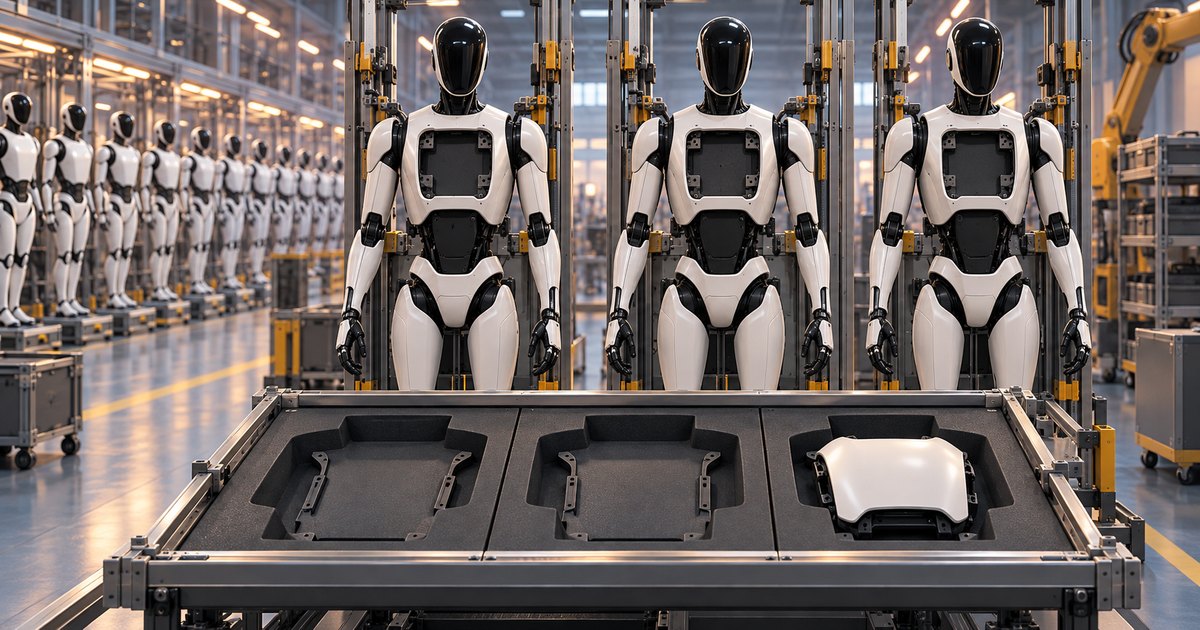
Tesla began producing Optimus at its Fremont facility around late July or August 2026, with initial capacity targets sitting at around 1,000 units per month. That figure contrasts sharply with the tenfold acceleration already announced. The gap reflects Tesla's phased approach: successive generations of production lines are being designed to push output toward 10,000 units per month and higher.
Current Deployment and Market Outlook
Current production is focused almost entirely on internal factory usage rather than external sales. This aligns with Tesla's guidance from early 2026, which anticipated low-volume internal deployment in the 2025-2026 window followed by eventual market sales. Supply-chain data from September 2026 points to orders for roughly 15,000 Optimus units, suggesting institutional interest is building even as commercial availability remains limited.
Investor sentiment has shifted. The market has reacted positively to Tesla's production milestones, with the company's share price benefiting from tangible evidence that Optimus is progressing beyond the concept stage. Analysts have speculated that Optimus could eventually be priced below $30,000 per unit once full commercialization is achieved, though that threshold remains years away given current constraints.
The production ramp signals Tesla's commitment to the robotics bet. Yet supply chain friction and the company's own candor about slow initial rates suggest the path from prototype to scale won't be smooth.