Trump and Lee Jae Myung announce $350B investment deal progress
In brief
- Trump and Lee met at UN General Assembly on September 22 to discuss $350B bilateral investment deal
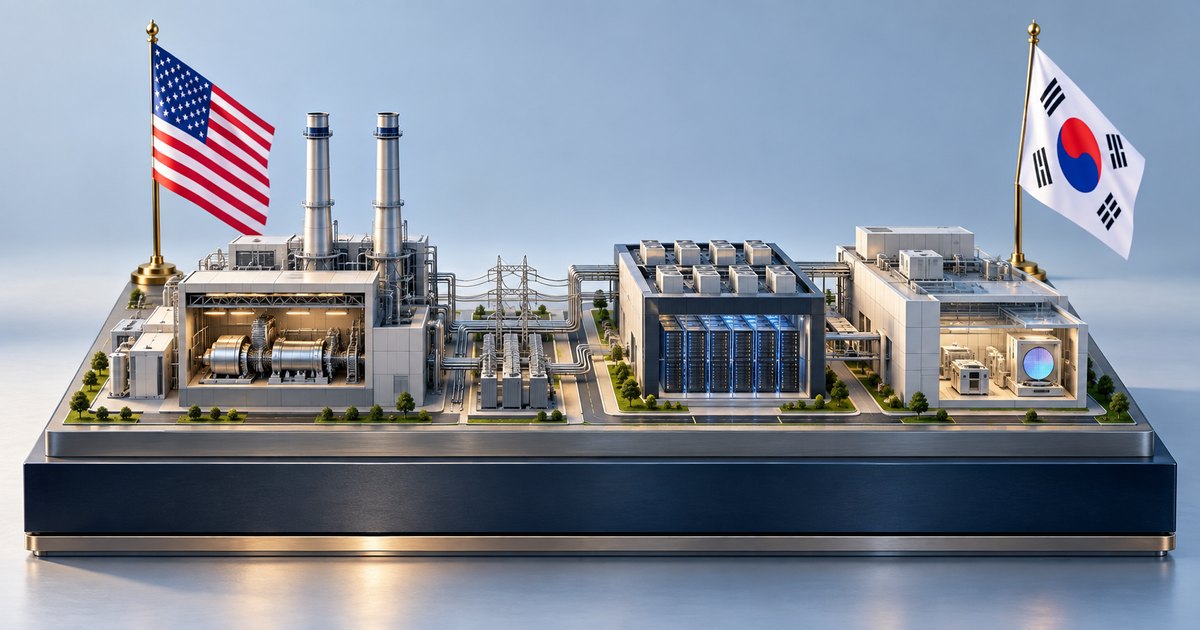
- $22.3B gas-fired power plant in Encinal, Texas will generate 6.3 gigawatts for AI data centers and chip fabrication
- US tariffs on South Korean goods reduced from 25% to 15% under agreement terms
- South Korea parliament passed implementing legislation March 12, 2026; annual investment capped at $20 billion
The Texas Power Plant
The centerpiece is a $22.3 billion gas-fired power plant in Encinal, Texas, designed to generate 6.3 gigawatts of electricity. That capacity is enormous—roughly enough to power several million homes or large-scale AI computing and chip fabrication. The facility will anchor the broader strategic partnership between Washington and Seoul.
The deal was originally set in motion in July 2025, when the two countries agreed on a broad framework. South Korea's parliament passed implementing legislation on March 12, 2026. The total package breaks down into $200 billion earmarked for strategic sectors and $150 billion for shipbuilding cooperation.
Tariff Relief and Investment Caps
US tariffs on South Korean goods drop from 25% to 15%, a meaningful discount for Korean exporters. Korean automakers like Hyundai and Kia have been expanding US production to sidestep tariffs, and electronics giants like Samsung and LG stand to benefit similarly from the reduction.
Both sides agreed to an annual investment cap of $20 billion to prevent the arrangement from draining South Korea's foreign exchange reserves. The annual cap means this deal will take well over a decade to fully deploy.
What's Still Under Review
Two additional initiatives remain under review and have not received formal approval. Discussions between Trump and Lee also touched on nuclear-powered submarines, shipbuilding cooperation, and the transfer of wartime operational control. A proposed Alaska LNG pipeline and nuclear reactor projects are among the items still being evaluated.
Critics in Seoul had questioned whether the deal's commercial viability justified the scale of financial commitment. The sheer capital required—$20 billion annually—represents a significant bet on long-term US-Korea strategic alignment.