US Treasury Pushes G7 Coordination on China's $1.2T Trade Surplus
In brief
- Treasury Secretary Bessent pushes G7 allies for coordinated response to China's $1.2T trade surplus
- China's goods trade surplus hit record $1.2 trillion in 2025; US deficit fell 33% in H1 2026
- G7 explores alternative rare earth suppliers in Australia, India, and Canada to reduce China dependence
- September 2026 G20 meetings in Asheville saw 19 of 20 members back non-market trade policy language
The surplus problem
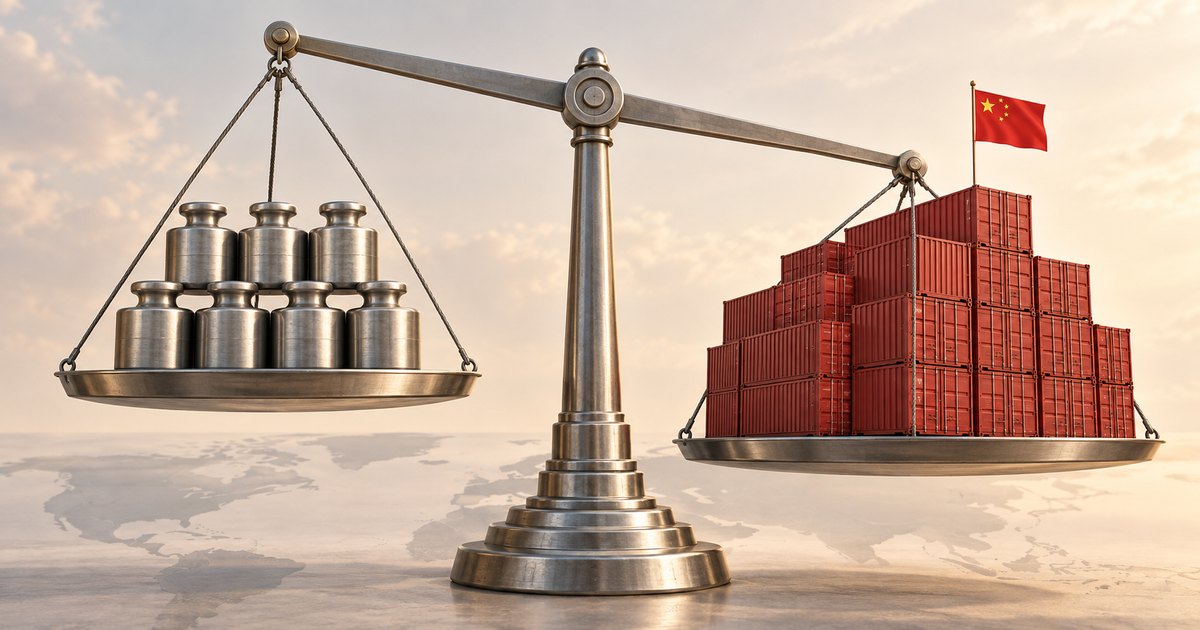
China's goods trade surplus hit a record $1.2 trillion in 2025, a figure Bessent has repeatedly characterized as unsustainable. Yet the picture is more complex than raw numbers suggest. The US trade deficit with China fell to $73.9 billion in the first half of 2026, roughly one-third lower than the same period a year earlier. That improvement masks a deeper problem: Chinese exports aren't disappearing—they're being rerouted to other markets, flooding allies with the same goods that US tariffs redirected.
Bessent's position reflects a shift in Washington's thinking. Tariffs alone haven't solved the structural imbalance. The solution, he believes, requires allied pressure on Beijing's non-market policies.
G7 escalation
Coordination began quietly. As early as January 2026, G7 discussions centered on critical minerals supply chains, with a particular focus on reducing China's dominant position in rare earths. By May 2026, G7 leaders were leveraging IMF data to quantify the impact of China's export practices on global trade.
The effort reached its peak in September. The September 2026 G20 finance ministers' meetings in Asheville, North Carolina, represented the most ambitious attempt yet to formalize consensus on China's trade practices. Nineteen of the G20's members supported language calling for the elimination of non-market policies that contribute to trade imbalances. But China blocked certain language in the chair's statement, preventing a full joint communique.
Supply chain alternatives
The G7's strategy hinges on alternatives. China currently dominates global processing of rare earth elements, a chokepoint in semiconductors, defense systems, and renewable energy. Australia's abundant lithium reserves, India's rare earth deposits, and Canada's mining sector are all potential beneficiaries of a deliberate shift away from Beijing.
This isn't about isolating China. It's about building redundancy into supply chains that currently depend on a single nation for critical inputs. Whether the G7 can actually execute that shift—and whether Beijing will respond with its own retaliatory measures—remains an open question.