Westinghouse files for $50B IPO on nuclear energy surge
In brief
- Westinghouse filed confidentially for $50B+ IPO on July 31 with Citigroup and Goldman Sachs as lead underwriters.
- AP1000 reactor design powers 57% of global operational nuclear reactors, generating long-term recurring revenue.
- Nuclear demand surges from AI data center electricity needs and expanded US federal financing for new projects.
- Brookfield Renewable Partners (51%) and Cameco Corp. (49%) own Westinghouse, acquired for ~$8B in late 2023.
- Confidential S-1 registration could go public as soon as October 2026.
The comeback story
Westinghouse's path to the public markets marks a dramatic turnaround. The company emerged from Chapter 11 bankruptcy in 2018 after years of project overruns and financial strain. Brookfield Renewable Partners and Cameco Corp. acquired Westinghouse for roughly $8 billion in late 2023, positioning the pair as majority owners. At a $50 billion valuation, Brookfield's 51% stake would be worth roughly $25.5 billion and Cameco's 49% would be worth around $24.5 billion.
Citigroup and Goldman Sachs are tapped as lead underwriters for the offering. The confidential S-1 registration could become public as soon as October 2026.
Technology and market position
Westinghouse's competitive moat runs deep. The company's AP1000 reactor design, a pressurized water reactor, represents the most widely deployed advanced nuclear technology in the world. The AP1000 uses passive safety systems that rely on natural forces like gravity and convection rather than active mechanical components — a critical advantage in an era of heightened safety scrutiny.
Westinghouse's technology underpins over 57% of operational nuclear reactors globally. This installed base creates a recurring revenue stream from fuel assemblies, maintenance, and upgrades that persists for the 60-to-80-year lifespan of a nuclear plant. That durability appeals to institutional investors hunting for predictable, long-duration cash flows.
The company reports a pipeline of up to 91 opportunities for deploying its latest generation of reactors, reflecting surging demand from both developed and emerging economies.
Why now?
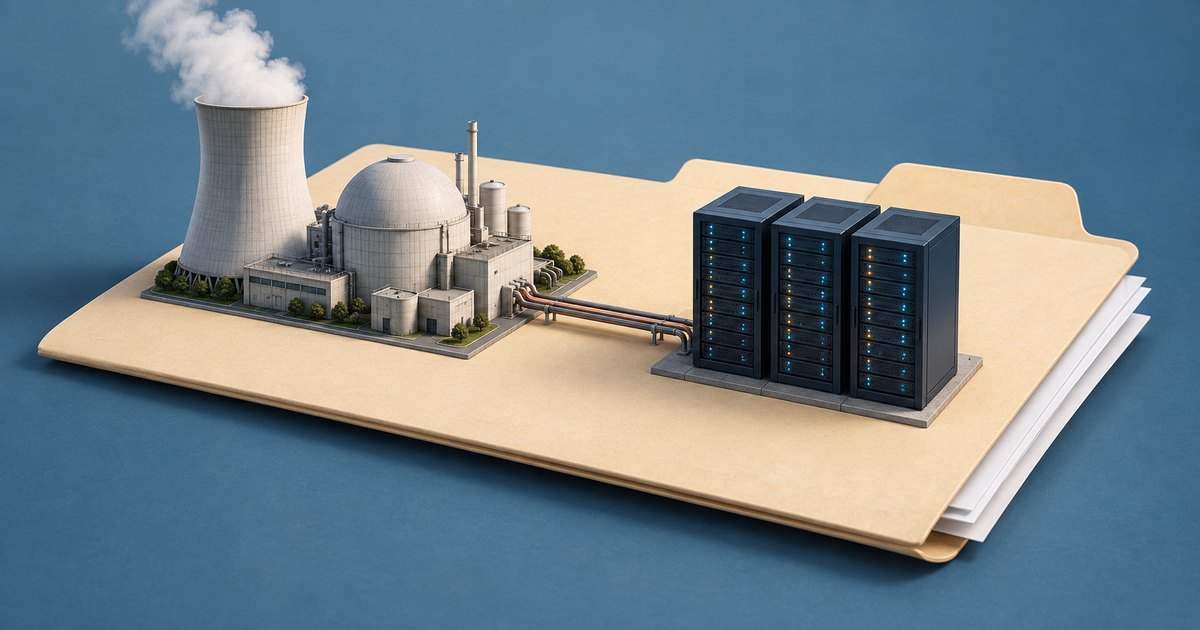
Three structural forces converge to create a pro-nuclear environment. First, data centers required to train and run AI models consume staggering amounts of electricity. Second, nuclear provides baseload power around the clock, unlike solar and wind. Third, US policy has shifted decisively in nuclear's favor, with federal financing for new nuclear developments expanded and bipartisan support solidified.
The Vogtle expansion in Georgia, which uses Westinghouse's AP1000 technology, did come in years late and billions over budget. But that project's eventual completion, and the political will behind it, signals that the US is willing to absorb nuclear's capital intensity for energy security and decarbonization goals.
An October 2026 public filing would give Westinghouse a runway to fine-tune its prospectus and capitalize on the momentum building around nuclear infrastructure investment.