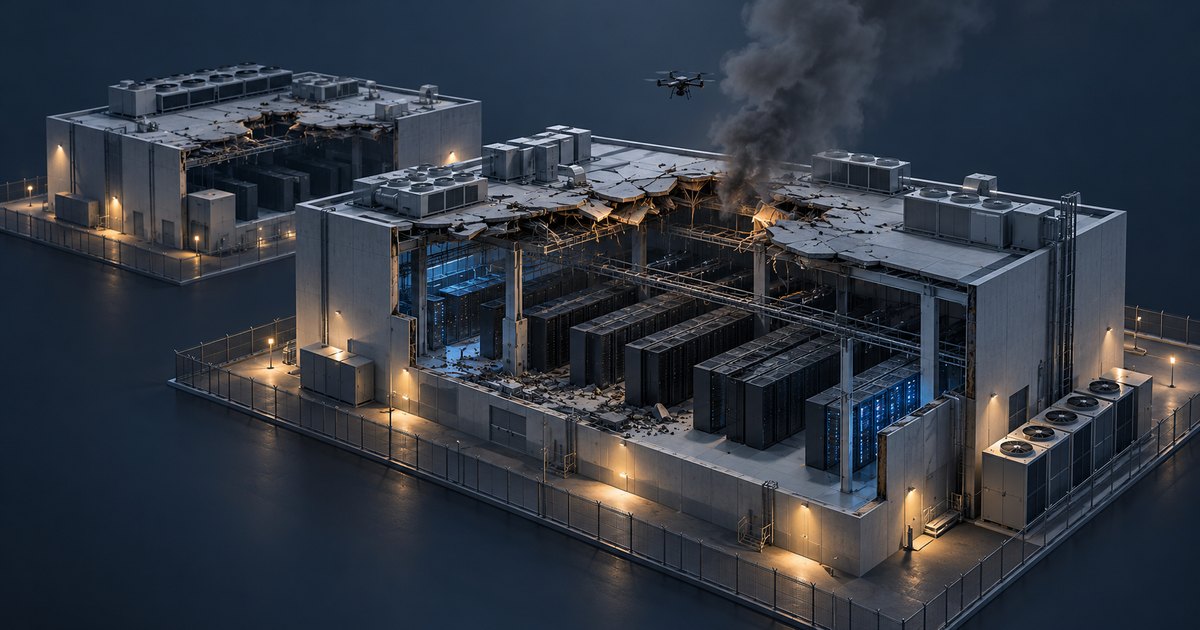
Accelerated Understanding launches neural operator AI to challenge transformer dominance
In brief
- Neural operators replace transformers, learning physical rules instead of predicting sequences.
- Model handles 1 trillion training tokens, 5 trillion at inference, with 1 trillion parameters.
- Co-founders: Anima Anandkumar (ex-NVIDIA) and Benedikt Jenik target energy, chip design, robotics, weather, pharma.
- Major departure from industry consensus as OpenAI, Meta, and competitors standardize on transformers.
A Physics Engine, Not a Sequence Predictor
Neural operators work fundamentally differently from the transformer models that power ChatGPT, Claude, and Gemini. Nearly every major model from OpenAI, Anthropic, Google, Meta, and Mistral uses some variation of the transformer. Accelerated Understanding's approach reverses that logic.
"A neural operator is more like a physics engine that learns the underlying rules governing how systems evolve over time. Instead of predicting the next word, it predicts how a fluid flows, how heat dissipates, or how a structure deforms under stress."
The distinction matters for domains where traditional deep learning hits a wall. Aerospace companies currently spend enormous computational budgets on fluid dynamics simulations. Pharmaceutical firms run molecular dynamics calculations that can take weeks. These workloads don't need language prediction—they need physics inference.
Scale and Scope
The numbers are substantial. The model operates in 4D, processing three-dimensional space plus time. During training, the model can handle up to 1 trillion tokens, and at inference, it exceeds 5 trillion tokens. In testing, the company demonstrated the ability to process 5 trillion data points in a single prompt. The model has also been scaled to 1 trillion parameters in pre-training.
Why This Matters
Accelerated Understanding's launch represents one of the most prominent departures from transformer consensus in the AI industry. Anandkumar brings credibility to the bet—she previously served as director of machine learning research at NVIDIA. Before founding Accelerated Understanding, Anandkumar and Jenik were approached to lead Project Prometheus, a venture backed by Jeff Bezos, which they declined.
The startup's bet is that transformer homogeneity has left room for specialized architectures to dominate specific problem spaces. Whether neural operators can scale to general-purpose reasoning remains an open question. But for simulation-heavy industries, the model's ability to learn physical laws directly—not through next-token prediction—could reshape how expensive computations get done.