Anthropic launches biology lab to test Claude in drug discovery
In brief
- Anthropic established physical biology labs with bench scientists to run Claude-driven drug discovery experiments.
- Claude Science integrates 60+ scientific databases, already deployed by Novo Nordisk and AstraZeneca.
- Claude-designed protein binders achieved 22-35% hit rates, nearly double the 10-15% industry benchmark.
- Life Sciences Verification Program grants up to $1M in credits for protein design competitions.
Claude moves from prediction into the wet lab
Claude Science, an AI workbench Anthropic launched on June 30, 2026, integrates over 60 scientific databases and deploys specialized agents for genomics, proteomics, and computational biology. The platform runs on existing Claude models, including Opus 4.8, and is already being used by pharmaceutical heavyweights Novo Nordisk (the Danish company behind blockbuster GLP-1 drugs) and AstraZeneca (one of Europe's largest pharmaceutical firms).
Anthropic is pursuing its own internal drug discoveries, specifically targeting rare and neglected diseases. These conditions affect small patient populations and typically don't generate the revenue needed to justify traditional pharma R&D. But if AI can dramatically reduce the cost and time of early-stage discovery, diseases that were previously uneconomical to pursue could become viable targets.
Performance and verification
In August 2026, Anthropic published experiments showing Claude models had designed protein binders against 15 different targets with a hit rate of 22-35%. That's well above the typical industry benchmark for protein binder design, which sits around 10-15%. The result echoes Google DeepMind's AlphaFold, which transformed protein structure prediction and won a Nobel Prize.
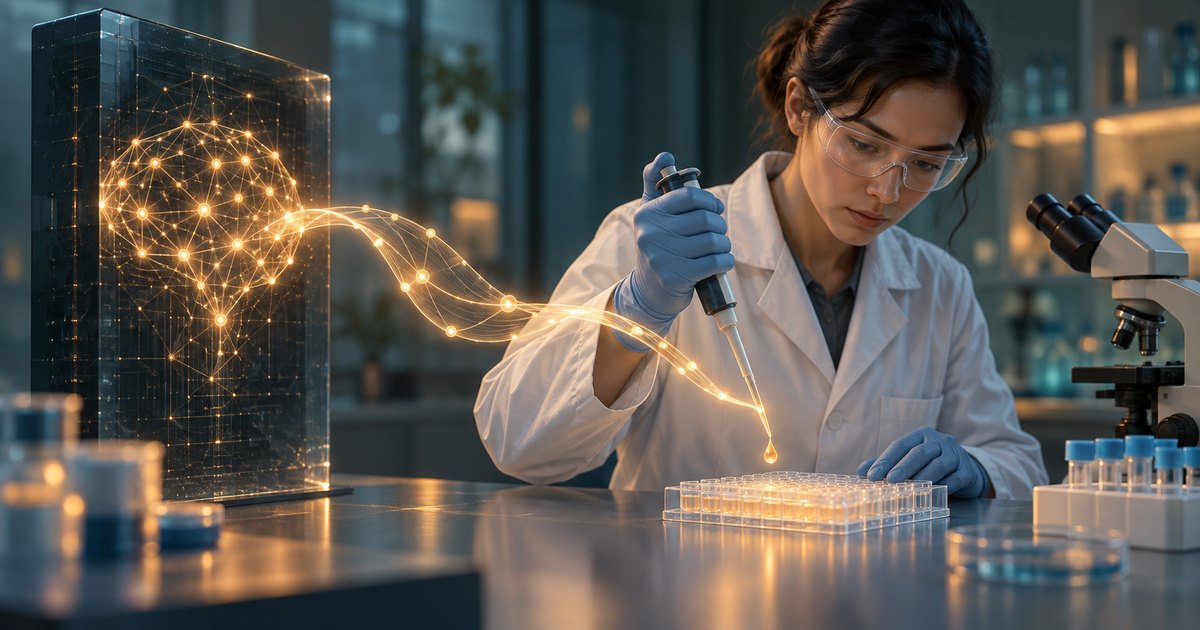
Anthropic's approach works as a feedback loop. The AI generates hypotheses and designs molecules computationally, then human scientists test those predictions at the bench, and results flow back to improve models. It's not pure automation — it's human-AI collaboration at the bench level.
On September 17, 2026, Anthropic introduced its Life Sciences Verification Program to expand access to Claude's biology capabilities. The program offers grants for both standard and high-risk biology use cases. It also includes a protein design competition with up to $1M in credits available.
Why this matters
A typical new drug costs well over a billion dollars to develop, and most of that expense comes from high failure rates at every stage of the pipeline. If Claude can meaningfully reduce those failure rates in early discovery, the economics of drug development shift. Rare diseases become addressable. Small biotech teams gain leverage. The bottleneck moves from computational biology into the physical lab — which is exactly where Anthropic is now investing.