Broadridge says its blockchain repo platform averaged $359 billion a day in September

In brief
- Broadridge's DLR repo platform averaged $359 billion a day in September, CryptoSlate reported.
- Monthly activity reached $7.5 trillion, a measure of processed activity, not loans outstanding.
- Securities remain in established custody, represented by digital tokens on a shared record.
- OFR estimated more than $8 trillion in Treasury-backed repo outstanding in August 2025.
What a repo actually is
A repurchase agreement (repo, for short) is a simple idea. One institution temporarily sells securities, often government bonds, to another for cash, and agrees to buy them back later at a slightly higher price. Money market funds, banks and other institutions with cash on hand sit on the lending side, while securities dealers, banks and hedge funds use repo to finance bond inventories or trading positions.
It's a big market. The Office of Financial Research estimated that more than $8 trillion in Treasury-backed repo was outstanding in August 2025.
How Broadridge's DLR works
Broadridge's distributed ledger repo system (usually shortened to DLR) gives participants a shared record of the transaction. According to Broadridge's explanation, the underlying securities are held within established custody arrangements and represented by digital tokens. That matters, because borrowing for only two hours means the parties have to establish which securities are available, who controls them, whether money has arrived and when collateral can be returned.
The headline number needs context.
Not every transaction the platform processes is an intraday loan, and the figures measure activity rather than loans outstanding. So $359 billion a day isn't the same thing as $359 billion lent out.
Why a few hours matter
CryptoSlate offered a hypothetical to show what's at stake. A firm borrowing $1 billion overnight at a 5% annualized rate would pay about $138,889 for one day under the usual 360-day money-market convention. Two hours at that rate, priced on a simple proportional basis, works out to roughly $11,574 (a theoretical difference of $127,315).
The publication was clear that this isn't a rate Broadridge offers. Intraday deals have their own rates, so the math is an illustration, not a quote.
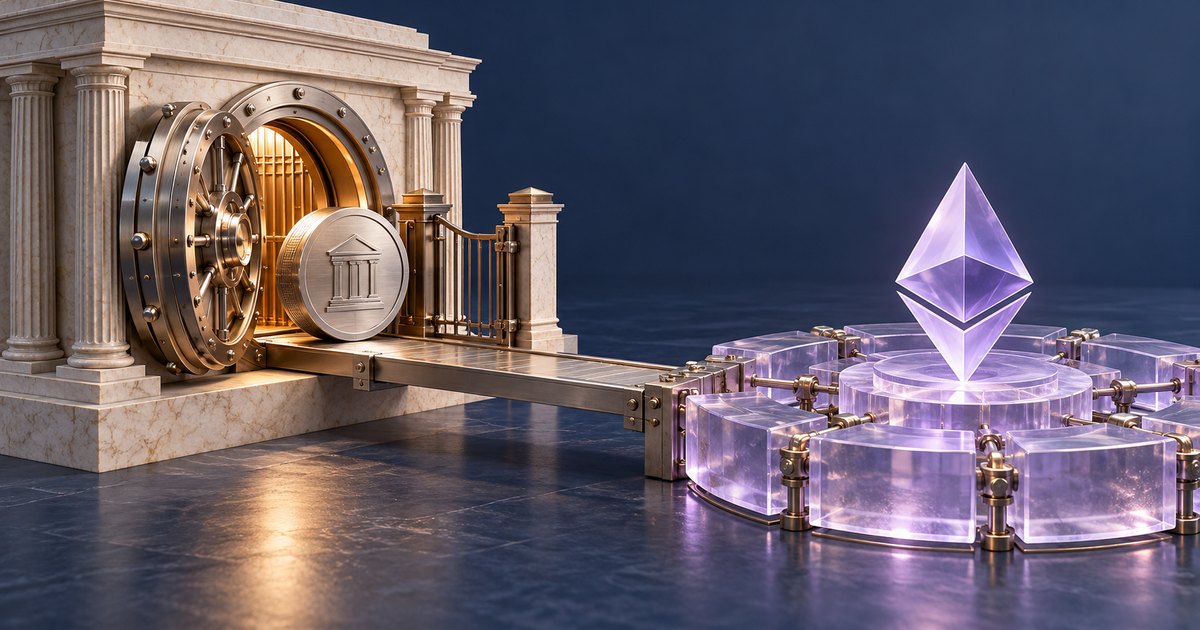
What's left is a fairly plain use for a ledger. Bonds stay with their custodians, tokens represent them on a shared record, and institutions can sometimes borrow for a few hours instead of overnight.
Frequently asked questions
What is a repo transaction?
A repurchase agreement is when one institution temporarily sells securities, often government bonds, to another for cash, agreeing to buy them back later at a slightly higher price. Money market funds and banks typically lend, while dealers, banks and hedge funds use repo to finance bond inventories or trading positions.
Does $359 billion a day mean Broadridge's platform lent that much?
No. According to CryptoSlate, Broadridge's figures measure processed activity rather than loans outstanding, and not every transaction on the platform is an intraday loan.
How does Broadridge's DLR use blockchain technology?
Broadridge's distributed ledger repo system, known as DLR, gives participants a shared record of the transaction. Per Broadridge's explanation, the underlying securities stay within established custody arrangements and are represented by digital tokens.