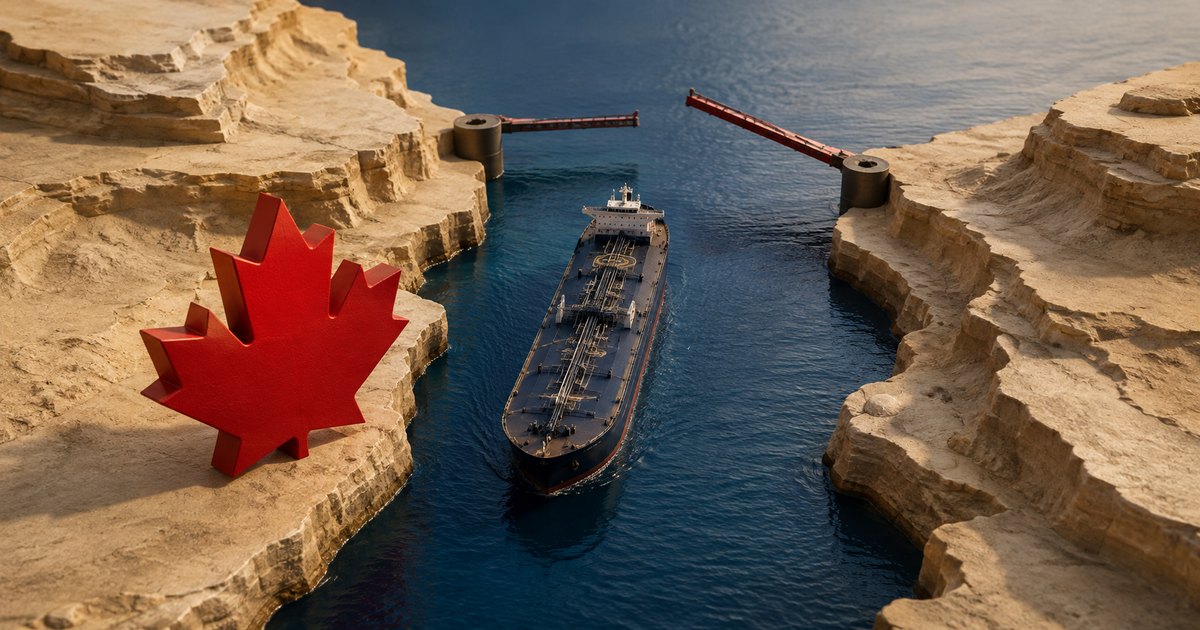
Canada backs US-led push to reopen Strait of Hormuz, sanctions Iran
In brief
- Canada formally backed US, French, and British campaign to reopen Strait of Hormuz
- Five Iranian individuals sanctioned in August 2026 for obstructing navigation rights
- Strait handles roughly 20% of global oil supply and significant LNG trade
- Canada conditioned logistical involvement on establishment of durable ceasefire
- Energy prices and transport costs spiked as traders priced in disruption risk
Sanctions and Diplomatic Pressure
Canada has now sanctioned 492 Iranian individuals and entities under its Special Economic Measures Act since 2010. The country expanded that list in August 2026, targeting five additional Iranian individuals for alleged efforts to obstruct navigation rights in the strait. Prime Minister Mark Carney signaled willingness to contribute expertise in areas like demining and cyber support, but with a key condition: Canada has conditioned logistical involvement on the establishment of a durable ceasefire.
Why This Matters for Energy Markets
The strait typically handles roughly 20% of the world's oil supply and a significant share of global liquefied natural gas trade. Disruption hits hard. Energy prices spiked as traders priced in the risk of prolonged disruption, and transport costs climbed as shipping companies rerouted vessels or demanded higher premiums for strait transit.
The current standoff traces back to February 2026, when US and Israeli military strikes on Iran prompted Tehran to issue threats about restricting military transit through the Strait of Hormuz. That threat rippled across global supply chains.
Diversification on the Agenda
G7 discussions have increasingly focused on diversifying energy routes precisely because of this vulnerability. Canada, as a major energy producer, has been identified as a potential contributor to alternative supply arrangements. The reopening campaign isn't just diplomacy—it's a play to stabilize global energy markets and reduce leverage any single chokepoint holds over the world economy.