China achieves mass production of ultra-pure silicon-28 for quantum computing

In brief
- China National Nuclear Corporation achieves independent mass production of silicon-28 with 99.99% isotopic purity
- Silicon-28's zero nuclear spin reduces environmental interference and extends qubit coherence time
- Industrial-scale production shifts quantum hardware from laboratory batches amid US export controls
Why Silicon-28 Matters for Quantum Computing
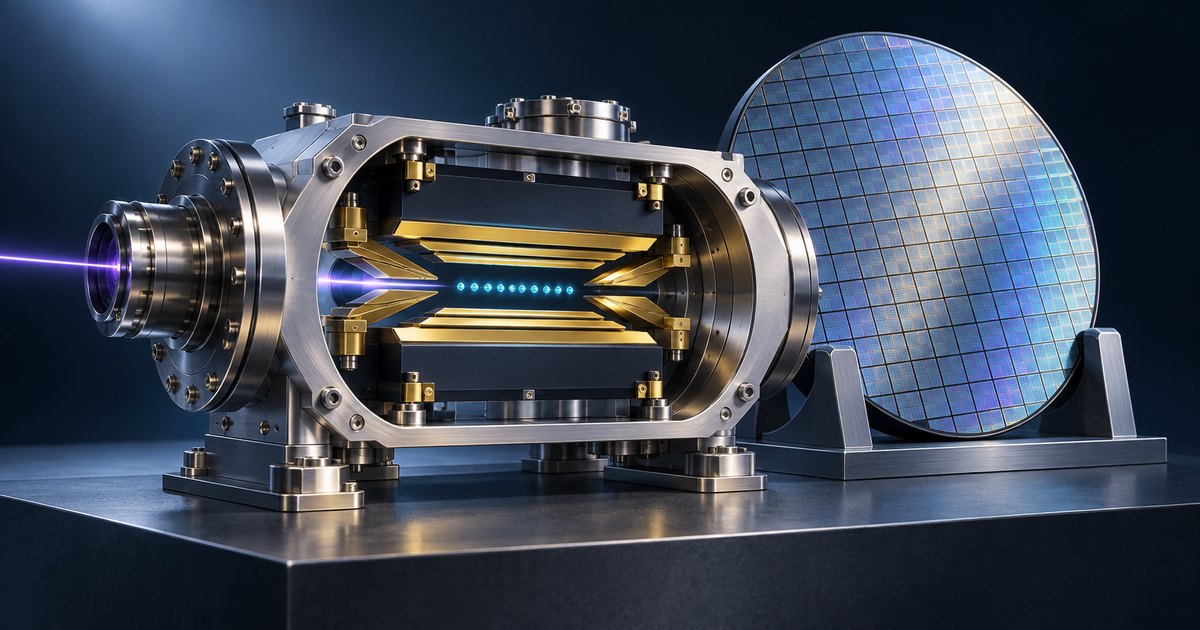
Silicon-28 has zero nuclear spin, which dramatically reduces environmental interference in quantum systems. Regular silicon contains a messy mix of isotopes, some of which have nuclear spin that creates noise interfering with qubits. Qubits built on silicon-28 substrates maintain their quantum states for longer periods, a property called coherence time. Longer coherence means more reliable calculations and better control precision.
Autonomy Amid Export Controls
The US has spent recent years tightening export controls on advanced semiconductors and chipmaking equipment to China. By developing silicon-28 production domestically, CNNC reduces dependence on international suppliers for a material that could become export-restricted at any moment. The ability to mass-produce this material, rather than create it in small laboratory batches, is what makes the announcement significant for scaling quantum hardware.
Implications for the Quantum Race
Google and IBM have invested heavily in superconducting qubit architectures as part of the global quantum computing race. The development intensifies competition, particularly as quantum systems mature. Beyond computing, quantum advances carry cryptographic implications. Bitcoin's ECDSA and SHA-256 hashing are theoretically vulnerable to sufficiently powerful quantum computers running Shor's algorithm and Grover's algorithm. Ethereum co-founder Vitalik Buterin has discussed quantum resistance as a long-term priority. China's silicon-28 breakthrough underscores why quantum-safe cryptography remains a critical focus for blockchain networks.
Frequently asked questions
What is silicon-28 and why does it matter for quantum computing?
Silicon-28 is an isotope of silicon with zero nuclear spin, which dramatically reduces environmental interference in quantum systems. Regular silicon contains mixed isotopes that create noise interfering with qubits. Silicon-28 allows qubits to maintain their quantum states for longer periods (coherence time), enabling more reliable calculations and better control precision.
Why is China's mass production of silicon-28 significant?
China shifted from laboratory batches to industrial-scale production, reducing dependence on international suppliers amid US export controls on semiconductors and chipmaking equipment. This domestic capability prevents potential supply chain disruptions from export restrictions and strengthens China's quantum computing autonomy.
How does quantum computing threaten Bitcoin and Ethereum?
Bitcoin's ECDSA and SHA-256 hashing are theoretically vulnerable to sufficiently powerful quantum computers running Shor's algorithm and Grover's algorithm. Ethereum co-founder Vitalik Buterin has discussed quantum resistance as a long-term priority, highlighting why blockchain networks must develop quantum-safe cryptography.