China records $119B trade surplus in August, extending $100B streak
In brief
- China's August trade surplus reached $119B, extending three consecutive months above $100B threshold
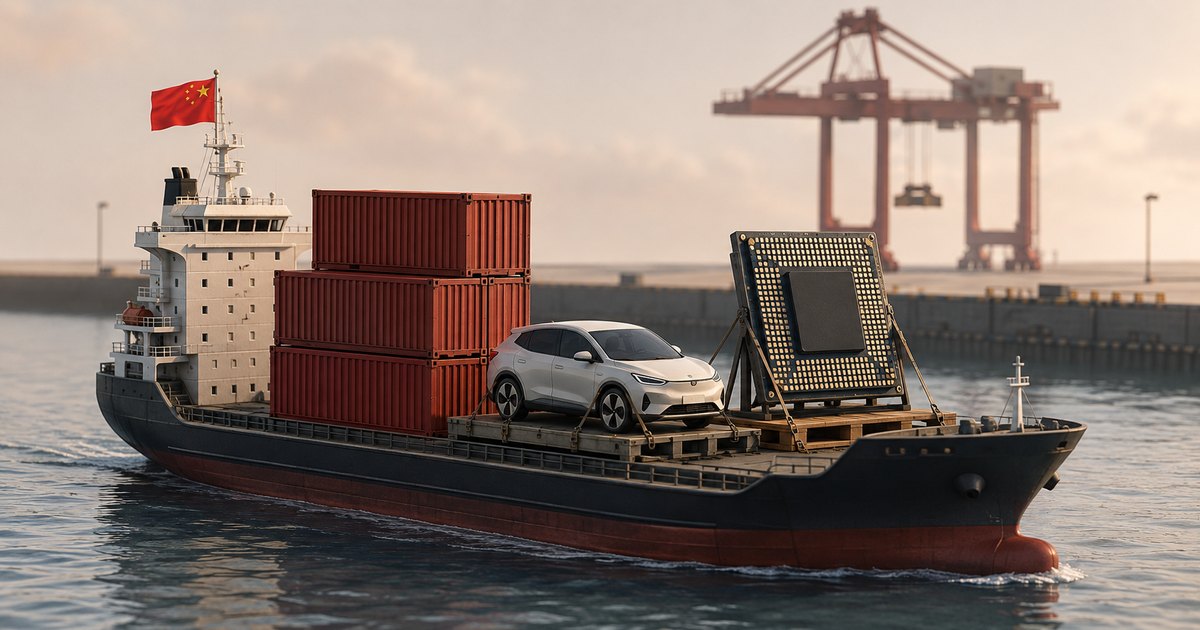
- High-tech exports—semiconductors, EVs, solar panels—now anchor China's trade model, replacing cost-based competitiveness
- US and EU tariff threats prompted front-loaded shipments as exporters accelerate goods delivery before duties
- Domestic headwinds persist: subdued consumer spending, property sector weakness, manufacturing PMI contraction
Export momentum driven by high-tech goods
China's exports in July totaled $397.85 billion, up 23.9% year-over-year, while imports reached $285.35 billion, up 27.5%. The widening gap reflects a structural shift in China's export composition. High-tech goods—particularly semiconductors and electric vehicles—have become core growth engines, replacing the low-cost manufacturing model that once defined Chinese competitiveness.
China's dominance in green technology manufacturing, from solar panels to EV batteries, has transformed its export model from cost-driven to technology-based. This reorientation reflects both domestic industrial policy and global demand for decarbonization. China's cumulative trade surplus from January through August exceeded $806 billion, underscoring the scale of this export engine.
Tariff uncertainty and front-loaded shipments
Trade tensions with major economies are reshaping export timing. Tariff uncertainty has incentivized front-loaded shipments, where exporters rush goods out before potential duties take effect. China's trade surplus with the US narrowed slightly to approximately $28 billion in July, down from $28.86 billion in June, signaling some drag from bilateral frictions.
The European Union has already moved on tariffs targeting Chinese electric vehicles, while the US maintains a sprawling regime of duties on Chinese goods spanning technology, steel, and consumer products. These headwinds may accelerate near-term export surges but risk dampening longer-term demand.
Domestic demand remains the weak link
Strong export orders mask persistent internal fragility. China's manufacturing PMI remained in contraction territory in August, even as strong export orders point to an economy heavily reliant on external demand. China's consumer spending has remained subdued relative to pre-pandemic trends, and the property sector continues to weigh on household wealth and confidence.
The trade surplus, while headline-impressive, reflects an economy tilted toward production for export rather than domestic consumption. At the current pace, China is on track to exceed $1 trillion in annual trade surplus—a figure that will likely intensify scrutiny from trading partners already grappling with tariff strategies.