Data centers adopt PFAS cooling for AI amid environmental concerns
In brief
- Data centers submerge AI servers in PFAS-based dielectric fluids to handle extreme cooling demands
- PFAS 'forever chemicals' persist in the environment and pose contamination risks
- Chemours claims 90%+ energy savings and near-zero water use, but no major deployments confirmed
- Communities in North Carolina and Virginia raised alarms about PFAS contamination risks
- Operators are investing in alternative cooling technologies to hedge regulatory risk
The efficiency case
Rack power densities have increased from 10-15 kilowatts to 100 kilowatts or more in recent years, straining traditional air cooling. Chemours, the leading supplier, claims its Opteon 2P50 fluid can cut cooling energy consumption by more than 90% and reduce water use to near zero. Nvidia has cited efficiency gains of up to 300x with advanced cooling solutions. Microsoft, meanwhile, has publicly committed to reducing water consumption at its data centers by 31-52%, with some facilities targeting near-zero on-site water use.
These gains matter. AI training consumes enormous amounts of water for cooling. Immersion systems promise to slash that burden while handling the thermal load that traditional infrastructure can't manage.
The environmental reckoning
But there's a catch. PFAS earned their "forever chemicals" nickname because their carbon-fluorine bonds are among the strongest in organic chemistry. They don't degrade naturally in the environment. Environmental assessments cite a 0.7% annual evaporative loss rate from these cooling systems, meaning the fluids escape into soil and groundwater over time.
Communities in North Carolina and Virginia have already raised alarms about PFAS contamination risks near existing chemical facilities. Earthjustice, the environmental law nonprofit, has challenged the EPA's expedited review process for these cooling chemicals, arguing that fast-tracking approval contradicts precautionary principles.
The deployment gap
Despite the efficiency promise, no major commercial deployments of the latest generation PFAS cooling fluids have been publicly confirmed as of mid-2026. That gap is telling. Regulatory uncertainty, community opposition, or other friction may be slowing rollout timelines.
A September 2026 report from ChemSec found that nearly all top PFAS producers are planning capacity expansions tied to AI data center demand. Yet 3M, historically dominant in PFAS dielectric fluids, has exited the market entirely, shifting reliance to companies like Chemours. The industry is consolidating around a solution that regulators and communities haven't yet embraced.
Some operators are already hedging. Data center operators are investing in alternative cooling approaches to avoid PFAS entirely due to regulatory risk. Whether those alternatives—immersion in non-fluorinated fluids, direct-to-chip cooling, or other innovations—can scale fast enough remains an open question as AI infrastructure demand accelerates.
Frequently asked questions
What are PFAS and why are they called 'forever chemicals'?
PFAS (per- and polyfluoroalkyl substances) are synthetic chemicals with carbon-fluorine bonds that are among the strongest in organic chemistry. They don't degrade naturally in the environment, earning them the nickname 'forever chemicals.' Once released into soil or water, they persist indefinitely.
How does PFAS immersion cooling work?
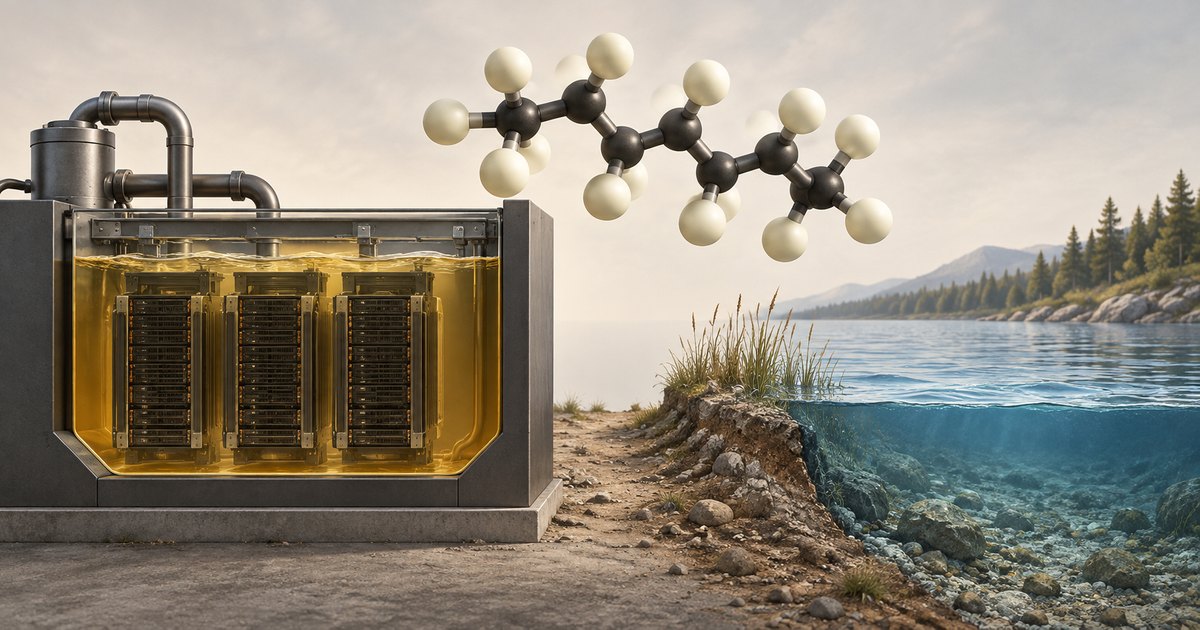
Server components are submerged in specially engineered dielectric fluid (a liquid that doesn't conduct electricity). The fluid boils at low temperature to absorb heat from the servers. This process can cut cooling energy consumption by more than 90% compared to traditional air cooling.
Why are communities concerned about PFAS cooling at data centers?
Environmental assessments show a 0.7% annual evaporative loss rate from PFAS cooling systems, meaning the chemicals escape into soil and groundwater over time. Communities in North Carolina and Virginia have raised alarms about contamination risks near existing chemical and data center facilities.
Are PFAS cooling systems already deployed at major data centers?
No major commercial deployments of the latest generation PFAS cooling fluids have been publicly confirmed as of mid-2026. Regulatory uncertainty and community opposition appear to be slowing rollout, despite the technology's efficiency gains.