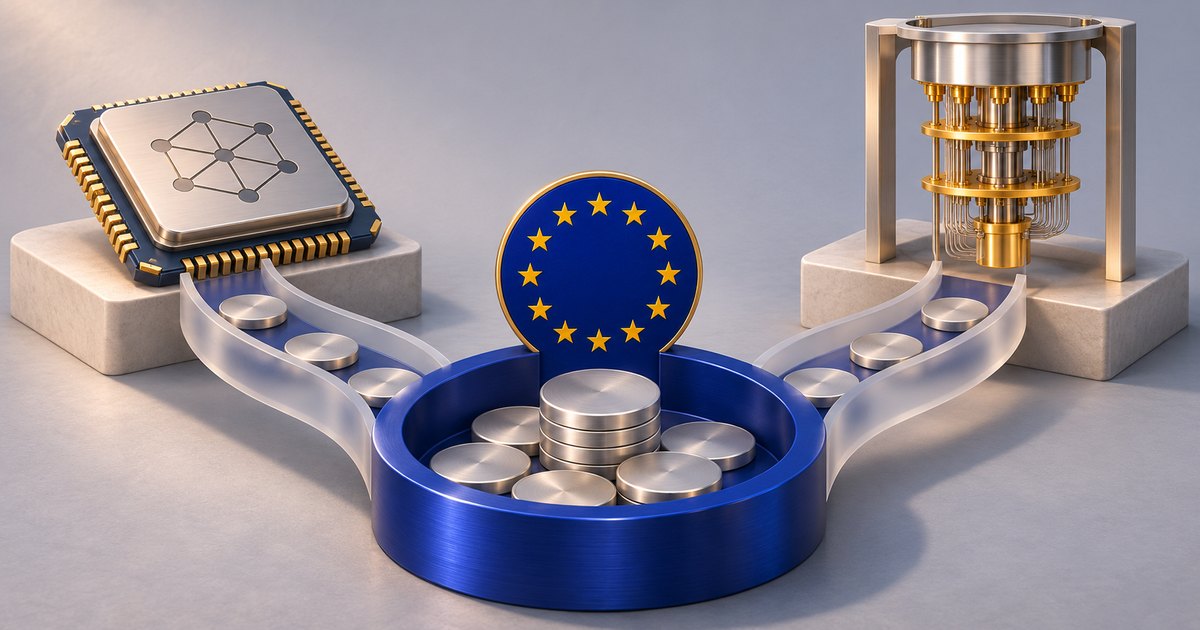
EU weighs fund of up to €50 billion for AI and quantum firms, FT reports
In brief
- Financial Times reported a proposed EU fund of up to €50 billion (about $54.7 billion).
- AI and quantum computing companies would be the fund's targets, per two unnamed officials.
- European Commission is targeting up to six euros of private money per euro committed.
- Operational details are expected in February, according to the report.
- Regulators have warned about AI-driven exchange hacks and quantum risks to blockchain cryptography.
What the FT reported
The EU wants to cut its reliance on US and Chinese technology, and this fund is one way it's looking to do that. According to two officials involved in the talks who spoke to the FT, the proposed Sovereign Tech Equity Fund would invest larger sums, take on more risk and hold stakes longer than existing EU financing programs.
Those are the officials' words, not an official EU statement.
The private-capital target
The European Commission isn't planning to fund this alone. It's aiming to attract private investors, targeting up to six euros of investment for every euro committed, per the FT report. Operational details are expected in February (again, according to the report), so how the fund would actually work isn't public yet.
Where crypto security fits
The fund isn't a crypto initiative. Nothing in the report ties it to crypto security, but the two technologies it targets do matter for the industry. Cointelegraph noted that hackers are already using AI to target crypto exchanges and steal funds, while a sufficiently powerful quantum computer could one day let attackers access other people's crypto.
The AI threat is already here. On Nov. 4, India's national cybersecurity agency warned that hackers were using AI tools to target crypto exchanges and other financial firms, with attacks resulting in stolen wallet keys and drained funds.
Quantum is further out, but regulators are already flagging it. In September, European financial regulators warned that quantum computers could undermine the cryptographic systems securing blockchain transactions. The fix has costs too: the International Organization of Securities Commissions (IOSCO) warned Thursday that upgrading blockchains to withstand quantum attacks could reduce transaction throughput and increase fees.
Frequently asked questions
What is the EU's proposed Sovereign Tech Equity Fund?
It's a proposed EU fund that could raise up to €50 billion (about $54.7 billion) to invest in AI and quantum computing companies, according to a Financial Times report cited by Cointelegraph. Two officials told the FT it would invest larger sums, take on more risk and hold stakes longer than existing EU financing programs.
Why does quantum computing matter for crypto security?
In September, European financial regulators warned that quantum computers could undermine the cryptographic systems securing blockchain transactions. IOSCO also warned that upgrading blockchains to withstand quantum attacks could reduce transaction throughput and increase fees.