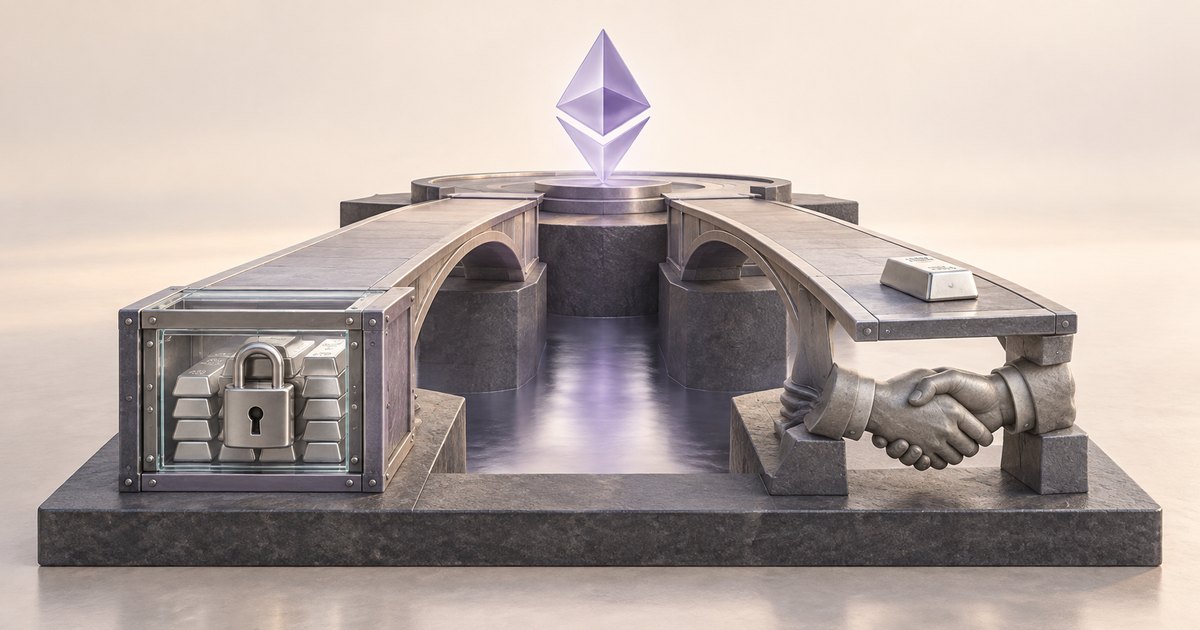
Fun CEO: On-Ramps and Bridges Will Disappear as Apps Embed Payments

In brief
- Alex Fine predicts standalone on-ramps and bridges will disappear as crypto apps embed unified payment flows
- Fun powers 100% of Polymarket deposits and withdrawals, processing over $3 billion monthly
- Next-generation crypto applications will abstract blockchain complexity, eliminating separate funding and bridging steps
The fragmentation problem
Today's crypto payments ecosystem remains unnecessarily fragmented. Developers are forced to stitch together different card processors, banking partners, crypto assets, blockchains, and bridges—each adding friction and complexity. Fine pointed out that in Web2, payments are highly fungible and standardized. In Web3, they're much more complex because every payment method behaves differently. Teams keep rebuilding the same infrastructure over and over instead of building unified, optimized funding flows.
"The age of on-ramps will be completely dead and the age of external bridging sites will be dead," Fine said. "Nobody wants to use a bridge for the purpose of using a bridge. They want to use an application."
Unified flows, not intermediaries
Fun is a payments infrastructure company that provides APIs allowing fintechs and crypto applications to embed deposits, withdrawals, settlement, and checkout directly into their products. The firm powers 100% of deposits and withdrawals on Polymarket and deposit flows into Aave's largest vaults, while processing more than $3 billion in monthly transaction volume. The company has raised more than $75 million to date.
Fine argued that companies built around converting fiat into crypto or moving assets between blockchains are solving an intermediary step that users never cared about. Standalone on-ramp providers and bridge interfaces are already losing prominence as more applications integrate payments directly into their own products.
The shift is already visible in prediction markets and tokenized equities platforms, which continue to attract growing numbers of users and trading activity. These applications succeed not by exposing blockchain mechanics, but by hiding them behind a seamless user interface.
Frequently asked questions
Why are on-ramps and bridges becoming obsolete?
Users don't care about converting fiat to crypto or moving assets between blockchains—they care about taking actions inside apps. Standalone on-ramps and bridges are intermediary steps that add friction. As applications embed unified payment flows directly into their products, these separate tools become unnecessary.
How does Web3 payments differ from Web2?
In Web2, payments are standardized and highly fungible. In Web3, every payment method behaves differently, forcing developers to rebuild the same infrastructure repeatedly instead of using unified funding flows. This fragmentation is why abstraction matters.