General Compute buys Cerebras chip fleet to pair with Nvidia GPUs for AI inference
In brief
- General Compute announced a large Cerebras wafer-scale chip purchase on September 29, 2026.
- Cerebras chips will handle decoding; existing Nvidia GPUs will handle prompt prefill.
- Customer capacity is slated for Q1 2027, starting with agentic coding.
- A $400 million Upper90 debt facility partly backs the deal, per Crypto Briefing.
Splitting the inference job
The plan treats inference as two separate jobs. The first, prompt prefill, digests the entire input context at once. Crypto Briefing described it as highly parallel and compute-heavy (the kind of task Nvidia GPUs were built to handle).
Decoding is a different animal. According to the report, it's memory-bandwidth-bound rather than compute-bound, and Cerebras' wafer-scale engine was engineered for exactly that bottleneck.
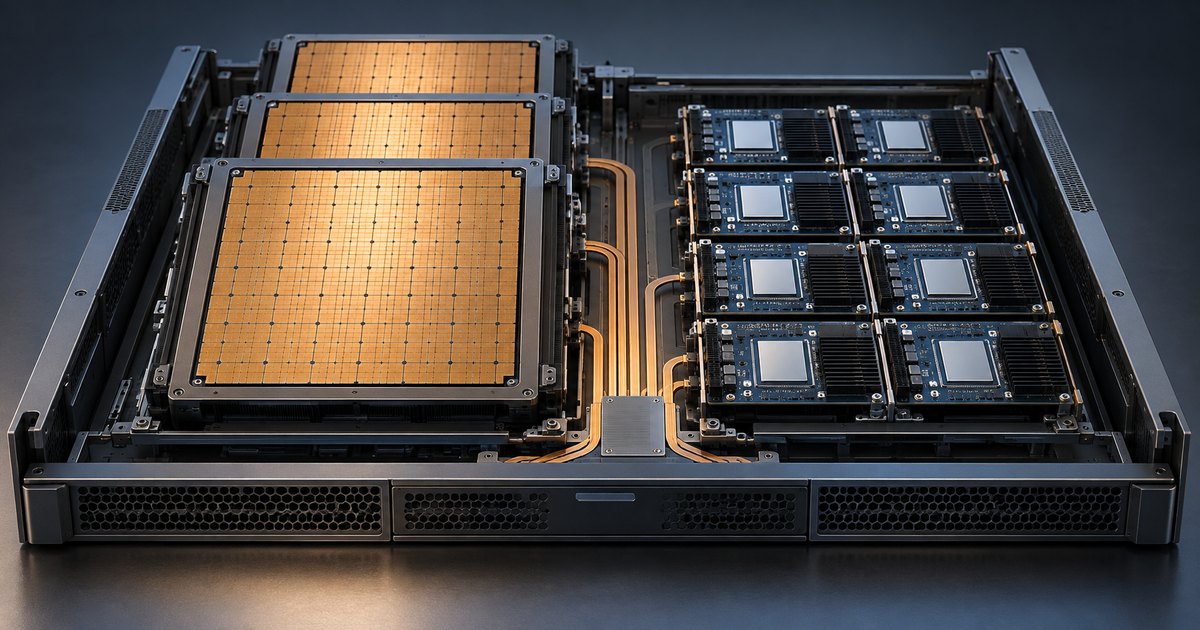
So General Compute is splitting the work: Cerebras handles decoding, Nvidia handles prefill, and the hybrid architecture targets per-token latency for agentic coding workloads.
That's the whole bet.
Why does latency matter so much here? Autonomous coding agents rely on long chains of sequential inference steps, and the report noted that small delays compound across those chains. Crypto Briefing also characterised Cerebras as holding some of the fastest per-user token generation rates currently in production.
Debt-backed, and the biggest commitment yet
The purchase is partly backed by a $400 million debt facility that General Compute secured with Upper90 in July 2026, per Crypto Briefing. It's also the company's largest hardware commitment since Finn Puklowski and Jason Goodison founded it.
Cerebras isn't short on large customers. Crypto Briefing reported that the chipmaker had secured a multi-year agreement with OpenAI valued at between $10 billion and $20 billion, covering 750 megawatts of capacity (the report didn't cite a source for those figures).
Inference fragmentation
The report framed the deal as part of a broader trend some in the industry are calling inference fragmentation, where operators use purpose-built silicon for specific phases of the pipeline.
General Compute isn't dropping Nvidia. The GPUs stay in the stack for prefill, while Cerebras hardware takes the decode phase, where the report said raw GPU muscle matters less than memory bandwidth.
If the timeline holds, customers will get access to the new capacity in Q1 2027, with agentic coding first in line.
Frequently asked questions
Why is General Compute using both Cerebras and Nvidia chips?
General Compute's hybrid setup assigns decoding to Cerebras chips and prompt prefill to Nvidia GPUs. Crypto Briefing described prefill as highly parallel and compute-heavy, which suits GPUs, and decoding as memory-bandwidth-bound, the bottleneck Cerebras' wafer-scale engine was engineered for.
What is inference fragmentation?
Crypto Briefing said some in the industry use the term inference fragmentation for a trend in which operators use purpose-built silicon for specific phases of the inference pipeline. The report framed General Compute's Cerebras purchase as reflecting that trend.
When will General Compute's Cerebras capacity be available?
The new capacity is slated to go live for customers in Q1 2027, according to Crypto Briefing. Agentic coding is the first target use case, and the hybrid architecture targets per-token latency for those workloads.