Google signs 22-year nuclear deal with Fortum in Finland
In brief
- Google signed 22-year nuclear power agreement with Fortum covering 50% of Loviisa plant capacity from 2030–2049
- Google commits €13 billion to AI and data center infrastructure across Finland during 2027–2028
- Investment marks Google's largest single European commitment, projected to add €3.6 billion annually to Finland's GDP
- Fortum stock surged 8–13.6% post-announcement; deal lifts Fortum's projected return on net assets by 1.4 percentage points
Nuclear power secures Big Tech's energy future
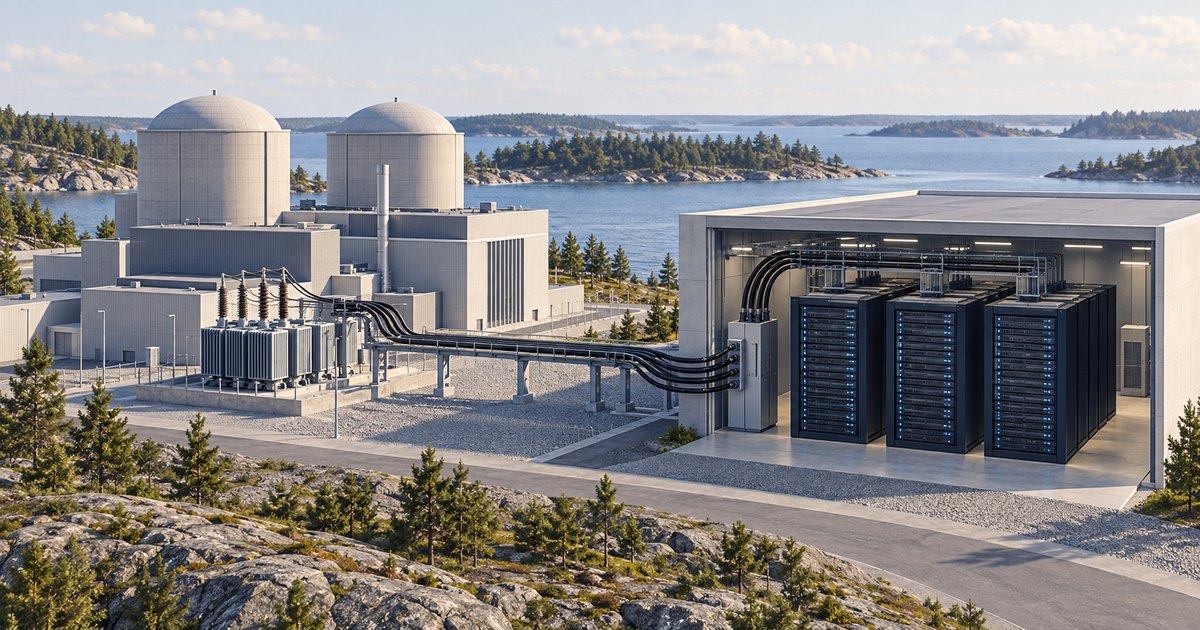
A 22-year agreement to buy half of a Finnish nuclear plant's output signals Big Tech's deepening appetite for atomic energy across the continent. The Loviisa plant, which provides over 10% of Finland's total electricity supply and directly employs about 580 people, was facing potential shutdown around 2030 without a major long-term buyer. Google's commitment changes that calculus entirely. Reduced capacity deliveries to Google are set to start as early as 2028, with the full 22-year term running through 2049.
The scale of this commitment stands out in the European energy market. Most corporate power purchase agreements in Europe run 10 to 15 years, making Google's two-decade horizon a structural vote of confidence in both nuclear economics and Finland's energy stability.
Investment and expansion reshape Finnish economy
Google plans to invest at least €13 billion, roughly $15.1 billion, in AI and data center infrastructure across Finland during 2027 and 2028. This represents the company's largest single investment anywhere in Europe. Google's existing data center in Hamina, which sits near the Loviisa plant, will see expansion. New facilities are planned in the regions of Muhos, Vaala, and Kajaani.
The economic ripple effects are substantial. The investment is expected to contribute an average of €3.6 billion annually to Finland's GDP during the construction phase and support around 7,000 permanent jobs once everything is up and running. For a nation of 5.5 million people, this represents a meaningful boost to both employment and fiscal capacity.
Market response and future collaborations
Fortum's stock surged between 8% and 13.6% following the announcement of the Google deal. The company projects that the power purchase agreement will lift its comparable return on net assets by approximately 1.4 percentage points. Fortum is also undertaking a €1 billion investment program for life extension upgrades at the Loviisa plant, which recently secured a license extension through 2050.
The two companies signed a memorandum of understanding to explore further energy collaborations, including the possibility of developing entirely new nuclear capacity at the Loviisa site. Fortum is simultaneously building 629 MW of new onshore wind capacity and a 94 MW battery storage system near Kajaani, signaling a diversified approach to meeting Google's energy demands.
Finland has positioned itself as Europe's nuclear leader. The country recently brought the Olkiluoto 3 reactor online, making it one of the few European nations actively expanding atomic capacity. Google's deal underscores how Big Tech's infrastructure demands are reshaping European energy markets and accelerating the continent's pivot toward stable, low-carbon power sources.