Houthis strike Saudi Aramco facilities near Riyadh as ceasefire collapses
In brief
- Houthi forces targeted Saudi Aramco facilities near Riyadh airport and Yanbu with missiles and drones on September 19.
- Saudi air defenses intercepted at least one ballistic missile; no casualties or significant damage reported.
- First air-raid alert in Riyadh since fighting escalated in July 2026, signaling abandoned ceasefire efforts.
- Houthi spokesperson Yahya Saree called the operations retaliation for Saudi strikes on Sanaa.
- Attack raises questions about Gulf defense systems' adequacy against increasingly sophisticated weapons.
Defense systems tested
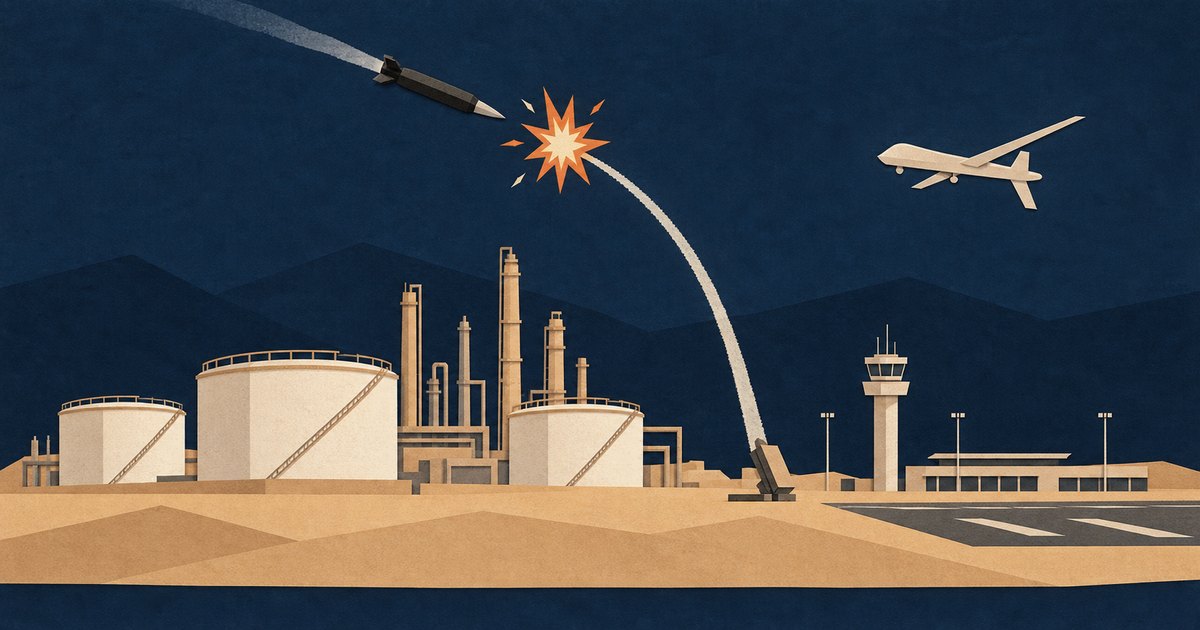
Saudi air defenses intercepted at least one ballistic missile aimed at Riyadh. The coalition also reported thwarting additional strike attempts on sites in Bisha, Taif, Farasan, and Yanbu. Saudi authorities said no casualties or significant damage resulted from the attacks, though a fire at an Aramco fuel depot temporarily disrupted flights.
Yet the strikes underscore a persistent vulnerability. Saudi energy assets remain vulnerable despite billions spent on air defense systems. History illustrates the risk. In 2019, a coordinated drone and missile strike on Aramco's Abqaiq processing facility and Khurais oil field temporarily knocked out roughly half of Saudi Arabia's oil production. That attack sent oil prices surging by the largest single-day percentage in decades.
The September 19 strikes were far less damaging than the 2019 precedent. Still, they signal a shift in the conflict's trajectory.
Ceasefire collapse
The escalation in July 2026 appeared to shatter what remained of a fragile ceasefire framework. The September 19 strikes suggest neither side is interested in de-escalation anytime soon. Houthi spokesperson Yahya Saree framed the operations as retaliation for Saudi strikes on Sanaa, the Yemeni capital the group has controlled since the civil war began in 2014-2015.
The Houthis' reach is striking. Riyadh sits roughly 1,000 kilometers from Houthi-held territory, yet Yanbu, a major petroleum export hub on the Red Sea coast, remains within their operational range.
Broader implications
The Houthis demonstrated during the Red Sea shipping crisis of 2024 that a non-state actor with the right weapons can disrupt global trade routes. Their willingness to strike deep into Saudi territory, combined with increasingly sophisticated drone and missile capabilities, raises questions about whether existing defense architectures in the Gulf are adequate.
Energy markets remain sensitive to supply shocks from the region. If the Houthis sustain or intensify strikes on Aramco's export infrastructure, the ripple effects could extend far beyond the Arabian Peninsula.