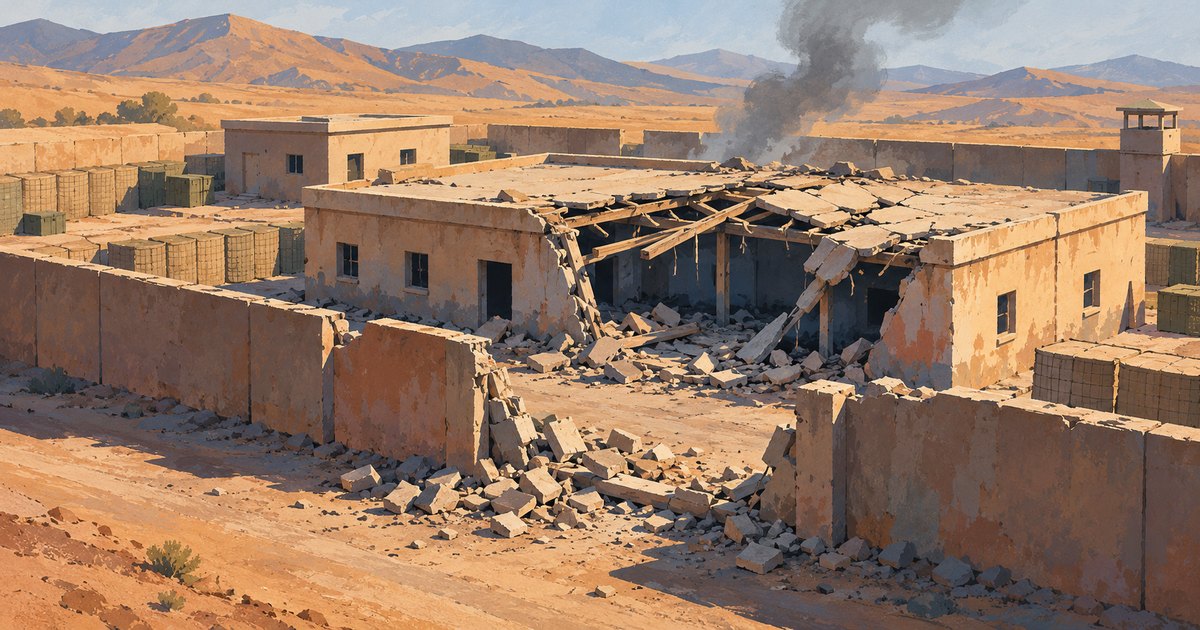
Iran asserts right to self-defense after US strikes on radar facilities

In brief
- Iran's Foreign Ministry condemned US strikes on June 6-7 as April 8 ceasefire violations.
- US characterized strikes as defensive responses to Iranian drone threats in Strait of Hormuz.
- Treasury sanctions on Iranian digital asset exchanges create cryptocurrency compliance obligations.
- Multiple ceasefire violations since April raise escalation risks in nuclear and maritime security talks.
The Immediate Dispute
Iran's Foreign Ministry issued a sharp rebuke of the strikes, calling them a direct violation of the April 8 ceasefire agreement. The US, by contrast, characterized the strikes as defensive measures in response to Iranian drone threats against maritime traffic. Both sides have framed their actions as proportional and justified, yet neither has provided detailed evidence of the provocations cited by the other.
Strikes on fixed military infrastructure represent a qualitative escalation beyond the skirmishes and provocations that preceded them. The targeting of permanent radar and surveillance installations signals a shift from symbolic shows of force to attacks on operational military capability.
Energy Markets and the Strait's Vulnerability
The Strait of Hormuz is the single most important chokepoint for global energy flows, with a significant share of the world's seaborne oil passing through its narrow waters daily. Any sustained disruption to shipping or military escalation in the region poses direct risks to global oil supplies and energy prices. Markets have watched the ceasefire closely for this reason.
The ceasefire, established on April 8, was supposed to create breathing room for discussions around Iran's nuclear capabilities and Strait of Hormuz security. Yet multiple violations have been reported since its inception in April, eroding confidence in its durability.
Cryptocurrency Compliance Implications
The geopolitical backdrop intersects with regulatory pressure on digital assets. The US Treasury expanded its sanctions regime to include Iranian digital asset exchanges, and Iran has historically used cryptocurrency networks to circumvent traditional banking sanctions. Each expansion of the US sanctions toolkit creates potential compliance obligations for exchanges and custodians operating globally, forcing them to reassess exposure to Iranian counterparties and to review transaction screening protocols.
The pattern of tit-for-tat military strikes, combined with expanding sanctions, narrows the diplomatic off-ramps available to both sides. Neither has shown appetite for full-scale conflict, yet the June 6-7 strikes demonstrate willingness to escalate beyond rhetoric.
Frequently asked questions
Why does the Strait of Hormuz matter in this conflict?
The Strait of Hormuz is the world's most critical chokepoint for seaborne oil. Escalation in the region risks disrupting global energy supplies. Both the US and Iran have strategic interest in controlling or influencing shipping through it, making it a focal point for military posturing and negotiation.
How do US sanctions on Iranian crypto exchanges affect the cryptocurrency industry?
When the US Treasury expands sanctions to include Iranian digital asset exchanges, it creates compliance obligations for global exchanges and custodians. They must implement transaction screening and review counterparty exposure, increasing operational complexity and regulatory burden across the sector.