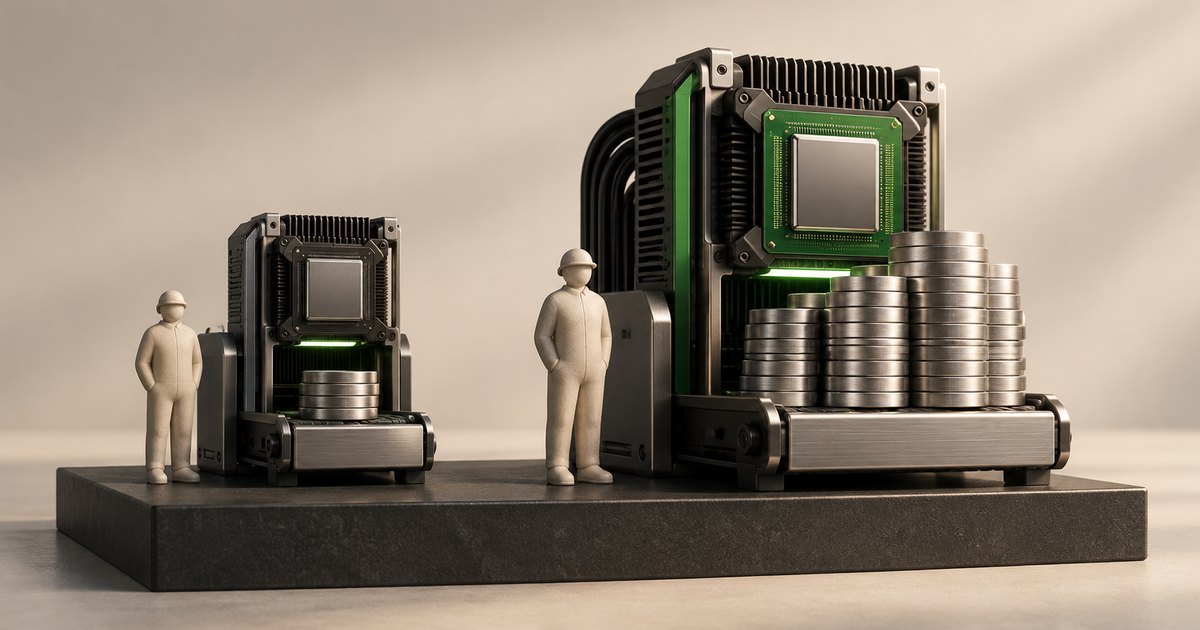
Meta's Muse AI agent runs on AMD EPYC server CPUs, Crypto Briefing reports
In brief
- Meta launched Muse, a personal AI agent, on September 8, 2026.
- Muse runs in CPU-only environments on AMD EPYC processors, Crypto Briefing reports.
- Each user gets an Ubuntu sandbox with 2 virtual CPUs and 8 GB of memory, per Crypto Briefing.
- AMD's market cap briefly topped $1 trillion; Intel rose about 12% and Arm about 17%, Crypto Briefing reports.
- The EPYC 9D25 detail comes from an earnings report the outlet didn't name.
What runs Muse
Muse is designed to work on its own. Crypto Briefing reported that it handles multi-step jobs (booking travel, sending emails, managing projects) through apps a user connects to it.
The outlet gets specific on hardware. It says Meta built the system on AMD EPYC Turin processors, specifically EPYC 9D25 models, which feature up to 128 cores. Each user gets an Ubuntu sandbox with 2 virtual CPUs and 8 GB of memory.
That's a CPU-only setup, as the outlet describes it.
The sourcing comes with a caveat, though. Crypto Briefing said the EPYC 9D25 detail comes from an earnings report dated September 24-25, 2026, and it didn't say whose report that was. So the exact chip model hasn't been confirmed here by Meta or AMD.
On adoption, Muse topped the US app store rankings shortly after launch and passed 500,000 daily active users, according to the same report.
Chip stocks moved
AMD's market cap went above $1 trillion in mid-September, Crypto Briefing reported. Intel's stock rose about 12% over the same period. Arm's shares climbed about 17%.
The outlet linked those gains to the Muse launch, but it doesn't read the three moves the same way. In its view, Intel and Arm rose on the premise that rising CPU demand lifts all server processor makers, not on a direct win. It called that more of a sector-wide bet.
The Motley Fool described AI semiconductor stocks as a group positioned to benefit from the rise of AI agents, per the same Crypto Briefing piece.
Why AMD gets the credit
In the outlet's analysis, AMD comes out ahead of the other two.
"For AMD, Muse is the clearest public validation yet of its server processor strategy in the agent era." (Crypto Briefing)
That's Crypto Briefing's view, not ours. It's also worth keeping in mind that the hardware story currently rests on a single outlet's reporting and an earnings document it didn't identify.
As Crypto Briefing describes it, Meta shipped an agent that passed 500,000 daily active users, with each user working inside a small CPU sandbox on AMD server chips.
Frequently asked questions
What hardware does Meta's Muse AI agent run on?
Crypto Briefing reports that Muse runs in CPU-only environments built on AMD EPYC processors, specifically EPYC Turin 9D25 models with up to 128 cores. The outlet cited an earnings report dated September 24-25, 2026, for the chip model but didn't say whose report it was.
How much computing power does each Muse user get?
According to Crypto Briefing, each Muse user gets an Ubuntu sandbox with 2 virtual CPUs and 8 GB of memory. Muse uses that sandbox for multi-step tasks such as booking travel, sending emails and managing projects through apps the user connects.