Nvidia guides $108B Q3 revenue, assumes zero China chip sales
In brief
- Nvidia posted $96.2B Q2 revenue, guided $108B Q3 with zero China contribution
- Data center revenue hit $89B; China fell from 13-20% to under 1% of segment
- US-China export restrictions cut Nvidia from estimated $50B annual AI chip market
- CEO Jensen Huang frames China losses as temporary; policy shifts could reshape outlook
- Hyperscalers like Microsoft and Amazon boost capex to offset lost Chinese demand
The China Collapse
Data center revenue alone hit $89 billion for the quarter, representing the vast majority of Nvidia's top line. Yet China, once responsible for 13% to 20% of that segment, contributed less than 1% in the recent quarter. Across all product categories, total revenue from China landed at approximately $7.88 billion.
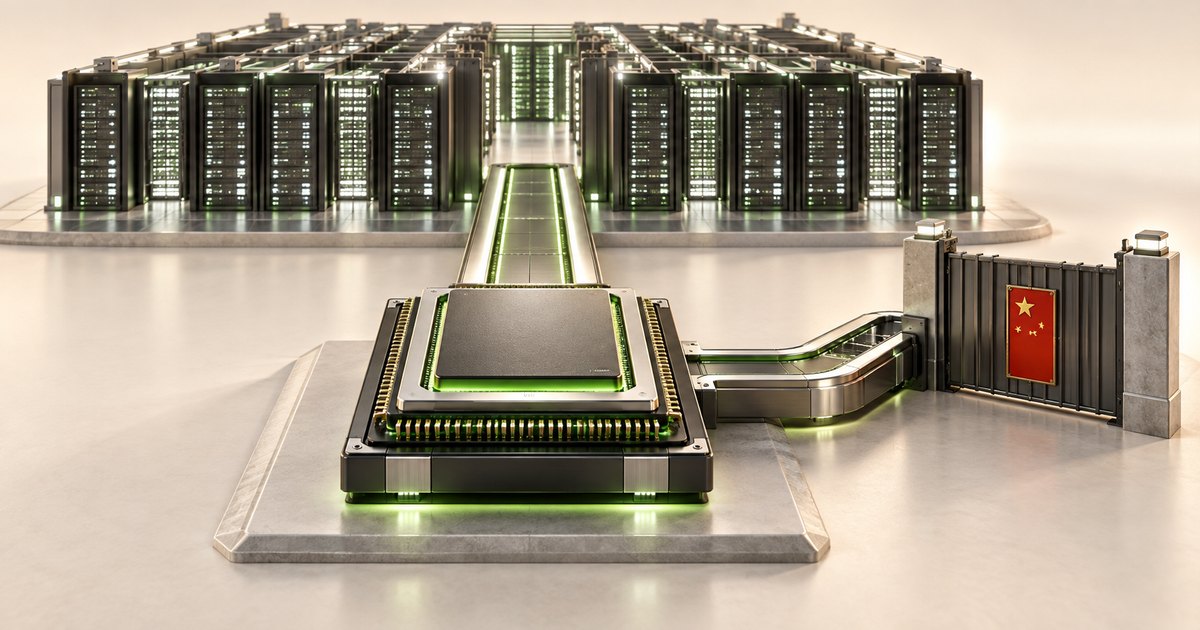
The decline stems from a two-way squeeze. US export controls first restricted Nvidia's most advanced chips from being sold to Chinese customers, forcing the company to adapt. Nvidia responded by designing downgraded versions specifically for the Chinese market, but subsequent restrictions tightened further. Beijing then imposed its own limitations on purchasing certain US-made chips, creating a pincer movement.
The result is stark. Analysts estimate the Chinese AI chip market could be worth $50 billion annually, yet Nvidia has been effectively locked out.
Compensation and Optionality
What's preventing a revenue cliff? Hyperscalers like Microsoft, Amazon, Google, and Meta are pouring capital into data centers at a pace that apparently compensates for lost Chinese demand. Their spending surge is absorbing Nvidia's supply, masking the geographic loss.
CEO Jensen Huang has acknowledged the situation publicly, framing it as a temporary constraint rather than a permanent loss. That framing matters. A potential Trump-Xi summit could reshape the export control landscape, and with it, Nvidia's addressable market. If policy shifts, the $50 billion market reopens.
The Competitive Shadow
Local alternatives exist but lag. Huawei's Ascend chips and other local solutions are gaining traction, though they remain generations behind Nvidia's architecture in most benchmarks. A small batch of H200 chips went to roughly 10 approved Chinese firms, but uptake was minimal due to local purchasing restrictions and US export controls.
For now, Nvidia's guidance stands: $108 billion in Q3, with China assumed at zero. The company projects about 70% revenue growth for the full fiscal year 2028, a figure that leaves significant upside if geopolitical winds shift.