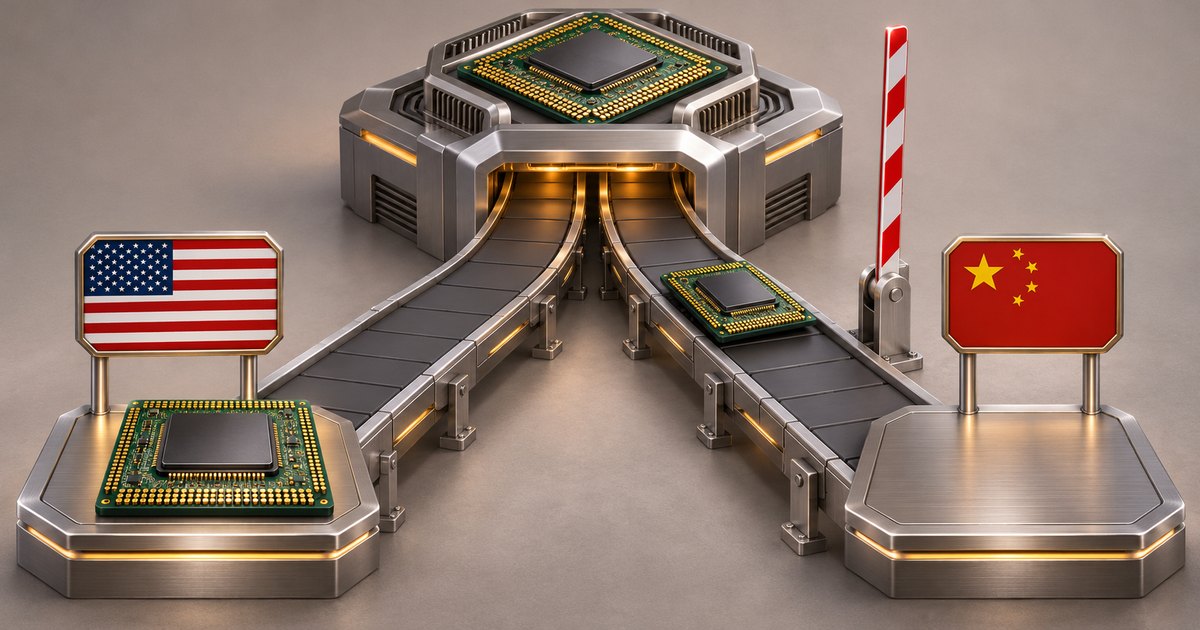
Nvidia's Jensen Huang calls US chip export curbs on China a strategic mistake
In brief
- Jensen Huang, Nvidia's CEO, called US limits on advanced chip sales to China a strategic mistake.
- Nvidia's China market share fell from around 95% to about 50%, Huang said.
- China accounted for 9% of Nvidia's fiscal 2026 revenue, per company reporting cited by Crypto Briefing.
- Nvidia booked a $4.5 billion H20 charge and a $0.4 billion H200 charge.
- Huang has a direct interest: Nvidia benefits from looser rules.
What Huang is arguing
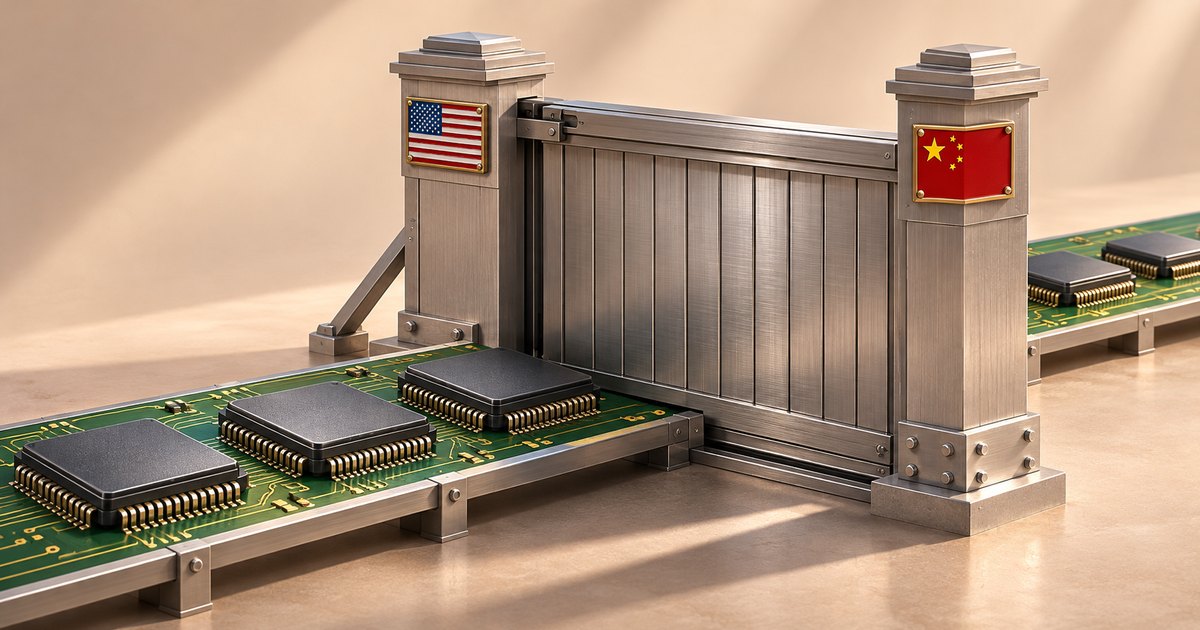
Huang's argument is blunt. In his view, the controls didn't slow China's progress in semiconductors and AI. They sped it up.
He said Chinese competitors have become more aggressive and that Huawei had a notable year of growth as American chips became harder to get. Those are Huang's own characterizations, not independent findings. The 95%-to-50% market share figure is his too (it comes from the interview, not from Nvidia filings or third-party data).
The numbers on Nvidia's books
The financial picture comes from Nvidia's reporting, as cited by Crypto Briefing. China accounted for only 9% of the company's fiscal 2026 revenue, a sharp decline from earlier years. Nvidia also recorded a $4.5 billion charge tied to its H20 chips and a $0.4 billion charge related to H200 inventory commitments.
That's real money.
A familiar critique from an interested party
Huang has gone after Washington's approach before. During a speech at Computex in May 2025, he took aim at the US AI diffusion rules, which govern how advanced AI technology can spread to other countries.
Huang described US AI diffusion rules as a “failure.”
The broader export control regime started with initial measures during the Trump era, and the Biden administration tightened it significantly. Its stated goal is to slow a strategic rival's access to advanced technology. So is it doing that? Huang says it isn't, and he's maintained that the US should keep its lead in the most advanced technologies while still engaging with the Chinese market.
His position comes with a caveat. Huang isn't a neutral observer here, and Crypto Briefing noted that Nvidia benefits directly from looser rules. Read his case for engaging China with that interest in mind, since the company stands to gain if the curbs are relaxed.
Frequently asked questions
What are the US AI diffusion rules Huang criticized?
The AI diffusion rules govern how advanced AI technology can spread to other countries. During a speech at Computex in May 2025, Nvidia CEO Jensen Huang described them as a "failure."
How much have China export controls cost Nvidia?
Nvidia recorded a $4.5 billion charge tied to its H20 chips and a $0.4 billion charge related to H200 inventory commitments, according to company reporting cited by Crypto Briefing. China accounted for only 9% of Nvidia's fiscal 2026 revenue, a sharp decline from earlier years.