ON.energy AI UPS system prevents data center grid crashes
In brief
- Virginia transmission fault July 22, 2026 caused 3 GW load loss, 3% of PJM grid demand
- ON.energy AI UPS system validated at US Department of Energy National Laboratory of the Rockies
- System achieved zero-voltage ride-through exceeding one hour, met ERCOT large-load standards
- ON.energy reports 2.5 GW deployed, 3 GW additional selected for deployment
The Grid Vulnerability
A single failed surge arrester two years prior had already knocked roughly 60 Virginia facilities and 1,500 megawatts offline simultaneously. The July 2026 event confirmed a pattern: as AI workloads concentrate in data center hubs, synchronized load disconnection poses an acute risk to grid stability.
Traditional infrastructure isn't equipped. Traditional low-voltage UPS systems, the kind already installed in most data centers, increasingly fail to meet emerging large-load ride-through standards.
ON.energy's Solution
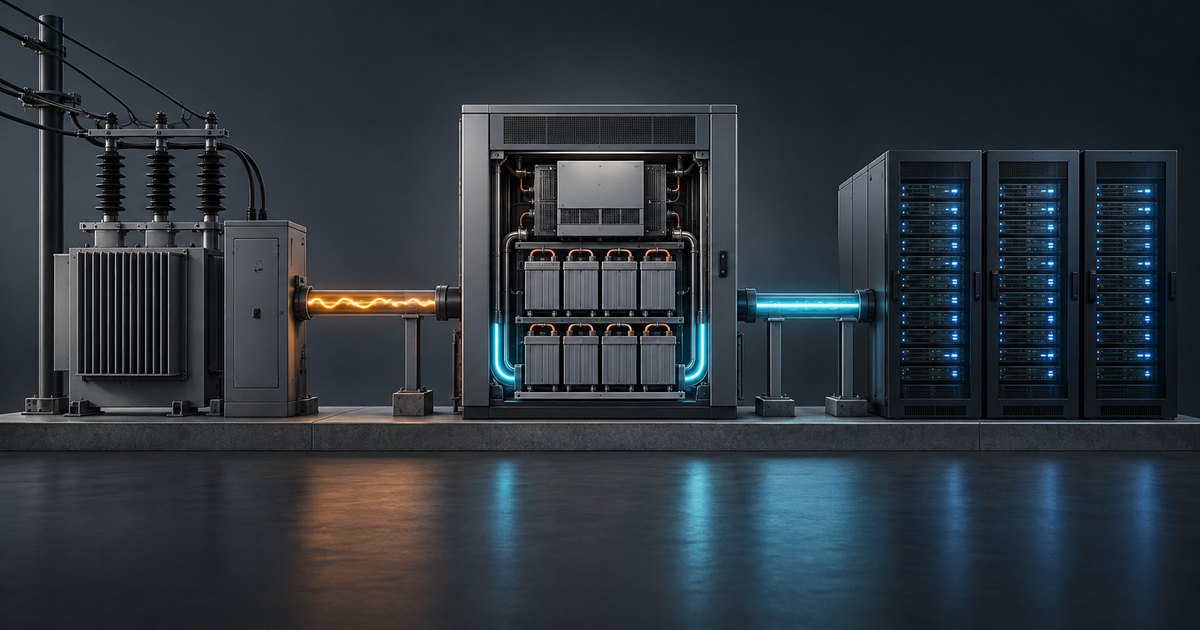
ON.energy's AI UPS functions as both a campus-wide uninterruptible power supply and a grid-interactive battery energy storage system. The company developed and tested the medium-voltage system to address this gap.
The system was independently validated at the US Department of Energy's National Laboratory of the Rockies, where it met ERCOT standards for large-load ride-through. During testing, the system achieved zero-voltage ride-through for over one hour and sustained 120% overvoltage for 12 seconds. The system also limits ramp rates to 20% per minute or less during load swings of up to 70% in either direction, exceeding compliance thresholds.
Deployment and IP
ON.energy holds US Patent 12,614,920 for its UPS architecture, with a priority date stretching back to 2022. The company has also secured validation from UL and independent system operators.
Deployment is already underway. ON.energy reports over 2.5 GW in active deployment with an additional 3 GW or so selected for its system. Crusoe plans to implement 5 GW of the AI UPS across several campuses starting in 2026, marking the most prominent partnership so far.
ERCOT's NOGRR 282 standards represent one of the first formal attempts to address synchronized load disconnection risk. ON.energy has secured multiple supply-chain agreements for essential components, a move suggesting it's planning for scale.