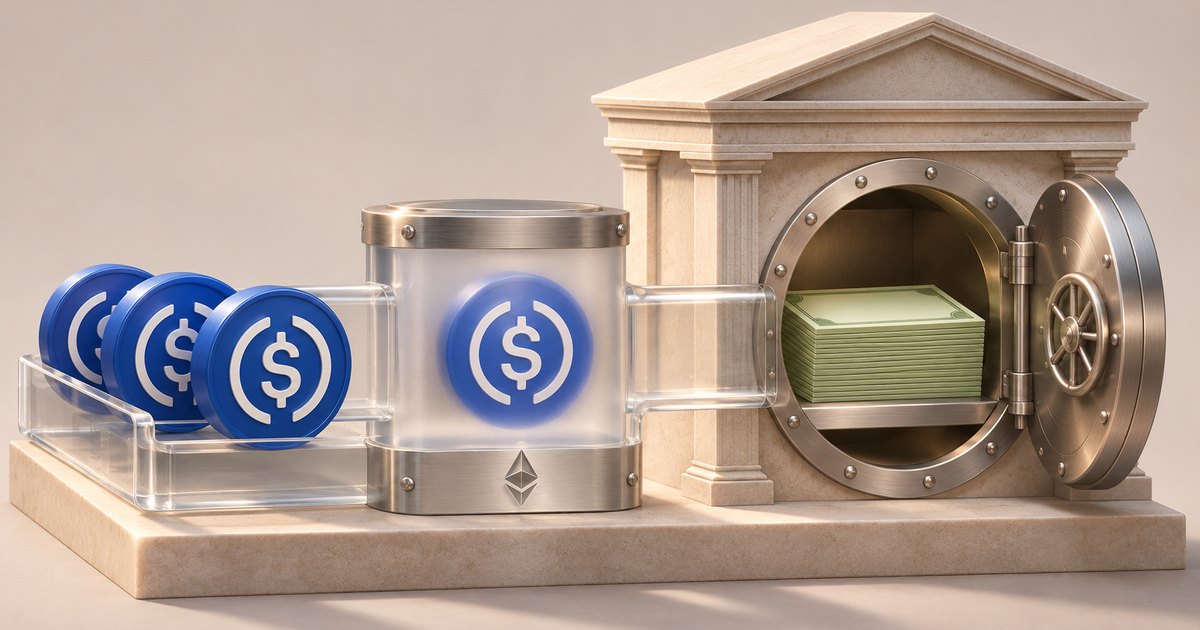
PNC pilot lets corporate clients take USDC payments as dollar deposits

In brief
- PNC announced a limited USDC pilot for eligible Corporate & Institutional Banking clients on Nov. 9.
- Incoming USDC on Ethereum converts 1-to-1 into dollars in a designated PNC account.
- Coinbase supplies the payment rails via its Payment APIs; PNC handles banking and treasury services.
- Conversion counterparty, fees, timing and usage figures weren't disclosed.
How the pilot works
Coinbase runs the rails. PNC provides the banking and treasury-management services, according to the Nov. 9 announcements as reported by CryptoSlate. This isn't a PNC-issued stablecoin, and the offering doesn't put customer deposits on a blockchain.
So the crypto part stops at the edge of the bank. CryptoSlate summed up the design this way:
"The payment travels over stablecoin infrastructure, but the receiving customer's balance ends up at the bank."
What PNC and Coinbase didn't disclose
Plenty is still missing. The conversion counterparty, the redemption versus inventory route, timing, fees, usage and any measured deposit effects weren't disclosed, and the announcements didn't say whether received tokens get redeemed or transferred.
CryptoSlate also noted that a credit in the receiving customer's account doesn't show how the payer acquired USDC or who supplied the conversion dollars (nor which other balances changed along the way). The outlet's September coverage of the Coinbase and Moov banking partnership left institution-specific fiat settlement routes unresolved too.
The Federal Reserve staff view
CryptoSlate said the design fits an adaptation strategy described by Federal Reserve staff, in which banks answer new payment competition with their own products and infrastructure, often through partnerships.
A March 30 Fed staff model sketched a hypothetical cross-border payment where the recipient sells stablecoins and deposits local currency while an intermediary keeps the tokens. Fees and delays in exchanging tokens for currency can influence how much inventory those intermediaries hold, the model said.
In a May 1 analysis, Fed staff separated aggregate bank deposit levels from their composition. Money can come back to banks when issuers hold reserve deposits, they wrote, or when securities dealers redeposit proceeds.
That's staff analysis, though, not PNC outcome data.
Frequently asked questions
How does PNC's USDC pilot work?
Eligible PNC Corporate & Institutional Banking clients receive USDC on Ethereum, and the payments are automatically converted 1-to-1 into dollars and deposited into a designated PNC account. Coinbase supplies the payment infrastructure through its Payment APIs, while PNC provides banking and treasury-management services.
Is PNC issuing its own stablecoin?
No. According to CryptoSlate's report on the Nov. 9 announcements, the offering didn't announce a PNC-issued stablecoin or put customer deposits on a blockchain. The payment travels over stablecoin infrastructure, but the receiving customer's balance ends up at the bank.
What details of the PNC pilot weren't disclosed?
The conversion counterparty, the redemption versus inventory route, timing, fees, usage and measured deposit effects weren't disclosed. The announcements also didn't say whether received tokens are redeemed or transferred.