DeepMind says Apptronik humanoids hit 96% success in Mercedes kitting pilot
In brief
- DeepMind disclosed the company-reported proof of concept on Nov. 10.
- Apollo 2 humanoids sorted parts at Mercedes sites in Kecskemét and Sindelfingen.
- Gemini Robotics 2.5 was tested alongside Gemini Robotics ER in the pilot.
- No trial count, intervention rate, uptime or definition of success was disclosed.
What the robots actually did
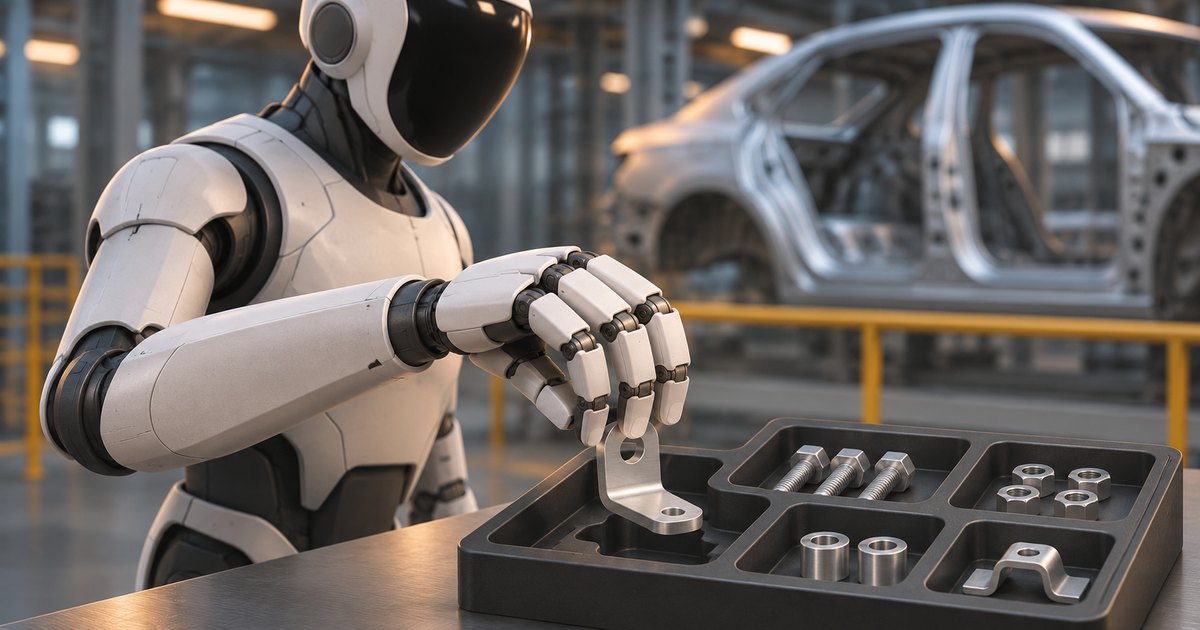
The task was automotive kitting, which means pulling parts from bulk bins and organizing them in the order needed for each vehicle. DeepMind's example showed the robot picking up metal brackets and placing them into sequencing containers.
It isn't just moving things around. The robot had to organize the components as well as move them.
DeepMind framed the pilot as a test for its Gemini Robotics 2.5 model (arranging the components that workers need to build the cars). Two models split the job, according to DeepMind: Gemini Robotics ER tracked the workflow, while Gemini Robotics 2.5 controlled the robot's hands and arms.
Apptronik CEO Jeff Cardenas said in the announcement that the models improved after a few weeks of post-training and moved into Mercedes production with little drop-off in performance. That's the company's own characterization.
A longer runway with Mercedes
This didn't come out of nowhere. In March 2024, Apptronik announced an agreement to explore uses for its original Apollo, including delivering assembly kits, inspecting components and transporting containers of kitted parts. Its argument was that humanoids could handle repetitive, physically demanding work in spaces designed for people, potentially avoiding a full factory redesign.
What wasn't disclosed
The 96% figure leaves a lot of blanks.
DeepMind called the kitting autonomous but didn't define whether success meant an individual pick, a completed tray or another unit. The disclosure gave no trial count, and it didn't report reset frequency, human-intervention rates, cycle times, uptime or operating costs. Evaluation duration wasn't disclosed either.
Those gaps matter more than the headline number does. For factory operators, the open questions are how much work the robots finish in a shift and how often a person has to step in to keep production moving, and a success rate on an undefined unit doesn't answer either one.
For now, it's a pilot with one company's scorecard.
Frequently asked questions
What is automotive kitting, and what did the Apollo 2 robots do?
Automotive kitting means taking parts from bulk bins and organizing them in the order needed for each vehicle. In DeepMind's example, the Apollo 2 robot picked up metal brackets and placed them into sequencing containers, so it had to organize the components as well as move them.
How reliable is DeepMind's 96% success rate figure?
The figure comes from a company-reported proof of concept. DeepMind didn't define whether success meant an individual pick, a completed tray or another unit, and it gave no trial count. It also didn't report reset frequency, human-intervention rates, cycle times, uptime or operating costs.