Russia pledges unlimited oil supply to India amid Western sanctions
In brief
- Russian Ambassador Denis Alipov declared Moscow ready to supply India with unlimited crude oil in September 2026.
- India's Russian crude imports peaked above 2 million barrels daily in 2025-2026, comprising roughly 55% of total imports.
- Western sanctions force Russian crude to trade at steep discounts, creating planning uncertainty for Indian refiners.
- The Russia-India crude corridor redirected global oil flows from European to Indian ports.
The Scale of India's Russian Oil Reliance
India's imports of Russian crude peaked above 2 million barrels per day during 2025-2026, according to trade data. At its high point, Russian crude accounted for roughly 55% of India's total crude imports. The volumes haven't remained stable. Sanctions pressure, tariff adjustments, and shifting regulatory environments have caused import volumes to swing between 400,000 and 1 million barrels per day at various points.
The uncertainty cuts both ways. For Indian refiners like Reliance Industries, Nayara Energy, and Indian Oil Corporation, the unpredictability in Russian crude supply creates planning headaches. Refiners need stable feedstock. They don't get it here.
How Russia's Discount Fuels the Relationship
Russian oil has been available at significant discounts compared to benchmark grades, a direct consequence of Western sanctions limiting Moscow's buyer pool. That discount matters. India's energy bill shrinks when crude costs less. For a country importing most of its oil, price cuts translate to real savings.
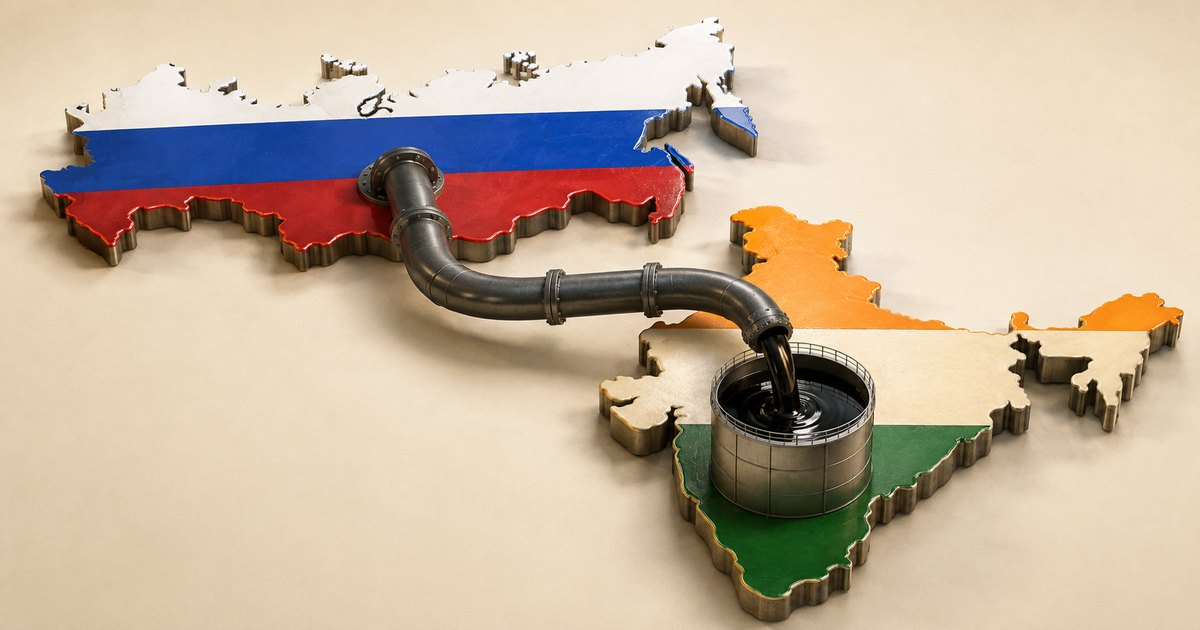
The Russia-India crude corridor has altered global oil trade patterns, with barrels previously flowing to European refiners now traveling longer routes to Indian ports. Supply chains shifted. Shipping routes lengthened. The geography of global energy trade rewired itself in response to sanctions.
Strategic Autonomy as Framing
India has consistently positioned its Russian energy purchases as a matter of strategic autonomy. New Delhi doesn't frame it as sanction-busting. It frames it as energy independence. Alipov's comments framed the supply relationship as being about Indian energy security and national development.
The unlimited supply pledge signals Moscow's commitment to this partnership. Whether volumes hold steady or swing again depends on sanctions enforcement, tariff moves, and regulatory shifts — forces neither capital fully controls.