Illuvium's Kieran Warwick says AI could spawn 100,000 short-lived crypto 'meme games'
In brief
- Illuvium co-founder Kieran Warwick forecasts up to 100,000 crypto meme games launching within a year.
- AI tools have cut build time to days and cost to around $1,000, Warwick says.
- Animoca Brands CEO Robby Yung doubts meme games will become a lasting category.
- DappRadar data shows $232.2 million in total value locked across 2,356 gaming dapps.
From months to days
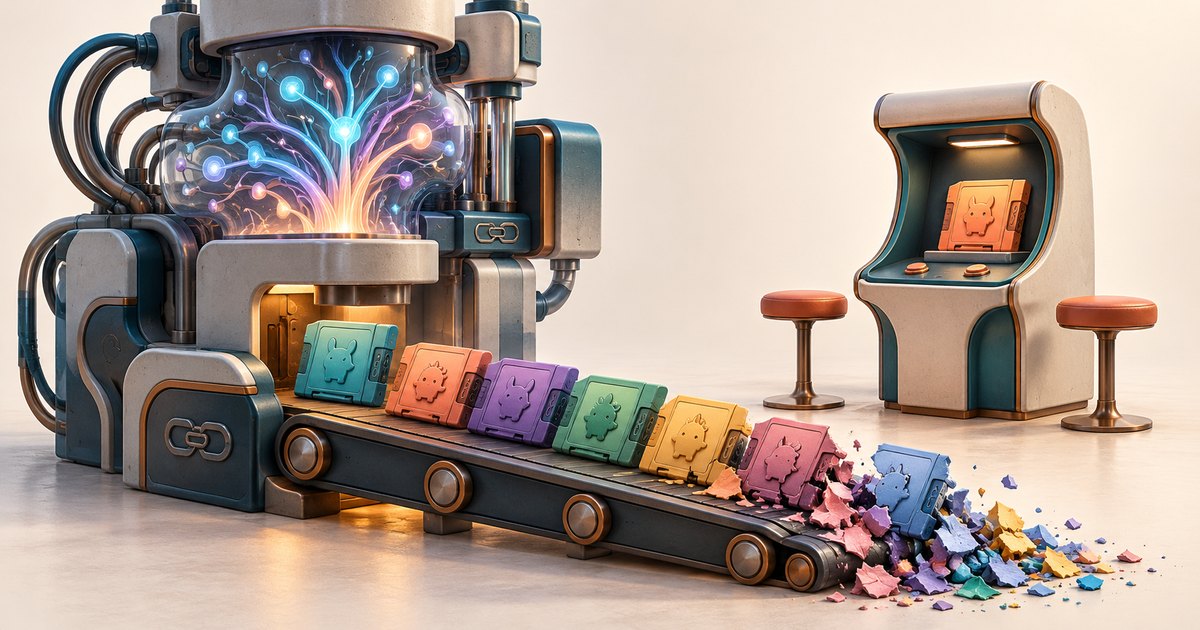
Speculative crypto games like Wolf Game and Fishing Frenzy, where players compete for financial rewards, once took months to develop, according to Cointelegraph. Warwick says that's changed. By his estimate, AI tools have cut the time and cost of building a similar game to just days and around $1,000.
He's comparing it to the 2024 memecoin cycle, when Pump.fun and similar launchpads helped fuel a surge in memecoins by making tokens easy to create. Warwick said he expects a similar speculative wave to reach meme games.
“Like you have serial deployers of memes, you’ll get serial deployers of games,” Warwick told Cointelegraph.
Warwick isn't pitching any of this as good news.
In a post on X on Monday, he wrote that there would be ridiculous gains and that people would get rinsed. Asked whether a mass of short-lived games would ultimately be good for the crypto gaming ecosystem, he said "probably not." Illuvium's own timeline runs much longer: Warwick said its flagship Overworld game has been in development for more than six years, with a revamped full release targeted for the first quarter of 2027.
The memecoin hangover
According to CoinGecko figures cited by Cointelegraph, the memecoin sector's combined market cap hit $150.6 billion in December 2024, then fell nearly 69% to $47.2 billion by November 2025. The boom split the industry. Supporters championed memecoins' appeal to traders, while critics argued they diverted capital from useful projects and damaged crypto's reputation.
Does the demand exist?
Not everyone expects the wave to stick. Animoca Brands CEO Robby Yung told Cointelegraph that low-effort meme games likely won't become a lasting category, because user retention is the lifeblood of games. He also pointed to low liquidity in altcoins and a lack of enjoyable, captivating games, and said very few titles use crypto at all, which leaves consumers with little choice.
Mirai Labs co-founder and CEO Corey Wilton, also speaking to Cointelegraph, questioned whether an AI-driven surge in supply can overcome weak demand. He said his company shipped six or seven games to market and concluded that demand within the Web3 space wasn't there.
The current market is small. DappRadar data cited by Cointelegraph shows $232.2 million in total value locked across 2,356 gaming dapps, and a basket of the top 50 gaming tokens carried a combined market cap of $3.8 billion at the time of the report.
Frequently asked questions
What are crypto 'meme games'?
Illuvium co-founder Kieran Warwick uses the term for short-lived speculative crypto games where players compete for financial rewards, along the lines of Wolf Game and Fishing Frenzy. He told Cointelegraph that many of them would be designed to last only a few days, long enough for their creators to turn a profit.
How cheap does Warwick say it is to build a meme game with AI?
Warwick said games like these once took months to develop. By his estimate, AI tools have now cut the time and cost to just days and around $1,000, and he forecast that as many as 100,000 such games could launch within a year.
Why are some gaming executives skeptical?
Animoca Brands CEO Robby Yung told Cointelegraph that low-effort meme games likely won't become a lasting category because user retention is the lifeblood of games. Mirai Labs CEO Corey Wilton said his company shipped six or seven games and concluded that demand within Web3 wasn't there.