Trump, Johnson convene tech CEOs on AI policy at White House summit
In brief
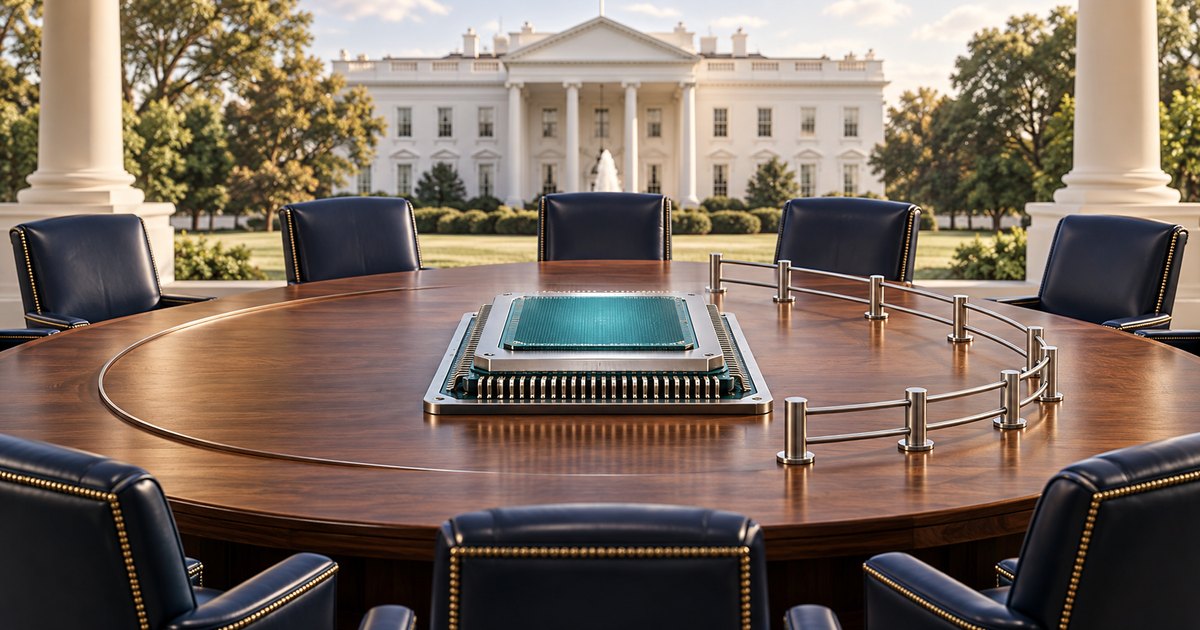
- Trump and Johnson convening tech CEOs at White House on September 29, 2026
- Trump favors light-touch AI regulation as competitive advantage against China
- Johnson backs industry self-regulation with measured federal oversight
- CEO roster not yet disclosed
- Summit part of administration's 'Golden Age' economic leadership initiative
Divergent approaches to AI governance
The two Republican leaders bring different philosophies to the table. Trump has consistently characterized existential AI threats as overblown, resisting AI-specific regulations that could constrain American companies. Johnson takes a more measured stance. The House Speaker has advocated for self-regulation among AI companies, paired with what he calls a "measured federal response."
This tension reflects a broader debate within the administration. On one side, Trump frames minimal domestic regulation as a strategic advantage in competition with China's tech ambitions. On the other, Johnson seeks a middle ground—industry accountability without heavy-handed federal mandates.
The competitive backdrop
The stakes extend beyond Washington. Leaders from OpenAI and Anthropic have been vocal about the risks associated with rapid AI development, signaling that the summit will likely hear calls for responsible guardrails. Yet the US approach stands in sharp contrast to China's regulatory model. China has imposed content labeling requirements and algorithm rules on AI systems, creating a tighter regulatory environment.
Trump's team sees this differently. The administration has positioned minimal domestic regulation as a strategic advantage in competition with China's tech ambitions. The calculus: lighter rules mean faster innovation, which translates to American dominance in frontier AI.
Part of the "Golden Age" agenda
The summit is part of a broader initiative the administration has branded the "Golden Age," emphasizing AI as central to American economic leadership. The specific roster of attending CEOs has not been disclosed, leaving room for speculation about which companies will have a seat at the table.
What emerges from September 29 could reshape how Washington approaches AI for years to come—whether favoring innovation velocity or regulatory clarity.