Turkey signals military support for Saudi Arabia against Houthi threat
In brief
- Turkish Foreign Minister Hakan Fidan announced military support readiness for Saudi Arabia on September 19, 2026
- Mecca Joint Defence Agreement signed August 7, 2026 by Turkey, Saudi Arabia, and Pakistan with NATO-modeled collective-defense clause
- Houthi attacks intensified since July 2026 with missile and drone strikes near Mecca and Riyadh
- Turkey specified technical military support capability to counter Houthi threat
- Pakistan confirmed no military response discussions underway regarding the trilateral pact
New Regional Defense Framework
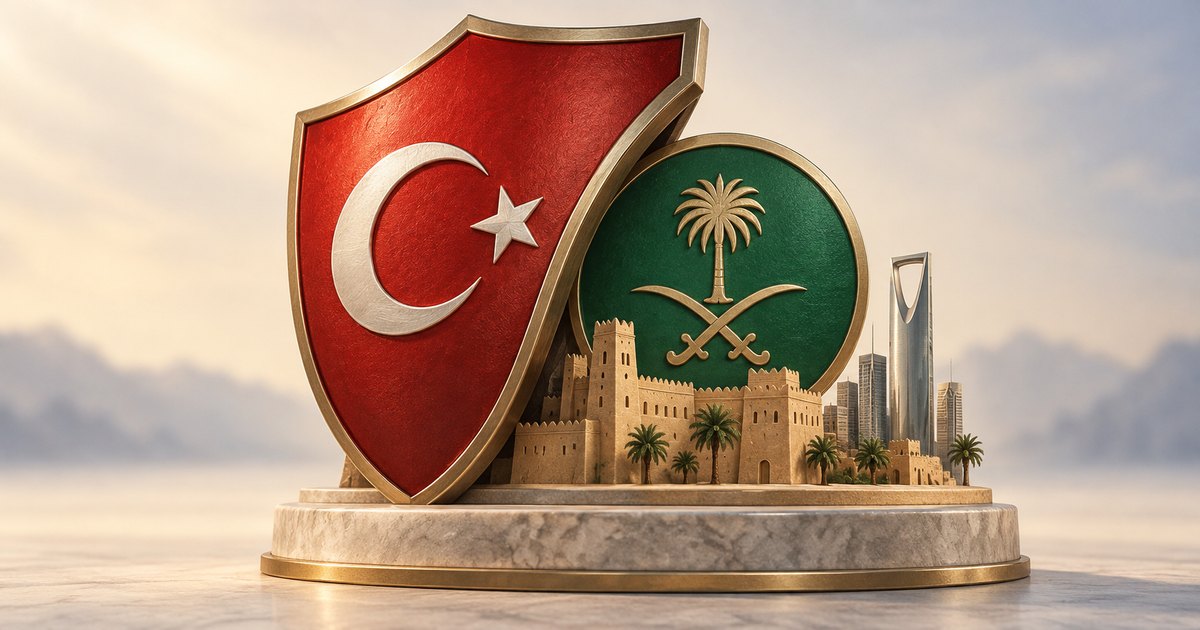
Turkey, Saudi Arabia, and Pakistan signed the Mecca Joint Defence Agreement on August 7, 2026. The pact includes a collective-defense clause modeled on NATO's Article 5, binding the three nations to mutual protection. Turkish Foreign Minister Hakan Fidan announced on September 19, 2026, that Ankara stands ready to provide military support to Saudi Arabia. The announcement came as regional tensions escalated sharply.
Turkey specified it could offer technical military support to help Saudi Arabia counter the Houthi threat. The nature and scope of this support remain undefined, though Turkey's track record in regional conflicts suggests advanced capabilities could be deployed. Turkey's involvement also reflects its ongoing military support to Saudi Arabia, which has included previous aircraft and drone supply agreements.
Escalating Houthi Threat
Houthi attacks against Saudi Arabia have intensified dramatically since July 2026, when the group declared a naval blockade against Riyadh. The campaign marks a significant escalation in a conflict that has simmered for years. Missile and drone attacks on September 19-20, 2026, targeted locations near both Mecca and Riyadh, striking at the heart of Saudi Arabia's most sensitive regions.
The Houthi movement's campaign against Red Sea shipping since late 2023 demonstrated a capacity for sustained, coordinated strikes using drones and ballistic missiles. Saudi Arabia's own air defenses have been tested repeatedly by Houthi strikes since 2019, and the intensification of attacks in 2026 suggests those defenses alone are insufficient.
Turkish Military Capabilities
Turkey's military technology has proven effective in recent regional conflicts. The Bayraktar TB2 drone reshaped conflicts in Libya, Nagorno-Karabakh, and Ukraine. Such systems could provide Saudi Arabia with new tools to counter Houthi operations, though deployment remains subject to political and diplomatic constraints.
Pakistan, the third signatory, has confirmed that no military response discussions have taken place regarding the Mecca agreement. This statement suggests the trilateral pact remains in an early phase, with formal activation mechanisms still undefined. The commitment to military support, while significant, doesn't yet translate to coordinated operations on the ground.