UK sanctions Israeli West Bank settlements, prepares trade ban
In brief
- UK designated six entities and one individual for asset freezes June 9, 2026, targeting settler violence networks
- Travel bans and director disqualifications accompany sanctions; UK updated business guidance on settlement economic activity
- Britain began preparing outright trade ban on West Bank settlement goods by September 2026 under Ed Miliband
- Over 700,000 settlers reside in West Bank and East Jerusalem; E1 project could add 1,200–3,500 homes
- UK coordinated sanctions with Australia, Canada, and France; settlement goods represent small slice of £6 billion annual UK-Israel trade
Sanctions and Business Guidance
Those sanctions also carry travel bans and disqualifications from serving as company directors, targeting networks that finance settler violence. The UK government simultaneously updated its official business guidance to explicitly advise British companies against engaging in economic or financial activities within illegal Israeli settlements.
The June designations represented a strategic pivot. Previous rounds had targeted individuals. This time, the UK went after the financial apparatus itself — the entities and networks that sustain the settler economy.
Trade Ban and Two-State Framing
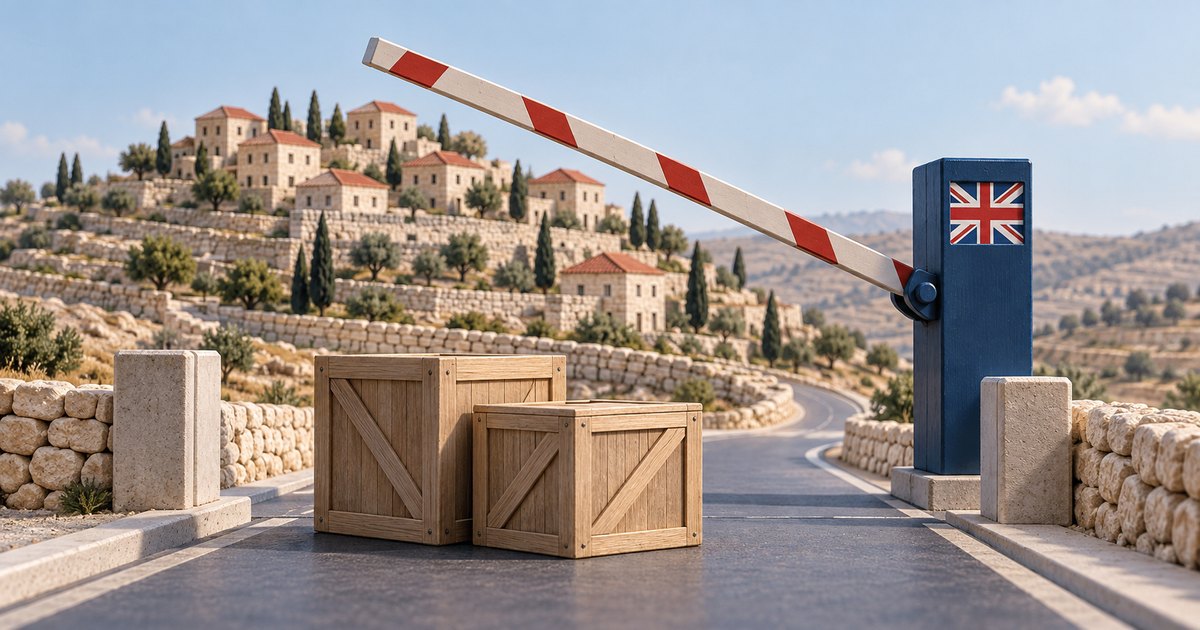
By early September 2026, the policy trajectory steepened further. Under Foreign Secretary Ed Miliband, Britain began preparing an outright trade ban on goods produced in West Bank settlements. The UK government has been careful to frame these measures as pro-peace rather than anti-Israel, emphasizing that normal trade with Israel continues and that the goal is preserving the viability of a two-state solution.
Settlement-produced goods represent only a small fraction of the roughly £6 billion in annual UK-Israel trade. Experts have noted that the practical economic impact of these sanctions remains largely symbolic. Still, the symbolic weight carries diplomatic meaning — a signal that Britain views settlement expansion as incompatible with a negotiated peace.
The Settlement Reality
The numbers underscore the scale of the issue. Over 700,000 Israeli settlers now reside in the West Bank and East Jerusalem, a figure that has climbed steadily and reached record levels. Expansion projects continue. E1, which could add between 1,200 and 3,500 homes east of Jerusalem, would effectively bisect the West Bank, severing the territorial continuity needed for a Palestinian state.
The UK's escalating response reflects a calculation that incremental pressure on the financial networks supporting settlements might nudge the trajectory toward negotiation rather than unilateral expansion.