US approves $24.3B F-35 sale to Saudi Arabia, raising Israel edge concerns
In brief
- State Department proposes $24.3 billion sale of up to 48 F-35A stealth fighters and 49 engines to Saudi Arabia
- Congress has 30 days to review and block the sale, requiring veto-proof majorities
- Saudi Arabia becomes first Middle Eastern nation besides Israel cleared to operate F-35A jets
- Critics warn Saudi Arabia's China ties could expose classified F-35 systems to Beijing
- Sale follows President Trump's November 2025 meeting with Crown Prince Mohammed bin Salman
A milestone for Saudi air power
Saudi Arabia's existing fleet relies on older-generation platforms including the F-15, the Tornado, and the Eurofighter Typhoon. The kingdom faces a persistent threat from Iran and its proxy forces, including the Houthi movement in Yemen, which has demonstrated the ability to strike Saudi territory with drones and missiles. The F-35 sale traces directly back to President Trump's meeting with Crown Prince Mohammed bin Salman at the White House in November 2025, which produced commitments spanning energy, investment, and defense.
The $24.3 billion price tag makes this one of the largest single arms deals in US history. Lockheed Martin Aeronautics would serve as the primary contractor, with Pratt & Whitney supplying the engines. If approved, Saudi pilots and ground crews would need extensive training, and the kingdom would need to build specialized maintenance facilities capable of handling the aircraft's sensitive stealth coatings and classified electronic systems.
The Israel question and China risk
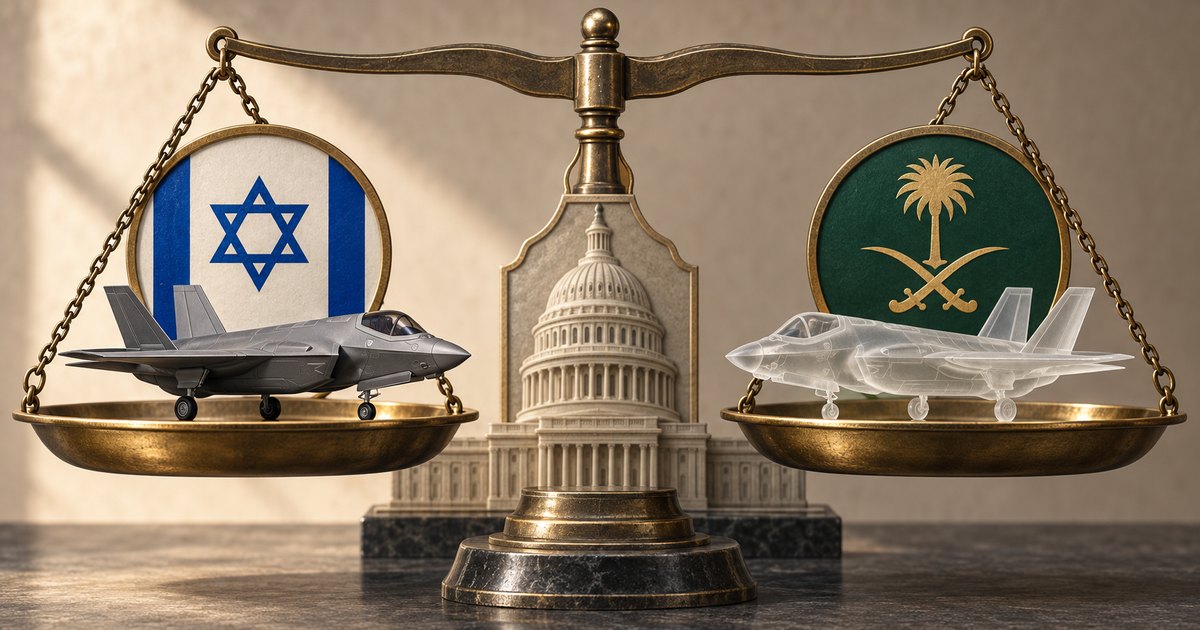
US law requires that arms sales to the Middle East preserve Israel's "qualitative military edge," meaning Israel should maintain a technological advantage over any potential adversary in the region. The proposed sale challenges that principle directly.
Critics in Congress worry that giving Saudi Arabia access to the F-35's classified systems creates a potential pathway for that technology to reach Chinese intelligence services. Saudi Arabia has deepened its technology partnerships with Beijing in recent years, spanning telecommunications infrastructure, AI development, and other sensitive sectors.
The F-35 operators share data links and operational frameworks that allow allied air forces to coordinate more effectively, improving Saudi Arabia's ability to operate alongside US and NATO forces. That interoperability benefit cuts both ways: it deepens integration but also multiplies exposure points for sensitive systems.
Congressional review and the path forward
Blocking an arms sale requires veto-proof majorities in both chambers of Congress. That's a high bar. The 30-day review window runs through mid-October, and while opposition exists, mustering the votes to override a presidential veto remains difficult in the current political environment.