US sanctions bill targeting Russian oil buyers complicates India's energy strategy
In brief
- Congress authorizes 100% tariffs on countries purchasing Russian oil, specifically targeting India
- Russian crude comprised 30% of India's oil imports in FY2026, valued at $40.8 billion
- New Delhi warns sanctions could jeopardize bilateral ties with the US, its largest trading partner
- Legislation expands sanctions across Russia's energy sector, financial institutions, and shadow tanker fleet
The scope of the new sanctions
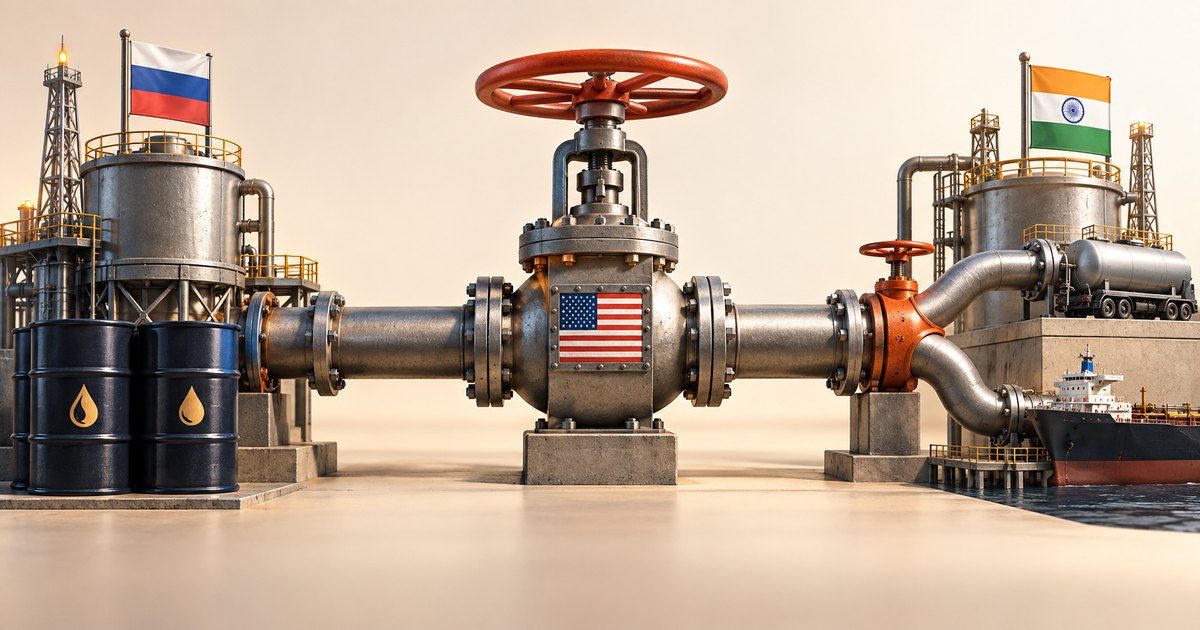
The bill authorizes tariffs of up to 100% on goods from major purchasers of Russian oil, targeting India, China, Azerbaijan, Hungary, and Slovakia. The House voted 262-159 and the Senate cleared it 86-11 in August, giving the legislation bipartisan backing that leaves little room for a future president to quietly waive enforcement. The legislation also expands sanctions across Russia's broader energy sector, financial institutions, and its shadow fleet of tankers, while extending sanctions on Iran.
India's dilemma
Russian crude accounted for roughly 30% of India's oil imports across FY2026, worth approximately $40.8 billion, and peaked above 40% in mid-2026. India has become one of Russia's biggest oil customers in recent years, purchasing deeply discounted crude while Western nations imposed sanctions on Moscow.
New Delhi faces a stark choice. Previous rounds of tariffs related to Russian oil buying had already reached up to 50% on some Indian goods before partial relief arrived in February 2026. The new 100% tariff threshold represents an escalation that could devastate Indian exports to the US.
New Delhi warned on September 17-18 that the sanctions could jeopardize bilateral ties with the US, its largest trading partner. The timing is critical. India must now weigh its energy security (reliant on discounted Russian crude) against the economic cost of American tariffs and the diplomatic fallout of defying a key ally.