XRP Ledger Foundation's Vet pushes back on 1,500 TPS criticism, cites payment channels

In brief
- X user 'Minus Wells' claimed 1,500 TPS isn't the future of finance, not even 5,000.
- XRP Ledger sustains 1,500 TPS on commodity hardware, according to U.Today.
- Payment channels and layers like Dassie better suit mass micropayments, Vet said.
- XRPL's Batch feature went live on mainnet in October 2026, U.Today reported.
- Mastercard wants more XRP Ledger hackathons, Vet said, hedging the claim with 'afaik'.
The throughput argument
An X user going by "Minus Wells" started it. He claimed that 1,500 TPS wasn't the future of finance (not even 5,000 TPS was), and he called 1,500 TPS roughly Visa's average throughput on a normal day.
U.Today's own figures don't match that comparison. The outlet said VisaNet has a technical capacity of 65,000 to over 83,000 TPS, with actual average volume of roughly 8,100 to 8,500 TPS. It also reported that the XRP Ledger sustains 1,500 TPS on commodity hardware.
Wells said he wasn't personally attacking XRP. He claimed XRPL, Avalanche, Stellar, Tezos L1, Cardano's Leios experiments and OP Mainnet swap tests had all published throughput figures or results below 5,000 TPS, though he acknowledged those weren't equivalent tests or necessarily current hard ceilings.
Vet's case: layers, Batch and AI
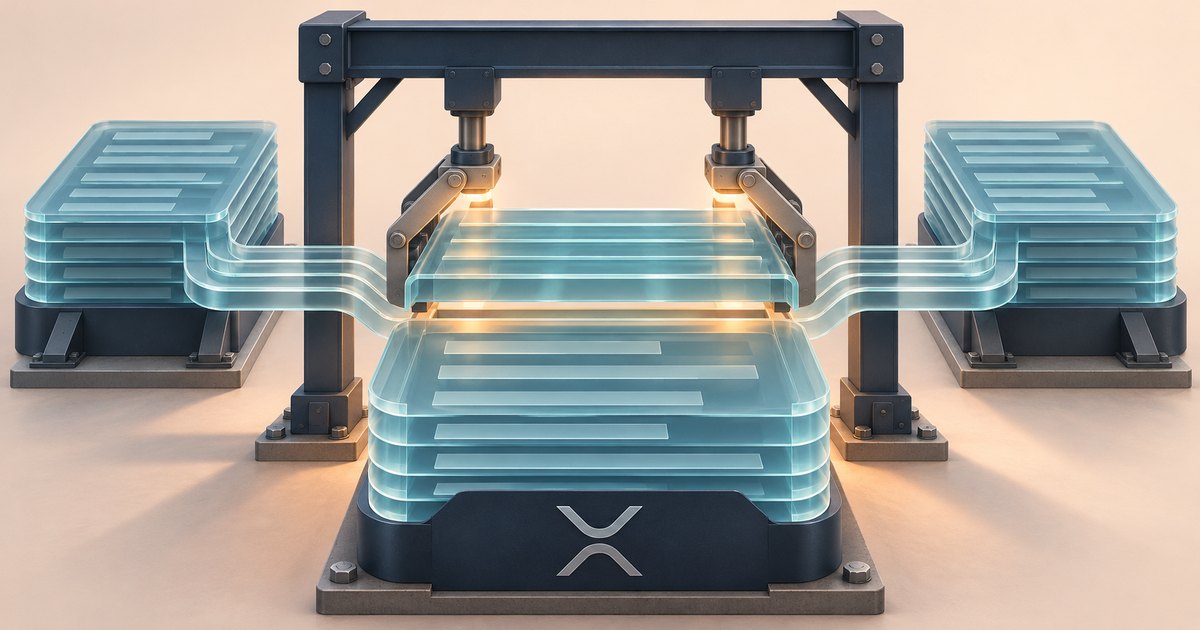
Vet's view is that speed on the base layer isn't the whole story. He said payment channels or higher layers such as Dassie (Interledger) are much better suited to mass micropayments, since not every transaction needs to settle within seconds.
He also pointed to Batch, a feature that bundles multiple transactions so they're processed together. U.Today reported that Batch launched on the XRPL mainnet in October 2026. Vet said batched settlement for institutions is good enough for now to be very beneficial compared with TradFi.
His longer-term argument leans on AI, and it isn't limited to the XRP Ledger.
"I strongly believe we'll scale the L1s very sharply, not only XRPL, thanks to AI helping us to advance this tech even further. We are continuously pushing throughput higher and there is a lot of potential (!!!) for significantly more"
Vet said developers are continuously pushing throughput higher. He framed the AI-driven scaling as something he strongly believes, not as a timeline.
The Mastercard remark
Vet also said Mastercard is looking to do more hackathons with the XRP Ledger after a successful one at the Swell event that used AI. He hedged that with "afaik" (as far as he knows), so it's his understanding rather than an announced Mastercard plan.
Frequently asked questions
What is the XRP Ledger's Batch feature?
Batch is a feature that lets multiple transactions be bundled together and processed as one batch. U.Today reported that it launched on the XRPL mainnet in October 2026. Vet, of the XRP Ledger Foundation, said batched settlement for institutions is good enough for now to be very beneficial compared with TradFi.
How many transactions per second does the XRP Ledger handle?
U.Today reported that the XRP Ledger sustains a throughput of 1,500 transactions per second on commodity hardware. For comparison, the outlet said VisaNet has a technical capacity of 65,000 to over 83,000 TPS, with actual average volume of roughly 8,100 to 8,500 TPS.
How does the XRP Ledger Foundation plan to handle micropayments at scale?
Vet, director of community at the XRP Ledger Foundation, said not every transaction needs to settle within seconds. He said payment channels or higher layers such as Dassie (Interledger) are much better suited to mass micropayments than the base layer.