XRP Ledger still uses two Bitcoin design choices, foundation's Vet says
In brief
- Vet, XRP Ledger Foundation's Director of Community, recounted XRPL's early Bitcoin code history on X.
- Jed McCaleb copied Satoshi's timekeeping code, comment included, into the XRPL, Vet said.
- Nik Bougalis removed the last of that code in December 2014, according to Vet.
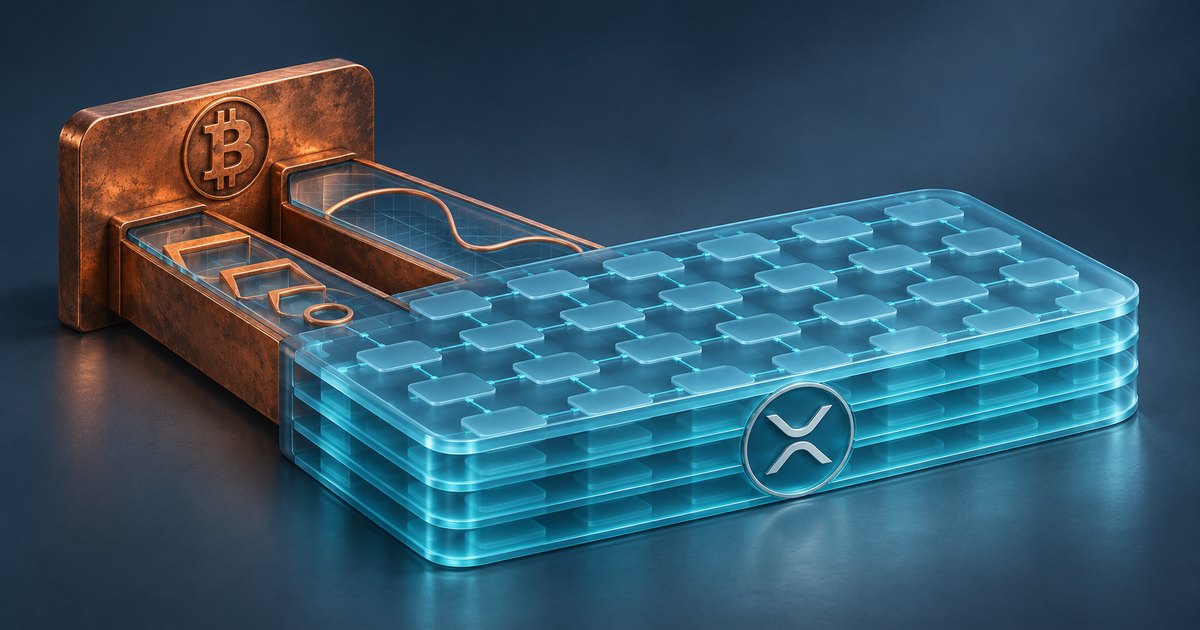
- Two Bitcoin design choices remain: the secp256k1 curve and SHA-256/RIPEMD-160 address generation.
Bitcoin code in the early XRPL
According to U.Today, three engineers (David Schwartz, Jed McCaleb and Arthur Britto) began developing the XRP Ledger in 2011. The founders set out to improve on Bitcoin's limitations and build a more sustainable digital asset designed for payments. Schwartz, now Ripple's CTO emeritus, wrote the first line of code for the ledger's core on November 11, 2011, the outlet reported.
Vet's account picks up from there. He said the XRPL started out using some Bitcoin code, including helper functions from the Bitcoin client Satoshi wrote. McCaleb copied Satoshi's timekeeping code into the ledger (one of Satoshi's code comments came along with it), according to Vet.
It didn't stay.
Vet said the original Satoshi code was gone by the end of 2014. In December of that year, former Ripple engineering lead Nik Bougalis removed the last of the timekeeping code along with the comment, he said. Asked why, Vet explained it had become leftover code as new code was introduced, so it was cleaned up.
U.Today noted that the maritime saying "Never go to sea with two chronometers; take one or three" appears in Bitcoin's source code, put there by Satoshi. The outlet doesn't say whether that's the comment that was copied into the XRPL.
What's still there?
Two design choices survived the cleanup, and Vet said every user relies on at least one of them.
Two design choices of Satoshi still remain on the XRPL and all of us use at least one of it.
The first is the secp256k1 signature curve, the same curve Bitcoin uses. Not everyone on the ledger depends on it, though; the XRPL also supports Ed25519. Vet recalled Schwartz saying the team picked secp256k1 so no one would doubt its security, since it was the same as Bitcoin's.
The second is address generation, and it's the one all XRPL addresses share. Addresses are derived from the public key by applying SHA-256 and then RIPEMD-160, a method inherited from Bitcoin, U.Today reported.
Frequently asked questions
Which Bitcoin design choices does the XRP Ledger still use?
According to Vet of the XRP Ledger Foundation, two remain. One is the secp256k1 signature curve that Bitcoin uses, though the XRPL also supports Ed25519. The other is address generation, which derives addresses from the public key using SHA-256 followed by RIPEMD-160.
What happened to the Bitcoin code originally used in the XRP Ledger?
Vet said the XRPL started out with some Bitcoin code, including Satoshi's timekeeping code, which Jed McCaleb copied in. He said Nik Bougalis removed the last of it in December 2014 because it had become leftover code as new code was introduced.